Blogs

2026 Best Egg Packaging Machine for Global Buyers

Choosing the 2026 Best Egg Packaging Machine requires more than comparing prices. Global buyers need equipment that protects shell quality, maintains hygiene, and fits local production conditions. A reliable Egg Packaging Machine should handle different egg sizes, carton formats, and line speeds without creating unnecessary damage. It should also support clear cleaning routines and dependable spare-part access.

Egg-packaging engineer Dr. Elena Markovic states, “A good machine protects every egg before it improves every number.” This principle matters on busy farms and industrial packing lines. Operators notice small details, such as gentle transfer points, stable conveyor movement, and accurate carton positioning. These details reduce cracked eggs and daily interruptions. They also improve confidence during peak seasons.

Performance is not the whole story. Buyers should examine electrical compatibility, operator training, software support, and maintenance records. Some machines look impressive during demonstrations but perform differently under dust, vibration, or uneven egg supply. That reality deserves attention. No machine is perfect.

A practical evaluation should include product trials, total ownership costs, cleaning time, and supplier responsiveness. Buyers may also need regional certification and documented food-contact materials. These requirements can vary by market. Careful verification remains essential.

This guide compares leading solutions for 2026. It considers capacity, flexibility, protection, automation, service, and long-term value. The final choice depends on the buyer’s facility, workforce, and expansion plans. Sometimes, a simpler machine is the wiser investment.
2026 Best Egg Packaging Machine for Global Buyers

Egg Packaging Machine Basics: 3,000–120,000 Eggs per Hour in 2026

In 2026, Egg Packaging Machines cover a wide production range, from3,000 to 120,000 eggs per hour. The correct capacity depends on farm size, labor availability, and delivery schedules. A small machine suits local farms with mixed egg sizes and frequent product changes. High-output systems require steady supply, accurate grading, and carefully arranged packaging materials. The headline capacity can be misleading. Real output usually falls when trays change or broken eggs require removal.

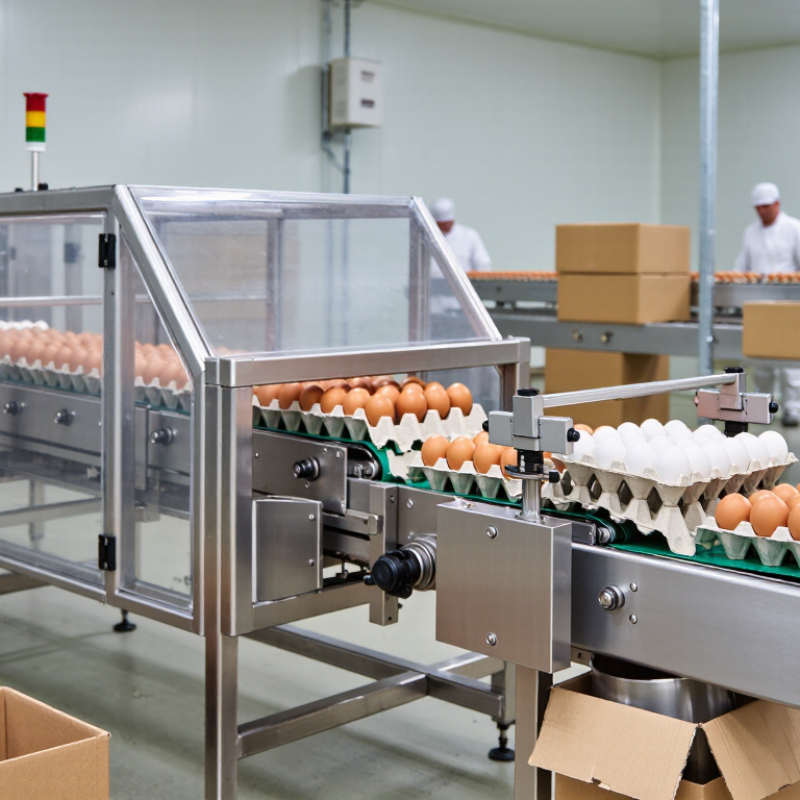
On a working line, sensors count eggs before transfer cups place them into trays. Gentle movement matters because tiny shell cracks may appear several hours later. Buyers should check tested speed, not only the advertised maximum. Ask for data based on the intended egg size, tray pattern, and operating shift. A practical acceptance test should measure packed eggs, rejects, stoppages, and cleaning time.

Small details affect reliability. Dust can reduce sensor accuracy. Poor tray alignment can interrupt a fast conveyor. Operators also need simple access to belts, cups, and safety guards.

I would leave extra capacity rather than run equipment continuously at its limit. That choice costs more initially, but it may reduce wear and missed shipments.

Still, no machine removes every production problem. Staff training, regular inspection, and realistic maintenance planning remain essential for consistent packaging performance.


How Leading Machines Reduce Egg Breakage Below 1% During Automated Packing

2026 Best Egg Packaging Machine for Global Buyers

Global egg output exceeds 90 million tonnes annually, according to FAO’s 2023 Statistical Yearbook. That scale makes breakage control a commercial priority, not a minor adjustment. Leading packing systems target breakage below 1%, but this result depends on egg quality, shell strength, and operator settings.

Gentle handling begins before the egg reaches the carton. Servo-driven belts reduce sudden acceleration, while soft suction cups limit shell pressure. Optical sensors detect missing or misaligned eggs. Short transfer paths also reduce impact points. USDA’s Egg-Grading Manual identifies cracks as a critical quality defect, so inspection must continue after loading. A 20-centimetre drop can matter.

Small details matter.

In practical installations, cushioned carton pockets and synchronized conveyor speeds help maintain stable placement. The machine should record cracked eggs, line speed, and stoppage causes. These records support traceability and better adjustments. However, below 1% is not guaranteed in every facility. Dirty eggs, uneven shells, rough cartons, and rushed calibration can raise losses quickly. Buyers should request test data using their own egg sizes and packaging materials. A factory trial is more reliable than a brochure claim. I would also question results measured only during short demonstrations. Long shifts reveal vibration, operator fatigue, and inconsistent feeding.

Sources: FAO, 2023 Statistical Yearbook; USDA Agricultural Marketing Service, Egg-Grading Manual.

Comparing 6-, 12-, and 30-Egg Cartons Under Global Packaging Standards

2026 Best Egg Packaging Machine for Global Buyers

Choosing between 6-, 12-, and 30-egg cartons changes more than the carton count. It affects machine layout, mold design, loading accuracy, and shipping stability.

A 6-egg format suits smaller households and premium retail packs. It needs gentle handling because fewer eggs leave less structural support. A 12-egg carton remains the most practical middle option for mixed markets. Its balanced footprint usually supports stable stacking and efficient pallet use. The 30-egg format reduces handling per egg, but it demands stronger cartons and wider conveyor spacing. It can work well for foodservice or high-volume distribution.

Machine buyers should compare changeover time, sealing pressure, and reject accuracy. The carton cavity must match the egg diameter, height, and weight range. Small dimensional errors can cause cracked shells during transfer.

I have seen machines pass empty-carton tests, then struggle with uneven eggs. That result is easy to miss. Request trials using real eggs from the target supply chain. Check drop resistance, vibration performance, and moisture behavior. Pulp, plastic, and hybrid materials may require different forming and sealing settings.

Global packaging standards also require careful verification. Materials should meet applicable food-contact requirements in each destination market. Labels, traceability marks, recycling information, and pack dimensions may vary by country.

Do not treat one certificate as universal approval. Ask for calibration records, material declarations, and documented quality checks. A machine with faster output is not always better. If operators need excessive adjustments, productivity may fall after installation. That weakness should be discussed before purchase.

Evaluating 304 Stainless Steel, Servo Drives, and IP65 Washdown Protection

For global egg processors, machine hygiene starts with material selection. FAOSTAT data place global hen-egg production at roughly 90 million tonnes annually, creating intense pressure for reliable, cleanable equipment. 304 stainless steel suits most food-contact frames because it resists routine moisture and common detergents. It is not invincible. High chloride water can still cause pitting, especially around welds and poorly drained corners.

Servo drives improve control where egg sizes, pack formats, or line speeds change. They support accurate indexing and gentler handling than fixed-speed systems. PMMI’s 2024 automation research identifies labor availability, uptime, and repeatable quality as major reasons food plants adopt automation. Buyers should request measured changeover times, not broad claims. A servo can perform well, but poor tuning still creates cracked shells and uneven spacing. That detail is easy to miss.

IP65 protection helps resist dust and low-pressure water jets during washdown. IEC 60529 defines the rating, but IP65 does not mean safe immersion or aggressive chemical exposure. Inspect cable glands, motor seals, drain paths, and control-cabinet placement. Ask for sanitation records and factory acceptance tests. Real cleaning conditions matter more than brochures. I have seen impressive stainless frames fail at small crevices. The specification was correct; the installation was not.

Global Buyer Checklist: CE, UL, Energy Use, Payback, and After-Sales Support

When selecting the best egg packaging machine for global production, treat certification as a working requirement, not a sales label. Ask for the current CE Declaration of Conformity, risk assessment, and technical file references. For North American projects, confirm whether the electrical cabinet and major components meet the required UL standards. Certification scope matters.

Watch the machine run with your actual egg sizes and tray formats. Record output, rejected packs, compressed-air use, and electricity consumption during a full shift. A touchscreen showing low energy use proves little by itself. Request measured data in kWh per 1,000 packed eggs. Check motor efficiency, standby settings, heater demand, and recovery after a brief power interruption. Small losses become expensive across three shifts.

Payback calculations need honest inputs. Include labor, film or carton waste, maintenance parts, installation, training, and downtime. Use your local electricity and wage rates. A six-month return may look attractive, but unstable demand can change it quickly. A cautious model is better. Not perfect, though.

After-sales support deserves the same scrutiny as machine speed. Ask for remote diagnosis hours, response targets, spare-parts availability, service manuals, and technician travel terms. Request references from facilities with similar humidity, voltage, and daily volume. During acceptance testing, record fault codes and cleaning steps with photos. Operators remember practical training better than thick manuals. One overlooked detail can delay production for days.

2026 Best Egg Packaging Machine for Global Buyers - Global Buyer Checklist: CE, UL, Energy Use, Payback, and After-Sales Support

Machine Configuration Typical Capacity Suitable Egg Output Typical Connected Load Indicative Energy Use Automation Level CE Documentation Checklist UL / North American Electrical Checklist Indicative Payback Period After-Sales Support to Require
Manual or Semi-Automatic Tray Packer Up to 4,000 eggs/hour Small farms, local distributors, seasonal operations Approximately 1–3 kW, excluding optional compressor Approximately 0.5–1.5 kWh per 1,000 eggs Operator loads eggs and trays; machine performs alignment or transfer EU Declaration of Conformity; risk assessment; machinery technical file; electrical schematic; user manual; applicable harmonised standards list Confirm whether the control panel and components are certified for the destination market; verify 60 Hz compatibility where required; request wiring diagrams and component certificates Approximately 12–30 months, depending on labour savings and utilisation Remote commissioning, operating training, spare sensors and belts, troubleshooting guide, response-time commitment
Automatic Egg Grading and Tray Packing Line 8,000–18,000 eggs/hour Medium farms, packing centres, regional wholesalers Approximately 5–15 kW, excluding refrigeration and building services Approximately 0.6–1.8 kWh per 1,000 eggs Automatic conveying, grading, counting, and tray loading with operator supervision Declaration of Conformity; machinery risk assessment; electrical safety documentation; emergency-stop validation; guarding and interlock records; operating and maintenance manuals Determine whether UL certification, field evaluation, or local approval is required; verify panel construction, short-circuit rating, grounding, motor protection, and 60 Hz operation Approximately 18–36 months at stable daily throughput Factory acceptance test; installation drawings; commissioning support; preventive-maintenance schedule; critical spare-parts list; software backup
High-Speed Automatic Packing Line 24,000–60,000 eggs/hour Large packing stations, export-oriented processors, supermarket suppliers Approximately 15–40 kW, excluding compressors, refrigeration, and printers Approximately 0.8–2.5 kWh per 1,000 eggs Integrated grading, weighing, tray or carton packing, conveyor controls, and production data interface Full machinery technical file; conformity assessment; electrical diagrams; safety-circuit validation; guarding documentation; EMC and low-voltage compliance evidence where applicable Request North American control-panel documentation, approved component list, SCCR information, grounding method, voltage and frequency confirmation, and local inspection support Approximately 24–48 months, mainly influenced by utilisation, labour cost, breakage reduction, and product mix On-site installation option; operator and maintenance training; remote diagnostics; spare-parts availability; documented escalation process; annual service option
Integrated Egg Packing and Case-Packing System 36,000–90,000 eggs/hour Large-scale commercial plants and multi-shift operations Approximately 25–70 kW, excluding building utilities Approximately 1.0–3.0 kWh per 1,000 eggs Integrated grading, packing, case handling, pallet interface, traceability, and line monitoring Require a complete line-level conformity assessment, safety validation, machine boundary definition, interface responsibilities, and final Declaration of Conformity Confirm whether each machine and the integrated line require separate approval; review control-panel certification, network safety, disconnects, grounding, and site acceptance requirements Approximately 30–60 months unless the line operates at high utilisation with significant labour savings Site survey; installation supervision; acceptance testing; production ramp-up support; preventive-maintenance contract; guaranteed spare-parts lead times
Carton Packing Module 4,000–30,000 eggs/hour, depending on carton format Retail cartons, premium packaging, mixed carton formats Approximately 3–15 kW, excluding upstream grading equipment Approximately 0.5–2.0 kWh per 1,000 eggs Automatic carton forming, egg placement, closing, coding, and discharge Check guarding, access doors, emergency stops, pinch-point protection, electrical documentation, and conformity of the complete machine assembly Verify voltage, frequency, control-panel construction, safety relays, motor protection, and compatibility with local electrical codes Approximately 18–42 months, depending on carton labour and changeover frequency Format-change instructions; tooling support; replacement vacuum cups or grippers; training; remote assistance; changeover-time target
Used or Refurbished Automatic Line Depends on original design and refurbishment quality Cost-sensitive buyers with qualified maintenance teams Must be measured during inspection; nameplate data may not reflect actual operating load Measure with a power meter during normal production; do not rely only on original specifications May include obsolete controls, discontinued sensors, or limited traceability functions Request current conformity status; an old CE mark alone does not prove that the refurbished configuration complies with current requirements Confirm local acceptance before shipment; check replacement parts, panel condition, grounding, short-circuit rating, and 60 Hz compatibility Approximately 12–36 months if downtime and replacement-part costs are controlled Written refurbishment scope; test report; remaining warranty; parts-availability statement; control-system backup; inspection photos and maintenance history
Indicative engineering and commercial benchmarks for buyer screening only. Actual capacity, energy use, payback, compliance requirements, and support coverage must be confirmed through the machine specification, site conditions, factory acceptance test, and destination-country regulations.

Plug & Play Installation

Our installation services are top-notch, delivering modular systems for any application on time in plug & play condition. We leave nothing for you to figure out, set up, or fix. All you’ve to do is just step in, and get going with your business.

Dismantling & Reassembling

We hold a long-term view when we build modular rooms taking into consideration your changing needs. Whether it’s shifting your workspace to a new site, redesigning your unit to fit new requirements, or simply clearing the area at the end of the project, our Dismantling & Reassembling teams are pressed into service to get the job done in the quickest possible time and minimum resource wastage.

Interior Designing

Our interior designs combine both functional and aesthetic aspects to provide you with physical and emotional comfort. We ask you for your preferences and give the best possible solutions aligned to your tastes. Our units are built to be modern, stylish, and elegant.

Bespoke Solutions

We understand that every project is unique and therefore has a different set of requirements. That’s why we believe in customizing our solutions to fit individual needs. We are equipped with the right talents, technology, and skillset to offer bespoke modular units, without compromising on turnaround time or quality.

Aftersales Service

The benefits of choosing Containers ME continues long after the installation of the units as we provide aftersales service for as long as you need. All you have to do is sign the Annual Maintenance Contract (AMC) and enjoy technical support for all the maintenance-related issues. By signing the contract, you can rest assured that a highly professional team of dedicated staff are at your service all year round to attend to your needs.

Customized Container Solutions

We specialize in Customized Container Solutions designed to meet diverse needs across the UAE. Our offerings include customized modular containers that cater to various applications, from tailor-made container solutions to bespoke container designs.

Whether you’re looking for personalized container homes or custom modular containers, we have you covered. Our customized container offices provide functional workspaces, while our customized portable containers ensure flexibility on-site. Explore our range of custom container storage units and customized cargo containers to optimize your space.

We also offer custom container leasing and custom container fabrication services, along with customized sea containers designed for secure transport. For specialized needs, our specialized container modifications will help you create the perfect solution for your requirements in both Dubai and the broader UAE.

Get a quote

Get a quote