Blogs

2026 Top Bridge Crane Manufacturers for Global Buyers?

Choosing the right Bridge Crane manufacturer in 2026 requires more than comparing prices or catalog photographs. Global buyers need dependable lifting equipment, proven engineering, and support that remains available after installation. A crane may look impressive online, yet its real value appears on the factory floor. Smooth trolley travel, accurate braking, and stable load control matter during every shift.

This guide examines leading manufacturers serving international markets. It considers production experience, design capability, certifications, customization, delivery performance, and after-sales service. Practical details matter. Can the supplier design a crane for a 30-meter span? Can it provide spare wheels quickly? Will technicians respond when a pendant control fails during a busy production week? These questions often separate a reliable partner from a low-cost seller.

Not every famous brand fits every factory. Some buyers need a heavy-duty steel mill crane, while others require a compact workshop system with limited headroom. Local voltage, building structure, climate, operator training, and regional compliance also affect the final decision. A supplier with strong products may still perform poorly without local service coverage. That deserves attention.

The manufacturers discussed here are evaluated through industry reputation, technical evidence, customer experience, and international support. However, rankings can change as product lines, ownership, and service networks develop. Buyers should verify current certificates, references, warranty terms, and inspection records before signing a contract. A careful comparison may take longer. It can prevent costly downtime later.

2026 Top Bridge Crane Manufacturers for Global Buyers?

What Is a Bridge Crane and How Does It Work?

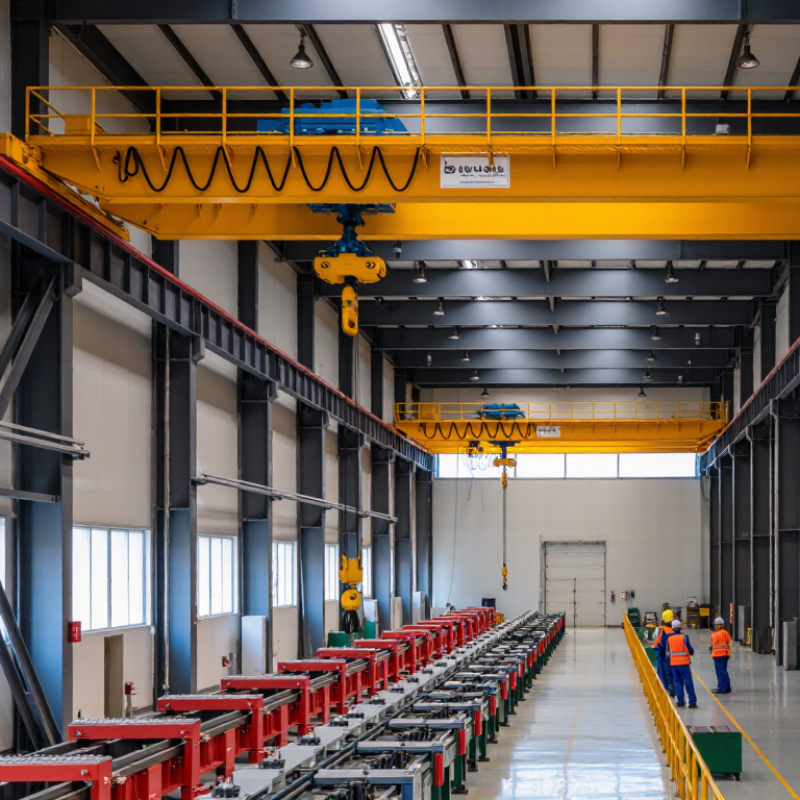
A bridge crane is an overhead lifting system used to move heavy materials through a defined workspace. It usually includes two parallel runways, a traveling bridge, a trolley, and a hoist. The bridge moves along the runways. The trolley crosses the bridge. The hoist lifts and lowers the load. These movements provide three working directions: lengthwise, sideways, and vertical.

During operation, electric motors turn steel wheels along the runway rails. Another motor moves the trolley across the bridge. The hoist winds a wire rope or chain around a drum. A hook, sling, or lifting attachment then carries the load. Operators use pendant controls or a wireless controller. Smooth acceleration helps reduce swinging. Sudden movement is risky.

Small details matter. Before choosing a crane, global buyers should check rated capacity, span, lifting height, duty cycle, power supply, and workshop temperature. The supporting building must also handle the crane’s wheel loads. In real factories, alignment errors, uneven loading, and worn brakes can appear over time. They should not be ignored. Regular inspections, functional testing, and operator training improve reliability. A load chart is useful, but it cannot replace practical judgment. Even a correctly specified crane may perform poorly when installation tolerances, floor conditions, or maintenance access receive too little attention.

Which Bridge Crane Manufacturers Lead the Global Market in 2026?

In 2026, the leading bridge crane manufacturers compete through engineering depth, dependable service, and measurable safety performance. Global buyers increasingly evaluate complete lifting systems, not only purchase prices. Strong manufacturers provide load calculations, duty classifications, runway alignment data, and documented factory testing. Their engineers also understand humidity, dust, temperature changes, and limited maintenance access.

Field experience remains valuable. A crane working inside a steel plant faces different stresses from one serving a clean warehouse. Leading suppliers adjust hoist speed, wheel design, controls, and structural margins accordingly. They offer commissioning support, operator training, spare-parts planning, and inspection records.

Response time matters when a bridge crane stops beside a production line. Very much.

Reliability should be verified through evidence. Buyers can request weld inspection reports, overload test procedures, component traceability, and references from similar facilities. Manufacturers using remote diagnostics may identify abnormal motor temperature or brake wear before failure.

However, digital monitoring does not replace physical inspections. That assumption can create risk. A low quotation may also exclude installation, rail correction, or future service visits.

Procurement teams should compare lifecycle costs, technical documentation, and local support before selecting a global supplier. No ranking stays permanent; performance depends on project execution, honest communication, and disciplined maintenance after delivery.

How to Compare Crane Manufacturers by Quality, Capacity, and Compliance

2026 Top Bridge Crane Manufacturers for Global Buyers

When comparing bridge crane manufacturers, quality should appear in records, not only brochures. Ask for weld inspection reports, material certificates, factory load-test results, and documented quality-control procedures. A reliable supplier should explain how engineers verify girder deflection, wheel alignment, brake performance, and emergency stops. Request project references with similar spans, lifting cycles, and working environments. A polished presentation is not proof.

Capacity involves more than the advertised maximum load. Confirm safe working load, span, lifting height, trolley speed, duty classification, and annual operating cycles. Consider the actual load shape, temperature, dust, humidity, and available headroom.

For example, a 20-ton crane moving steel coils needs different controls than one serving a maintenance workshop. Engineers should provide calculations for runway forces and building connections. Some buyers compare price too early. That mistake can hide expensive structural changes.

Compliance must be checked against the destination country’s requirements and applicable international standards. Request design calculations, operating manuals, inspection plans, electrical diagrams, and conformity documents before signing. Verify that components can be serviced locally and that spare parts remain available. Independent inspection can reveal gaps before shipment. It costs time, but rework costs more. No evaluation is perfect; supplier documents may be incomplete, and test conditions may differ from the real facility. Record every assumption, then ask the manufacturer to confirm it in writing.

What Certifications and Services Should Global Buyers Expect?

2026 Top Bridge Crane Manufacturers for Global Buyers

Global buyers should evaluate more than lifting capacity and purchase price. A reliable bridge crane manufacturer provides traceable engineering records, clear testing evidence, and practical after-sales support. ISO 9001 supports consistent quality management, while ISO 14001 may demonstrate responsible environmental practices. Depending on the destination, buyers may also require CE, UKCA, or other regional conformity documents. These requirements are not interchangeable.

Ask for signed load-test reports, material certificates, welding procedure records, and electrical inspection results. The manufacturer should explain the crane’s duty class, rated load, travel speed, and safety limits in plain language. Independent inspection can add confidence before shipment.

During factory audits, small details matter: readable nameplates, protected cable routes, and organized spare-parts lists often reveal production discipline. A polished certificate is not proof of good workmanship. This is where buyers sometimes overtrust paperwork.

Tips: Request a complete technical file before placing the order. Confirm installation supervision, commissioning, operator training, warranty terms, and response times for breakdowns. Ask whether remote diagnostics and replacement parts will remain available for years, not only during the warranty period. Clarify who handles local compliance checks and site changes. Some suppliers promise global service but rely on slow third parties; this deserves direct questioning. A short video of a similar installed crane can also expose design details that drawings miss. Practical service matters.

How Can Buyers Select the Right Bridge Crane Manufacturer?

How Can Buyers Select the Right Bridge Crane Manufacturer?

Selecting a bridge crane manufacturer in 2026 requires more than comparing quoted prices. Buyers should examine lifting capacity, span, duty class, operating speed, and site conditions. A reliable manufacturer will request detailed drawings, load data, workshop dimensions, and working cycles before recommending equipment. Be cautious when a supplier offers a quick design without asking technical questions.

Review engineering qualifications, factory inspection procedures, welding standards, and load-testing records. Ask for documented case studies from facilities with similar dust, temperature, humidity, and production demands. After-sales support matters too. Confirm spare-parts availability, commissioning assistance, operator training, and response times. A crane may look excellent on paper but still create delays if local service is weak. That risk is often underestimated.

Tips: Compare at least three technical proposals, not only their final prices. Check whether each proposal includes installation, testing, controls, safety devices, and future maintenance. Request clear warranty conditions and written exclusions. Speak with previous users, and ask what went wrong after delivery. Their honest feedback may reveal more than polished brochures. No checklist is perfect. Recheck the design with an independent lifting engineer when loads are critical or the workspace is unusual.

2026 Top Bridge Crane Manufacturers for Global Buyers? - How Can Buyers Select the Right Bridge Crane Manufacturer?

Anonymous supplier capability benchmark for evaluating bridge crane manufacturers without displaying company or brand names.

Anonymous Supplier Profile Typical Product Scope Typical Safe Working Load Typical Span Range Typical Duty Classification Customization Capability Relevant Standards and Compliance Typical Project Lead Time Best Fit for Global Buyers Recommended Verification Documents Selection Rating
Profile A: Full-Line International Manufacturer Single-girder and double-girder overhead travelling cranes, top-running systems, underslung cranes, electric hoists, controls and spare parts. 5–320 metric tonnes, depending on configuration and lifting duty. 6–35 m for standard industrial layouts; larger spans may require project engineering. FEM 1Am–4m or ISO M3–M7, subject to load spectrum and operating frequency. High; can normally engineer runway systems, tandem lifting, outdoor protection, anti-sway controls and special lifting tools. EN 15011EN 13001ISO 9001IEC electrical requirements 12–28 weeks after approved drawings and technical clarification. Large industrial plants, steel service centers, power projects, shipyards and multinational procurement programs. Design calculations, load charts, duty-class calculation, weld procedures, factory test records, quality certificates and reference project list. ★★★★★
Profile B: Heavy-Duty Process Crane Specialist Process cranes for steel, foundry, scrap handling, ladle handling, continuous casting and high-temperature production environments. 30–500 metric tonnes, often using multiple hoists or synchronized lifting. 12–40 m, with building-specific engineering required for long spans. FEM 3m–5m or ISO M6–M8 for demanding operating cycles. Very high; may include redundant brakes, enclosed operator cabins, heat shields, load monitoring, emergency lowering and redundant control systems. EN 15011EN 13001IEC 60204-32ISO 9001 24–48 weeks, depending on engineering, components and testing requirements. Steel mills, foundries, metallurgical plants and facilities requiring high availability and thermal protection. Fatigue calculations, thermal design limits, redundancy philosophy, brake calculations, risk assessment, FAT procedure and maintenance plan. ★★★★★
Profile C: Standard Industrial Crane Manufacturer Standard single-girder and double-girder bridge cranes, wire-rope hoists, electric chain hoists and basic radio controls. 1–80 metric tonnes for common manufacturing and warehouse applications. 6–30 m, commonly matched to standard factory bays. FEM 1Am–3m or ISO M3–M6. Medium to high; suitable for variable speeds, extended lifts, outdoor service, low headroom and basic process integration. EN 15011EN 13135ISO 9001CE technical file where applicable 8–20 weeks for standard configurations; longer for non-standard layouts. General manufacturing, logistics centers, machinery plants, maintenance workshops and assembly facilities. General arrangement drawing, motor and brake data, electrical schematic, inspection plan, warranty terms and spare-parts list. ★★★★☆
Profile D: Low-Headroom and Retrofit Specialist Underslung cranes, low-headroom hoists, runway extensions, replacement hoists and modernization packages for existing buildings. 0.5–25 metric tonnes, normally selected to match existing building capacity. 5–25 m, subject to roof structure, runway geometry and available clearance. FEM 1Am–2m or ISO M3–M5. High for constrained sites; can adapt to existing runways, limited headroom, unusual column spacing and phased installation. EN 15011EN 13001EN 60204-32ISO 9001 10–24 weeks, plus site-survey and shutdown coordination time. Existing factories, workshops with limited headroom, facility upgrades and replacement projects. Site survey report, existing-structure assessment, wheel-load calculations, clearance drawing, installation method statement and commissioning report. ★★★★☆
Profile E: Modular Export-Oriented Supplier Modular bridge crane packages, standard hoists, prefabricated girders, containerized spare parts and remote technical support. 1–50 metric tonnes for general industrial applications. 6–28 m using standardized components and configurable layouts. FEM 1Am–3m or ISO M3–M6. Medium; efficient for standard projects, with optional variable frequency drives, radio control and outdoor packages. EN 15011EN 13001ISO 9001Export documentation 8–18 weeks for standard designs, excluding international shipping and customs clearance. Cost-sensitive international projects, distributors, smaller factories and repeat orders with similar specifications. Bill of materials, packing list, commercial invoice, certificates of origin, inspection records, spare-parts schedule and installation manual. ★★★★☆
Profile F: Automation and Smart-Crane Integrator Automated bridge cranes, warehouse integration, positioning systems, load monitoring, anti-collision systems and production-line interfaces. 2–100 metric tonnes, depending on automation architecture and lifting cycle. 6–32 m, with travel paths defined by production and storage requirements. FEM 2m–4m or ISO M4–M7. Very high; supports PLC integration, digital communication, barcode or RFID positioning, collision avoidance and operational data collection. EN 15011EN 13001IEC 60204-32Functional safety assessment 18–40 weeks, including software development, simulation, testing and site commissioning. Automotive plants, logistics automation, prefabrication yards and facilities requiring repeatable material flow. Functional specification, software validation plan, network architecture, cybersecurity controls, FAT/SAT protocol and operator training records. ★★★★★
Profile G: Local Service and Modernization Provider Hoist replacement, control-panel upgrades, variable-frequency drives, inspections, load testing, runway repairs and preventive maintenance. Existing crane capacity, commonly 1–100 metric tonnes. Based on the existing runway and building structure. Determined by the original crane duty class and the updated operating profile. Medium; strongest in troubleshooting, modernization, compliance upgrades and reducing production downtime. Local lifting regulationsEN 15011 assessmentEN 60204-32Inspection competency records 2–16 weeks for parts and 1–8 weeks for planned site work, subject to equipment availability. Facilities with an installed crane fleet, urgent downtime issues or a requirement for local maintenance coverage. Technician qualifications, inspection reports, component compatibility statement, risk assessment, test certificates and emergency-response plan. ★★★★☆
Buyer selection rule: Do not select a bridge crane manufacturer by rated capacity or price alone. Compare duty class, load spectrum, wheel loads, available headroom, runway condition, control requirements, local service capability, spare-parts availability, compliance documentation and total cost of ownership.

Technical ranges are typical market benchmark bands for anonymous supplier profiles, not rankings or verified claims about any named company. Final crane capacity, span, duty classification and compliance requirements must be confirmed through project-specific engineering calculations and the regulations applicable at the installation site.

Plug & Play Installation

Our installation services are top-notch, delivering modular systems for any application on time in plug & play condition. We leave nothing for you to figure out, set up, or fix. All you’ve to do is just step in, and get going with your business.

Dismantling & Reassembling

We hold a long-term view when we build modular rooms taking into consideration your changing needs. Whether it’s shifting your workspace to a new site, redesigning your unit to fit new requirements, or simply clearing the area at the end of the project, our Dismantling & Reassembling teams are pressed into service to get the job done in the quickest possible time and minimum resource wastage.

Interior Designing

Our interior designs combine both functional and aesthetic aspects to provide you with physical and emotional comfort. We ask you for your preferences and give the best possible solutions aligned to your tastes. Our units are built to be modern, stylish, and elegant.

Bespoke Solutions

We understand that every project is unique and therefore has a different set of requirements. That’s why we believe in customizing our solutions to fit individual needs. We are equipped with the right talents, technology, and skillset to offer bespoke modular units, without compromising on turnaround time or quality.

Aftersales Service

The benefits of choosing Containers ME continues long after the installation of the units as we provide aftersales service for as long as you need. All you have to do is sign the Annual Maintenance Contract (AMC) and enjoy technical support for all the maintenance-related issues. By signing the contract, you can rest assured that a highly professional team of dedicated staff are at your service all year round to attend to your needs.

Customized Container Solutions

We specialize in Customized Container Solutions designed to meet diverse needs across the UAE. Our offerings include customized modular containers that cater to various applications, from tailor-made container solutions to bespoke container designs.

Whether you’re looking for personalized container homes or custom modular containers, we have you covered. Our customized container offices provide functional workspaces, while our customized portable containers ensure flexibility on-site. Explore our range of custom container storage units and customized cargo containers to optimize your space.

We also offer custom container leasing and custom container fabrication services, along with customized sea containers designed for secure transport. For specialized needs, our specialized container modifications will help you create the perfect solution for your requirements in both Dubai and the broader UAE.

Get a quote

Get a quote