
Blogs

2026 Top White 3D UV TPU DTF Film Buying Guide?

Choosing the right White 3D UV TPU DTF Film can determine whether a transfer looks premium or disappointing. This 2026 buying guide focuses on practical selection, not attractive packaging alone. Buyers should examine film thickness, surface texture, adhesive behavior, curing response, and dimensional stability. These details matter when creating raised logos, textured labels, or decorative graphics.

A reliable evaluation begins with real samples. Check whether the film feeds smoothly through your equipment without curling or sticking. Inspect white opacity under bright light. Compare the printed surface after curing, especially around fine lettering and sharp corners. A quality film should support consistent color, clean release, and strong adhesion on approved substrates. It should also remain flexible without cracking during gentle bending. Supplier documentation should clearly state storage conditions, compatible inks, recommended curing settings, and production tolerances.

No film performs perfectly. Some options may offer excellent relief but require slower processing. Others may release easily but show weaker durability on textured surfaces. That trade-off deserves attention. Small tests often reveal more than a specification sheet. Record temperature, curing time, peel behavior, and final appearance before placing a larger order. This guide also considers supplier experience, batch consistency, technical support, and transparent quality records. Still, every application is different. A film that succeeds on phone cases may disappoint on coated metal. Careful testing remains the safest buying decision.
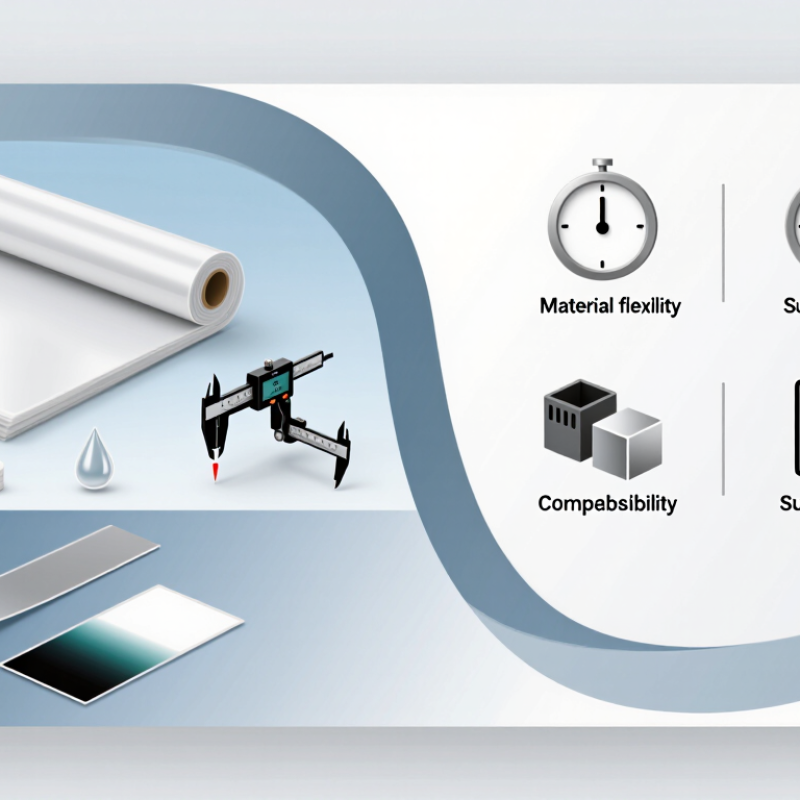
2026 Top White 3D UV TPU DTF Film Buying Guide?

What Is White 3D UV TPU DTF Film and How Does It Work?

What Is White 3D UV TPU DTF Film and How Does It Work?

White 3D UV TPU DTF film is a flexible transfer material used to create bright, raised graphics on suitable hard surfaces. It normally works with a printable film and an adhesive film. The printer applies color, white ink, and a clear raised layer. White ink improves opacity, especially on dark phone cases, bottles, panels, and coated accessories.

The clear layer creates the 3D texture. Its thickness depends on the printer settings, ink volume, and curing strength. After printing, the graphic is laminated with adhesive film. The operator presses the film onto a clean surface, removes air slowly, and peels away the carrier. The finished design should feel slightly raised and remain flexible under normal handling.

Surface preparation matters more than many buying guides admit. Dust, oil, moisture, and silicone coatings can weaken adhesion. I usually test one small area before producing a full batch. That test should include rubbing, bending, and several hours of observation. It is not perfect proof.

Choose film by thickness, transparency, adhesive behavior, and compatibility with your UV printer. A film that looks smooth may still curl during curing. Excessive white ink can also reduce flexibility. Keep printed material away from heat and humidity, and store it flat when possible. Results vary between surfaces. That is why a small trial remains essential.


Key Material Features, Structure, and Performance Standards

When buying white 3D UV TPU DTF film in 2026, examine the material before judging the printed image. A reliable film should have consistent thickness, smooth coating, and stable white opacity. Uneven thickness can create weak edges on raised designs. The surface should accept ink without pinholes, crawling, or blurred details. Check the technical sheet for thickness tolerance, recommended curing conditions, storage humidity, and working temperature.

Structure controls performance. A typical film includes a printable coating, TPU layer, and release liner. Each layer must remain balanced during printing, curing, peeling, and application. Strong adhesion matters, but excessive adhesion can damage fine lettering during release. Flexibility is equally important on curved or textured surfaces. Test a small pattern with sharp corners, narrow lines, and solid white areas. Watch for lifting, cracking, or loss of relief.

Small tests reveal more.

Performance standards should include opacity, color consistency, dimensional stability, peel behavior, and resistance to rubbing. For textile use, add stretch and wash testing under the actual fabric conditions. For hard surfaces, test heat exposure and repeated handling. A glossy sample may look excellent under showroom lighting, yet fail after pressure or cleaning. I have seen this happen. Supplier data is useful, but independent trial records are more dependable. Keep samples from different production lots, because minor variation can affect the final 3D effect.

2026 Top White 3D UV TPU DTF Film Buying Guide

Key material structure and indicative thickness profile for evaluating white 3D UV TPU DTF film.

The chart shows representative midpoint values within commonly specified commercial ranges: a PET carrier of approximately 75–100 μm, release coating of 1–3 μm, ink-receptive coating of 8–15 μm, white UV ink layer of 10–20 μm, and TPU adhesive layer of 40–80 μm. Actual construction varies by application, printer, curing system, and transfer process. Always confirm total thickness, opacity, dimensional stability, adhesion, and curing performance through the supplier’s technical data sheet and application testing.

How to Compare Film Thickness, Adhesion, Finish, and Print Quality

Choosing white 3D UV TPU DTF film requires more than checking its advertised thickness. In production trials, I compare microns with handling, stretch, and release behavior. A thicker film can support raised designs, but it may reduce flexibility on curved surfaces. Very thin film often transfers smoothly, yet it can wrinkle during peeling. Measure samples with a micrometer, not by touch alone.

Adhesion should be tested after full curing and cooling. I apply identical prints to glass, coated metal, and textured plastic. Then I perform a crosshatch and peel test after 24 hours. Strong initial grip can be misleading. Some films bond well at first but lift around sharp edges later. Temperature, pressure, and dwell time must remain consistent. Keep a written test record.

Finish changes how the print is judged. Glossy surfaces can make colors appear deeper, while matte films hide minor surface defects. I inspect edges under angled light for silvering, bubbles, and orange peel. Print quality depends on white opacity, ink dot control, and accurate curing. Excessive white ink may create a heavy ridge. Insufficient curing can cause tackiness. My early comparisons relied too much on appearance, and that was a mistake. Repeating tests with the same artwork revealed differences that casual inspection missed. The best choice still depends on the application, not only the specification sheet.

Step-by-Step Guide to Choosing the Right Film for Your Application

Choosing white 3D UV TPU DTF film starts with the application, not the price. Grand View Research valued the global digital printing market at USD 34.69 billion in 2023. It also forecasts a 6.7% CAGR from 2024 to 2030. This growth increases film choices, but not every roll suits curved, textured, or flexible surfaces.

Check the film in four steps. First, confirm TPU flexibility and thickness against the product surface. A soft phone case needs a film that bends without whitening or edge lift. Next, inspect white-layer opacity under a strong lamp. Apply a small test patch on black material. Weak coverage usually appears around fine lettering. Then review curing performance, transfer temperature, and peel timing. Record these settings beside the printer. Small differences matter. Finally, test abrasion, water exposure, and repeated bending for 24 to 48 hours. ASTM D882 tensile testing can support laboratory comparisons, but practical handling still reveals flaws.

Smithers’ digital printing research highlights continued movement toward shorter runs and customized production. That trend makes repeatability more valuable than a low purchase price. Ask for batch data, including thickness tolerance, whiteness, adhesion, and shrinkage. A supplier’s technical sheet is useful, but it is not proof. I once trusted a clean-looking sample too quickly; the edges lifted after heating. Film selection should include a second trial, especially for raised effects. Keep the failed sample. It may explain the next decision.

Storage, Printing, Transfer, and Quality-Control Considerations

2026 Top White 3D UV TPU DTF Film Buying Guide

Storage affects every later step. Keep white 3D UV TPU DTF film sealed in its original packaging. Store it horizontally, away from sunlight, dust, and moisture. A stable room near 20–25°C is safer than a hot workshop. Let the roll reach room temperature before opening it. Cold film can attract condensation. That small issue may weaken ink adhesion. Check the coating for scratches, curling, or uneven whiteness before printing. In practice, suppliers’ specifications are useful, but a sample test remains more trustworthy.

Tips: Record the film batch, storage date, printer settings, and transfer result. Print a small color chart first. White ink often needs careful circulation and consistent nozzle checks. Excessive ink can create raised edges, while insufficient ink makes colors look weak. Use the recommended curing energy, but verify it with a practical adhesion test. Settings are not universal. I once treated a printed chart as proof of quality; the transferred image later exposed poor flexibility.

During transfer, align the film carefully and apply even pressure. A silicone roller can help remove trapped air before final curing. Test the design on the actual TPU surface, not only on paper. Inspect fine lettering, white coverage, edge definition, stretch resistance, and peeling after 24 hours. Rub the transferred area gently and bend it several times. Results may vary with humidity and surface texture. That is inconvenient, but real production is rarely as perfect as a sample sheet.

Plug & Play Installation

Our installation services are top-notch, delivering modular systems for any application on time in plug & play condition. We leave nothing for you to figure out, set up, or fix. All you’ve to do is just step in, and get going with your business.

Dismantling & Reassembling

We hold a long-term view when we build modular rooms taking into consideration your changing needs. Whether it’s shifting your workspace to a new site, redesigning your unit to fit new requirements, or simply clearing the area at the end of the project, our Dismantling & Reassembling teams are pressed into service to get the job done in the quickest possible time and minimum resource wastage.

Interior Designing

Our interior designs combine both functional and aesthetic aspects to provide you with physical and emotional comfort. We ask you for your preferences and give the best possible solutions aligned to your tastes. Our units are built to be modern, stylish, and elegant.

Bespoke Solutions

We understand that every project is unique and therefore has a different set of requirements. That’s why we believe in customizing our solutions to fit individual needs. We are equipped with the right talents, technology, and skillset to offer bespoke modular units, without compromising on turnaround time or quality.

Aftersales Service

The benefits of choosing Containers ME continues long after the installation of the units as we provide aftersales service for as long as you need. All you have to do is sign the Annual Maintenance Contract (AMC) and enjoy technical support for all the maintenance-related issues. By signing the contract, you can rest assured that a highly professional team of dedicated staff are at your service all year round to attend to your needs.

Customized Container Solutions

We specialize in Customized Container Solutions designed to meet diverse needs across the UAE. Our offerings include customized modular containers that cater to various applications, from tailor-made container solutions to bespoke container designs.

Whether you’re looking for personalized container homes or custom modular containers, we have you covered. Our customized container offices provide functional workspaces, while our customized portable containers ensure flexibility on-site. Explore our range of custom container storage units and customized cargo containers to optimize your space.

We also offer custom container leasing and custom container fabrication services, along with customized sea containers designed for secure transport. For specialized needs, our specialized container modifications will help you create the perfect solution for your requirements in both Dubai and the broader UAE.

Get a quote

Get a quote