
Blogs

What Is an Alkaline Hydrogen Generator and How Does It Work?

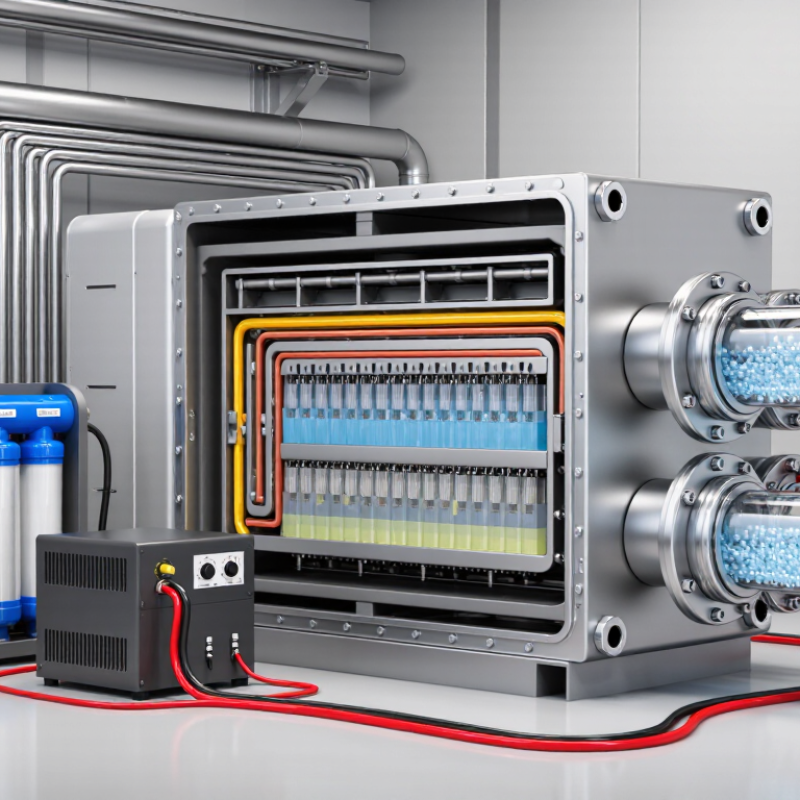
An Alkaline Hydrogen Generator produces hydrogen by splitting water through electrolysis. It uses electrical current and an alkaline electrolyte, commonly a potassium hydroxide solution, to help carry ions between electrodes. The process may sound simple. Its safe, steady operation depends on several carefully controlled parts.

Inside the cell, water reaches the electrode surfaces while direct current drives the reaction. Hydrogen forms at the cathode, and oxygen forms at the anode. A diaphragm or separator keeps the gases apart as they leave the cell. It reduces mixing, but the whole system still needs sound seals, sensors, and operating controls. The details matter.

A complete generator may also include a power supply, water-treatment equipment, gas cooling, and drying stages. These components affect output, purity, and maintenance needs. For example, mineral deposits can build up when unsuitable feed water is used, while changing current can alter production rates. Actual performance depends on the design and operating conditions, so published specifications deserve close attention.

This guide explains what an alkaline hydrogen generator is and how its main components work together. It also considers practical limits, such as energy use and routine inspection. Hydrogen is colorless and highly flammable, so system design and handling procedures are essential—not optional details. And one point is easy to overlook: producing hydrogen is not the same as proving it is suitable for every application.
What Is an Alkaline Hydrogen Generator and How Does It Work?

Core Components: Electrodes, Diaphragm, and 20–30 wt% KOH Electrolyte

An alkaline hydrogen generator uses electricity to split water into hydrogen and oxygen. Its performance depends on three core parts: electrodes, a diaphragm, and a potassium hydroxide electrolyte. Together, they create a controlled path for electrons and hydroxide ions.

Electrodes carry the electrochemical reactions. At the cathode, water gains electrons and produces hydrogen gas. At the anode, hydroxide ions release oxygen and return toward the electrolyte.

Porous surfaces can improve gas release and reduce bubble buildup. Small details matter. Poor contact resistance wastes power and raises heat.

The diaphragm sits between both electrodes. It allows hydroxide ions to pass while limiting hydrogen and oxygen mixing. A damaged or poorly fitted diaphragm can reduce purity and increase operational risk.

The electrolyte commonly contains 20–30 wt% KOH, providing strong ionic conductivity. However, KOH is highly caustic, so sealed handling, protective equipment, and regular inspections are essential.

Water quality also matters because impurities may corrode electrodes or block the diaphragm. Operators should monitor temperature, electrolyte concentration, pressure, and gas output.

A stable reading does not always prove ideal performance. Ageing components can look normal while efficiency slowly declines. This is where practical maintenance often reveals more than specifications.


Electrochemical Reaction: Water Splits into Hydrogen and Oxygen at the Electrodes

An alkaline hydrogen generator uses direct current to split water inside an alkaline electrolyte, usually containing potassium hydroxide. The reaction occurs across two electrodes separated by a diaphragm. At the cathode, water accepts electrons and forms hydrogen gas and hydroxide ions: 2H₂O + 2e⁻ → H₂ + 2OH⁻. Hydroxide ions then move through the electrolyte toward the anode. At the anode, they release electrons and produce oxygen: 4OH⁻ → O₂ + 2H₂O + 4e⁻. Hydrogen bubbles rise from one side, while oxygen leaves the other.

The process looks simple. It is not effortless. Electrode surfaces, electrolyte concentration, temperature, and diaphragm condition affect output and gas purity. Operators must also remove water impurities, because contamination can increase resistance and accelerate maintenance needs. The International Energy Agency’s Global Hydrogen Review 2024 reported more than 1.4 gigawatts of installed water-electrolysis capacity worldwide by the end of 2023, showing rapid industrial adoption. Yet scale does not remove basic physics. U.S. Department of Energy technical assessments commonly place present electrolytic energy use near 50 kilowatt-hours per kilogram of hydrogen, depending on system design and operating conditions. Some field results perform better, while others fall short. That variation deserves honest attention. A practical inspection should check voltage stability, temperature, gas crossover, electrolyte level, and visible bubble behavior. Small irregularities can signal declining efficiency before the numbers become obvious.

Operating Conditions: Alkaline Electrolysis Commonly Runs at 60–90°C

An alkaline hydrogen generator uses electricity to split water into hydrogen and oxygen. Inside the cell, an alkaline electrolyte, commonly potassium hydroxide, carries hydroxide ions between two electrodes. The power supply drives the reaction through a diaphragm that helps keep the gases separate. Hydrogen forms at the cathode, while oxygen forms at the anode.

Alkaline electrolysis commonly runs at 60–90°C. This range lowers electrolyte resistance and supports faster ion movement. It can also improve energy use when temperature, current, and electrolyte concentration remain stable. Operators usually monitor cell voltage, liquid level, gas purity, and cooling performance. A small temperature rise may seem helpful. Excess heat is not.

At 60°C, the process may respond more slowly and consume more electricity. Near 90°C, reaction speed can improve, but seals, diaphragms, and electrodes face greater thermal stress. Real systems rarely hold one perfect temperature. Load changes, water quality, and maintenance condition all matter. That is where simplified explanations become weak. A generator may perform well in a test room, yet behave differently during long operation. Careful calibration and routine inspection remain essential. Clean feedwater helps reduce deposits and protects stable gas production. Operators should also treat temperature sensors as critical instruments, not optional accessories.

Alkaline Hydrogen Generator: Operating Temperature and Water Vapor Pressure

Alkaline electrolysis commonly operates at 60–90°C. A direct current passes through an alkaline electrolyte, splitting water into hydrogen at the cathode and oxygen at the anode. The chart shows how the saturation vapor pressure of water increases across this typical operating range, based on IAPWS-IF97 steam-table data.

Material Balance: 9 kg of Water Produces 1 kg of H₂ and 8 kg of O₂

What Is an Alkaline Hydrogen Generator and How Does It Work?

An alkaline hydrogen generator splits water through electrolysis. Inside the cell, a direct current moves through an alkaline electrolyte, commonly a potassium hydroxide solution. Hydrogen forms at the cathode, while oxygen forms at the anode. The overall reaction is simple: 2H₂O → 2H₂ + O₂.

Material balance matters. Producing 1 kilogram of hydrogen requires about 9 kilograms of water. The reaction also generates approximately 8 kilograms of oxygen. This ratio comes from molecular masses: 36 kilograms of water produce 4 kilograms of hydrogen and 32 kilograms of oxygen. Scaled down, 9 kilograms becomes 1 kilogram and 8 kilograms. The numbers are clean.

Real equipment is less perfect. Water treatment, gas separation, cooling, and periodic purging create additional consumption. The alkaline electrolyte usually circulates rather than being consumed, but impurities and maintenance still require replacement. The International Energy Agency’s Global Hydrogen Review 2024 reports that water electrolysis commonly uses around 50–55 kWh of electricity per kilogram of hydrogen, depending on system design and operating conditions. That energy figure is often more important than the water ratio.

A useful field check is simple: weigh the feedwater and record hydrogen output over several hours. Losses then become visible. The theoretical balance remains essential, but it is not a complete operating promise. Temperature, pressure, water quality, and current efficiency can shift the measured result.

Energy Demand: Typical Systems Use Roughly 50–60 kWh of Electricity per kg H₂

What Is an Alkaline Hydrogen Generator and How Does It Work?

Energy Demand: Typical Systems Use Roughly 50–60 kWh of Electricity per kg H₂

An alkaline hydrogen generator separates water into hydrogen and oxygen through electrolysis. Inside the stack, a liquid alkaline electrolyte carries ions between two electrodes. The cathode produces hydrogen, while the anode releases oxygen. A diaphragm keeps the gases apart and supports safer operation.

Electricity demand usually matters more than the water volume. Typical systems consume roughly 50–60 kWh of electricity per kilogram of hydrogen produced. One kilogram of hydrogen contains about 33.3 kWh of lower heating value energy. The difference reflects conversion losses, heat management, gas purification, compression, and pumps.

Real performance varies. A warm, stable stack may operate near its rated efficiency. Frequent starts, partial-load operation, or poor water quality can increase consumption. Auxiliary equipment also deserves attention. It may quietly use several additional kilowatt-hours per kilogram.

A practical example helps. Producing five kilograms daily could require approximately 250–300 kWh of electricity. That demand resembles the daily use of several household appliances running continuously. Actual results depend on system design and operating conditions.

The 50–60 kWh figure is useful, but it is not universal. Measurements should include the complete system boundary, not only the electrolysis stack. This distinction is often overlooked. A reliable assessment records electricity quality, operating pressure, temperature, hydrogen purity, and production rate. Without those details, efficiency comparisons can become misleading.

What Is an Alkaline Hydrogen Generator and How Does It Work? – Energy Demand: Typical Systems Use Roughly 50–60 kWh of Electricity per kg H₂

Data Dimension Typical Value or Description Why It Matters
Electrolysis method Alkaline water electrolysis Uses an aqueous alkaline electrolyte to conduct ions between two electrodes.
Main input Water, electricity, and an alkaline electrolyte such as potassium hydroxide or sodium hydroxide Electricity drives the chemical reaction, while the electrolyte improves ionic conductivity.
Electrochemical reaction 2H₂O → 2H₂ + O₂ Water is split into hydrogen at the cathode and oxygen at the anode.
Hydrogen production site Cathode, also called the negative electrode Water molecules receive electrons and form hydrogen gas and hydroxide ions.
Oxygen production site Anode, also called the positive electrode Hydroxide ions release electrons and form oxygen and water.
Ion transport Hydroxide ions move through the alkaline electrolyte from the cathode toward the anode. Ion movement completes the internal electrical circuit.
Typical electricity consumption Approximately 50–60 kWh per kg of H₂ Actual consumption varies with stack efficiency, operating pressure, power electronics, cooling, water treatment, and gas purification.
Theoretical minimum energy About 39.4 kWh per kg H₂ based on the higher heating value of hydrogen Real systems require more energy because of electrical, thermal, gas-processing, and auxiliary losses.
Water consumption The stoichiometric requirement is about 9 kg of water per kg of H₂; practical plant intake is higher. Additional water may be needed for purification, cooling, flushing, and system losses.
Hydrogen output pressure Often produced at several to a few tens of bar, depending on system design Higher delivery pressure can reduce downstream compression requirements but may increase energy use.
Hydrogen purity Commonly around 99.5%–99.999% after appropriate gas separation and purification Required purity depends on the end use, such as fuel cells, industrial heating, or chemical production.
Operating temperature Typically about 60–90°C for conventional alkaline electrolyzer systems Temperature affects reaction kinetics, conductivity, efficiency, and materials durability.
Core components Electrolyzer stack, electrodes, diaphragm, electrolyte circulation loop, rectifier, water-treatment unit, gas separator, cooling system, and controls Each subsystem contributes to safe operation, gas quality, efficiency, and production reliability.
Diaphragm function Separates hydrogen and oxygen compartments while allowing ion transport Helps prevent gas mixing and supports safe, high-purity hydrogen production.
Dynamic response Generally slower than proton-exchange-membrane systems when following rapidly changing power Stable electricity supplies and operating buffers can improve performance with variable renewable power.
Typical advantages Mature technology, potentially long operating life, and use of relatively abundant catalyst materials These characteristics can support large-scale hydrogen production when operating conditions are suitable.
Key limitations Electrolyte handling, possible gas crossover, lower flexibility than some newer designs, and the need for water and gas management System design and regular monitoring are necessary to maintain efficiency and operational safety.
Emission profile No direct carbon dioxide emissions during electrolysis; lifecycle emissions depend mainly on the electricity source. Using renewable or low-carbon electricity can substantially reduce the climate impact of the produced hydrogen.

Note: Values are representative engineering ranges. Actual performance depends on electrolyzer design, operating pressure, temperature, electricity quality, water purity, and balance-of-plant equipment.

Plug & Play Installation

Our installation services are top-notch, delivering modular systems for any application on time in plug & play condition. We leave nothing for you to figure out, set up, or fix. All you’ve to do is just step in, and get going with your business.

Dismantling & Reassembling

We hold a long-term view when we build modular rooms taking into consideration your changing needs. Whether it’s shifting your workspace to a new site, redesigning your unit to fit new requirements, or simply clearing the area at the end of the project, our Dismantling & Reassembling teams are pressed into service to get the job done in the quickest possible time and minimum resource wastage.

Interior Designing

Our interior designs combine both functional and aesthetic aspects to provide you with physical and emotional comfort. We ask you for your preferences and give the best possible solutions aligned to your tastes. Our units are built to be modern, stylish, and elegant.

Bespoke Solutions

We understand that every project is unique and therefore has a different set of requirements. That’s why we believe in customizing our solutions to fit individual needs. We are equipped with the right talents, technology, and skillset to offer bespoke modular units, without compromising on turnaround time or quality.

Aftersales Service

The benefits of choosing Containers ME continues long after the installation of the units as we provide aftersales service for as long as you need. All you have to do is sign the Annual Maintenance Contract (AMC) and enjoy technical support for all the maintenance-related issues. By signing the contract, you can rest assured that a highly professional team of dedicated staff are at your service all year round to attend to your needs.

Customized Container Solutions

We specialize in Customized Container Solutions designed to meet diverse needs across the UAE. Our offerings include customized modular containers that cater to various applications, from tailor-made container solutions to bespoke container designs.

Whether you’re looking for personalized container homes or custom modular containers, we have you covered. Our customized container offices provide functional workspaces, while our customized portable containers ensure flexibility on-site. Explore our range of custom container storage units and customized cargo containers to optimize your space.

We also offer custom container leasing and custom container fabrication services, along with customized sea containers designed for secure transport. For specialized needs, our specialized container modifications will help you create the perfect solution for your requirements in both Dubai and the broader UAE.

Get a quote

Get a quote



