Blogs

10 Best Candy Shop Shelves for Retail Buyers?

Choosing among the 10 best candy shop shelves requires more than attractive colors and polished finishes. Grand View Research valued the global confectionery market at approximately $242.5 billion in 2023. It also projects continued growth through 2030. That scale creates opportunity, but it raises the standard for in-store presentation. Every shelf must protect products, guide shoppers, and support fast replenishment.

The National Confectioners Association’s 2024 State of Treating report highlights candy’s role in everyday enjoyment, seasonal moments, and personal rewards. Retail buyers should translate those behaviors into practical layouts. A low shelf can invite children’s products, while eye-level space can showcase premium chocolate. Clear labels matter. So do adjustable tiers, wipe-clean surfaces, and enough depth for varied packaging. A narrow shelf may look efficient until gift boxes block smaller items behind them.

Retail anthropologist Paco Underhill has written, “The best way to sell something is not to sell it.” His point applies strongly to candy shop shelves. Good merchandising feels effortless. Shoppers notice the product before the fixture. That requires experience, not guesswork. Store traffic, basket size, package weight, and seasonal demand should influence the final choice. No shelf wins everywhere. A design that works in a bright convenience store may fail in a boutique with softer lighting. This guide compares ten options with those limitations in mind. It considers durability, visibility, cleaning effort, capacity, and buyer value, while acknowledging one uncomfortable truth: attractive shelving cannot rescue weak assortment planning.
10 Best Candy Shop Shelves for Retail Buyers?

What Makes a Candy Shop Shelf Suitable for Retail Use

For retail buyers, a candy shop shelf must sell safely, not merely look colorful. In store evaluations, I check stability, visibility, cleaning access, and restocking speed. A strong unit keeps packages facing shoppers at eye level. It also supports heavier jars without bending. Rounded edges reduce snagging near busy aisles. Adjustable tiers help one fixture hold small bags, boxed treats, and seasonal displays. These practical details often matter more than decorative panels.

Material choice affects daily reliability. Powder-coated steel handles frequent wiping and resists ordinary retail wear. Food-safe plastic bins work well when staff need quick product changes. Wood can add warmth, but unfinished surfaces may trap crumbs and moisture. Shelves should have clear load limits and secure brackets. They need enough spacing for labels, hands, and wheelchair approach. A 90-centimeter aisle clearance suits many layouts, but local accessibility rules still require verification. Do not trust appearance alone.

I once selected a bright shelf with poor rear access. It looked excellent on opening day. Restocking soon became slow and awkward. That mistake changed my buying checklist. I now request assembly instructions, cleaning guidance, warranty terms, and replacement-part availability. I also test one sample before approving a larger order. Ask staff to move a full tray, wipe every corner, and remove a stuck package. Their feedback can reveal problems that product photos hide. A suitable shelf supports hygiene, clear pricing, stock control, and comfortable shopping throughout the day.


Key Shelf Types for Displaying Different Candy Products

Choosing the right candy shop shelves starts with the product, not the fixture. Gravity-feed shelves suit wrapped bars and small packets because items move forward naturally. Tiered acrylic shelves improve visibility for boxed candy and gift packs. Open wire shelving works well for lightweight bags, while deep bins hold bulk sweets and attract hands-on browsing. Use narrow impulse shelves near checkout for single-serve products.

For delicate chocolate, choose shaded shelving away from heaters, windows, and strong lighting. Glass-front cabinets offer protection for premium assortments, but they may slow customer access. Slatwall baskets provide flexible placement for seasonal candy and changing promotions. In my retail projects, shelf depth has often mattered more than appearance. Deep shelves can hide products and create messy stock. No shelf solves every problem.

Tips: Keep popular items between eye and waist level. Leave small gaps between product groups. Check shelf edges daily for torn packaging or sticky residue. Use clear labels with prices and allergy information. Rotate stock by arrival date, even when the display looks full. Test one shelf section for a week before expanding it. This approach reveals real buying behavior, although customer traffic can make results imperfect.

Ten Recommended Candy Shop Shelves for Retail Buyers

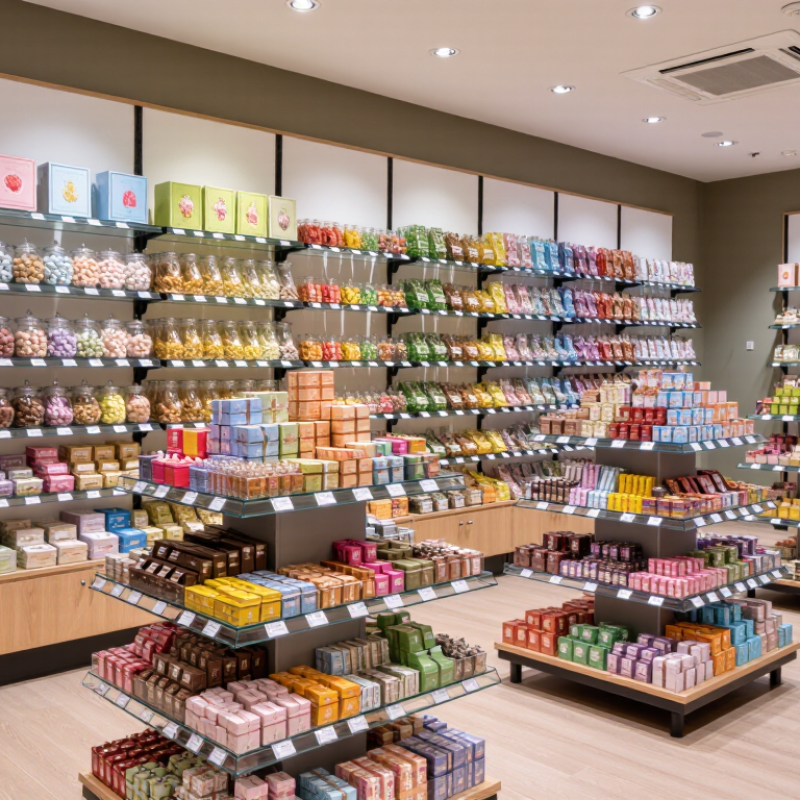
Retail buyers need candy shop shelves that protect products, guide shoppers, and use limited floor space wisely. Ten practical choices include adjustable wall shelving, freestanding tiered units, countertop acrylic risers, wire basket racks, rotating displays, gravity-feed shelves, corner units, low children-friendly shelves, glass-door cabinets, and mobile rolling racks. Each option serves a different selling situation.

In my retail planning experience, adjustable wall shelving works well for mixed package sizes. Tiered units make bright packaging visible from several aisles away. Rotating displays suit small items near checkout, while gravity-feed shelves support neat product rotation. Glass-door cabinets can protect premium or delicate confectionery, but they may slow browsing. Low shelves improve access, although they need more frequent restocking. Check weight limits carefully. A sagging shelf looks careless and creates avoidable safety concerns. Rounded edges, stable feet, and washable surfaces also matter during daily cleaning.

Tips: Measure aisle width before ordering. Leave enough space for carts and mobility devices. Use clear price labels and keep similar products together. Test one shelf with real stock for a week. Watch which rows empty first. That evidence is more useful than a showroom impression. Rotate older products forward and inspect packaging each morning. I would avoid choosing every shelf from one style; a uniform display can feel tidy, yet it may reduce impulse purchases. Some layouts need revision after customers move through them.

How to Compare Shelf Capacity, Materials, and Durability

10 Best Candy Shop Shelves for Retail Buyers?

Shelf selection affects how much candy you display, how quickly staff restock it, and how safely products remain accessible. Compare capacity by usable shelf width, depth, and vertical spacing, not by the unit’s outside measurements. A shelf measuring 36 inches wide may hold less after brackets and dividers are installed. Measure your package sizes, including seasonal bags and boxed items. Leave enough hand space for shoppers. Crowded shelves look untidy and slow replenishment.

Material choices should match your store’s traffic and cleaning routine. Powder-coated steel handles frequent loading and resists everyday scratches. Laminated wood can create a warmer appearance, but damaged edges may absorb moisture. Clear acrylic improves visibility, although it can show fingerprints and develop cracks under rough handling. Check the weight rating for every shelf level. Do not assume a thick-looking panel is stronger. Ask for load data and inspect joints, fasteners, and adjustable supports.

Tips: Load one sample shelf before ordering several units. Test the heaviest candy package, repeated restocking, and a careful wipe-down. Watch for bending, wobbling, sharp edges, or difficult adjustments. Record the results. A ten-minute trial may reveal flaws that product photos hide.

Durability also depends on design details. Feet should remain stable on slightly uneven floors. Dividers should move without tools. Replaceable parts are valuable when stores operate for years. I have found that easy cleaning is sometimes more useful than premium appearance. Still, capacity estimates can be imperfect because packaging changes and displays evolve. Build in modest spare space.

Choosing Shelves Based on Store Layout, Budget, and Sales Goals

For retail buyers, the ten best candy shop shelves depend on layout, budget, and sales goals. Wall bays suit narrow stores and keep popular products visible at eye level. Gondola shelving creates flexible aisles for larger assortments. Endcaps support seasonal promotions and impulse purchases. Tiered countertop shelves work near checkout, while rotating racks add variety in small spaces. Dump bins deliver strong visual impact, but they can look untidy without daily care. According to the National Confectioners Association, U.S. confectionery retail sales reached $54.1 billion in 2023. That scale rewards clear organization, not simply more stock.

Budget matters. A basic metal gondola usually offers better long-term value than custom wood shelving. Modular shelves also allow buyers to test different product heights and pack sizes. For premium presentation, backlit or glass-front units may support higher price points, though maintenance costs can rise quickly. NielsenIQ’s 2024 consumer research continues to show strong interest in convenient snacking, making checkout placement worth testing. Still, one layout rarely works everywhere. I have seen attractive shelves fail because shoppers could not reach the lower rows comfortably.

Tips:

  • Keep bestsellers between waist and eye level.
  • Leave visible gaps between product groups.
  • Use small signs with prices and flavor cues.
  • Measure weekly sales by shelf position.
  • Try one change at a time.
  • A simple photo audit can reveal blocked labels, empty hooks, and messy bins before customers complain.

Plug & Play Installation

Our installation services are top-notch, delivering modular systems for any application on time in plug & play condition. We leave nothing for you to figure out, set up, or fix. All you’ve to do is just step in, and get going with your business.

Dismantling & Reassembling

We hold a long-term view when we build modular rooms taking into consideration your changing needs. Whether it’s shifting your workspace to a new site, redesigning your unit to fit new requirements, or simply clearing the area at the end of the project, our Dismantling & Reassembling teams are pressed into service to get the job done in the quickest possible time and minimum resource wastage.

Interior Designing

Our interior designs combine both functional and aesthetic aspects to provide you with physical and emotional comfort. We ask you for your preferences and give the best possible solutions aligned to your tastes. Our units are built to be modern, stylish, and elegant.

Bespoke Solutions

We understand that every project is unique and therefore has a different set of requirements. That’s why we believe in customizing our solutions to fit individual needs. We are equipped with the right talents, technology, and skillset to offer bespoke modular units, without compromising on turnaround time or quality.

Aftersales Service

The benefits of choosing Containers ME continues long after the installation of the units as we provide aftersales service for as long as you need. All you have to do is sign the Annual Maintenance Contract (AMC) and enjoy technical support for all the maintenance-related issues. By signing the contract, you can rest assured that a highly professional team of dedicated staff are at your service all year round to attend to your needs.

Customized Container Solutions

We specialize in Customized Container Solutions designed to meet diverse needs across the UAE. Our offerings include customized modular containers that cater to various applications, from tailor-made container solutions to bespoke container designs.

Whether you’re looking for personalized container homes or custom modular containers, we have you covered. Our customized container offices provide functional workspaces, while our customized portable containers ensure flexibility on-site. Explore our range of custom container storage units and customized cargo containers to optimize your space.

We also offer custom container leasing and custom container fabrication services, along with customized sea containers designed for secure transport. For specialized needs, our specialized container modifications will help you create the perfect solution for your requirements in both Dubai and the broader UAE.

Get a quote

Get a quote