Blogs

10 Best Grinding Tools for Professional Buyers

Choosing a Grinding Tool is a production decision, not just a purchase. The right setup can improve finish consistency, control cycle time, and reduce avoidable wheel changes. Yet a tool that performs well on a test piece may disappoint on a hot production line. Small details matter: material hardness, stock removal, access, operator skill, and dust extraction.

Market reports underline the scale of the category, though their figures need context. Fortune Business Insights’ 2024 Grinding Machines Market report estimates the global market at US$5.52 billion in 2023 and projects US$7.47 billion by 2032. That forecast concerns grinding machines broadly, not every grinder, abrasive, or hand tool. It signals sustained industrial demand, but it does not identify the best choice for an individual shop. A forecast is not a buying specification.

This guide compares ten options through practical criteria: power, precision, durability, consumable cost, and suitability for common materials. It also considers the realities buyers face, including vibration, maintenance access, and whether replacement parts are readily available. Details worth checking. Specifications can look impressive on paper, but real performance depends on the application and setup. No single ranking can settle every workshop’s priorities; some trade-offs deserve a closer look before a purchase order is approved.
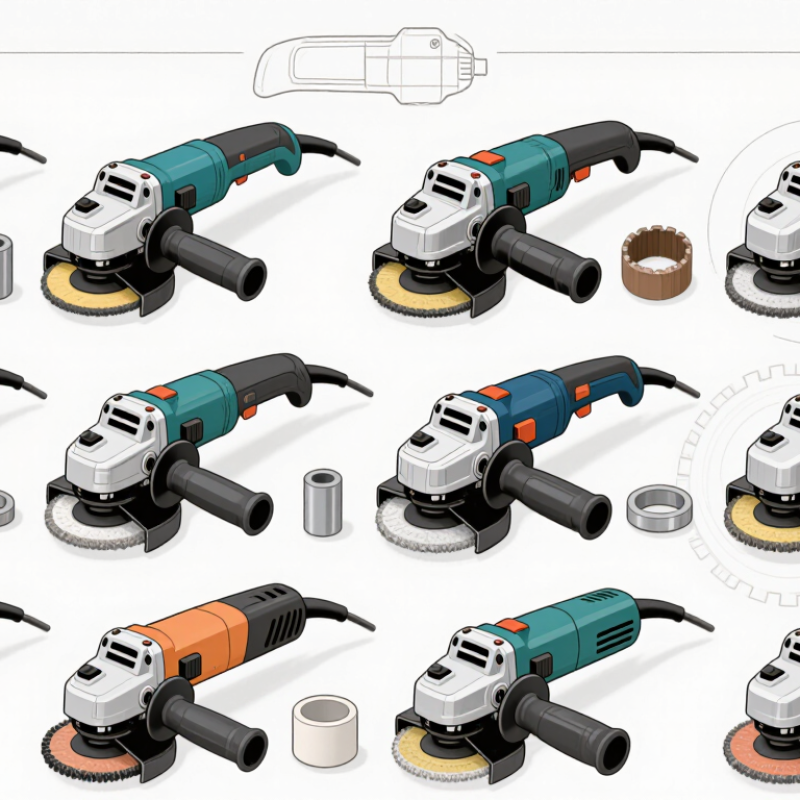
10 Best Grinding Tools for Professional Buyers

How Professional Grinding Tools Are Classified by Design and Function

Professional grinding tools are best classified by their construction and the work they perform. A bench grinder stays fixed on a workbench, making it practical for sharpening, deburring, and shaping small metal parts. An angle grinder uses a rotating disc for cutting, weld cleanup, or surface preparation, while its side handle helps control pressure. Straight and die grinders reach narrow openings, such as the inside edge of a cast component. Belt grinders use a moving abrasive belt to smooth broad surfaces and blend edges.

Different jobs. Different controls.

Function provides another useful classification: stock removal, edge finishing, sharpening, and precision surface grinding. A coarse abrasive removes material quickly but can leave deep marks; a finer grade improves the finish but works more slowly. For purchasing, match the tool’s speed, power, abrasive size, and duty rating to the material and expected workload. Check guard compatibility, grip comfort, vibration, and dust extraction options before comparing price. These details matter during long shifts, not just during a brief product demonstration.

The categories are helpful, but not perfectly tidy. An angle grinder can remove weld material or prepare a surface, depending on its disc and technique. A compact die grinder may feel precise, yet it can still remove material too aggressively. Buyers should verify operating limits in the manufacturer’s instructions and test the setup on sample stock where possible.


Which Performance Factors Matter Most to Professional Buyers

For professional buyers, a grinder’s real test is steady performance under load, not its maximum speed on a specification sheet.

Compare material removal on the metals or surfaces your team actually processes. A tool that cuts quickly but leaves deep scratches may add costly finishing time. Check whether speed controls remain stable when pressure changes. That matters when switching from rough stock removal to a finer finish.

A clean spec sheet can still mislead.

Heat, vibration, and dust control affect both work quality and operator comfort across a full shift. During a practical trial, note how warm the housing becomes after repeated passes and whether the grip feels secure with gloves. Listen for changes in motor pitch under load. Small details count.

Inspect wheel changes, guard adjustment, and access to routine service points; delays here can interrupt production. Match the tool’s rated capacity and accessories to the materials and task, and confirm that replacement parts are available through a dependable supply channel.

I would not judge comfort from a brief demonstration alone. One rushed test can miss fatigue that appears after an hour.

Compare purchase cost with expected upkeep, but treat estimated service life cautiously unless it reflects similar working conditions.

Ten Grinding Tools Commonly Used in Professional Work

In professional work, the right grinder depends on material, geometry, finish, and production volume. Common choices include angle grinders, bench grinders, die grinders, straight grinders, belt grinders, surface grinders, cylindrical grinders, centerless grinders, tool-and-cutter grinders, and internal grinders. That is a broad range. Portable angle and die grinders handle weld cleanup and edge blending. They also reach confined areas. Bench and straight grinders suit controlled work on tools or small parts.

Belt grinders remove stock quickly, while surface grinders produce flat, closely controlled faces. Cylindrical and centerless machines finish round components, often where repeatability matters. Tool-and-cutter grinders restore cutting edges; internal grinders work inside bores. Setup changes everything. Choose an abrasive suited to the workpiece, then check its condition, speed rating, and fit. Keep guards in place and wear eye and face protection.

Operators should secure the workpiece and avoid forcing contact. Excess pressure can overheat edges or spoil a finish. A test pass on scrap can reveal chatter, abrasive loading, or a poor finish before valuable parts are touched. Yet this step is sometimes skipped when schedules tighten. That is worth reconsidering: speed matters, but consistent results and predictable tool life usually matter more.

How to Match Grinding Tools to Materials and Applications

Choosing a grinding tool starts with the material, not the machine. For stainless steel, a suitable abrasive and moderate pressure help limit heat and discoloration.

Heat is the warning.

If the workpiece turns blue, pause and reassess the abrasive, speed, and contact time. For cast iron, a wheel designed for that material can handle its hard, brittle surface more predictably. Aluminum needs an abrasive that resists loading, since soft metal can clog the working face quickly. Match the wheel or disc to the tool’s rated speed, too. Never assume a larger tool can safely use a faster accessory.

The application matters just as much. A bonded wheel can remove stock from a flat steel edge, while a flap disc offers more control when blending welds or smoothing curved surfaces. For tight corners, a small mounted point may reach where a wide disc cannot.

Check the manufacturer’s material and speed ratings, then test on a scrap piece when possible. Watch for vibration, uneven wear, or a changing surface color. These signs can point to a poor match or excessive pressure.

There is no perfect shortcut: material grades vary, and a tool that works well on one job may behave differently on the next. Keep the workpiece secure and use the required protective equipment.

How to Evaluate Safety, Durability, and Operating Costs

A professional grinding tool should be judged by more than its rated power. Check that the guard adjusts securely and stays between the operator and the wheel. Test the switch, grip, and balance while wearing the protective equipment specified by the manufacturer. Dust control matters, too; grinding fine material can quickly cloud a small work area. Confirm that the tool accepts the accessories and wheel sizes your jobs require.

Durability shows in details. Inspect the housing, cable, vents, and spindle for looseness or damage, then run the tool briefly and listen for unusual vibration. Ask about service intervals and replacement-part availability. Operating cost includes more than the purchase price: wheels, energy use, downtime, and operator training all add up. Compare these costs across a realistic workload, not a best-case estimate. Even careful tests have limits; a short trial may not reveal long-term wear.

Tips: Keep a simple log of wheel changes, repair time, and vibration complaints. Compare results after several weeks. A spreadsheet is enough. One overlooked cost can change the decision.

Article Source:

Plug & Play Installation

Our installation services are top-notch, delivering modular systems for any application on time in plug & play condition. We leave nothing for you to figure out, set up, or fix. All you’ve to do is just step in, and get going with your business.

Dismantling & Reassembling

We hold a long-term view when we build modular rooms taking into consideration your changing needs. Whether it’s shifting your workspace to a new site, redesigning your unit to fit new requirements, or simply clearing the area at the end of the project, our Dismantling & Reassembling teams are pressed into service to get the job done in the quickest possible time and minimum resource wastage.

Interior Designing

Our interior designs combine both functional and aesthetic aspects to provide you with physical and emotional comfort. We ask you for your preferences and give the best possible solutions aligned to your tastes. Our units are built to be modern, stylish, and elegant.

Bespoke Solutions

We understand that every project is unique and therefore has a different set of requirements. That’s why we believe in customizing our solutions to fit individual needs. We are equipped with the right talents, technology, and skillset to offer bespoke modular units, without compromising on turnaround time or quality.

Aftersales Service

The benefits of choosing Containers ME continues long after the installation of the units as we provide aftersales service for as long as you need. All you have to do is sign the Annual Maintenance Contract (AMC) and enjoy technical support for all the maintenance-related issues. By signing the contract, you can rest assured that a highly professional team of dedicated staff are at your service all year round to attend to your needs.

Customized Container Solutions

We specialize in Customized Container Solutions designed to meet diverse needs across the UAE. Our offerings include customized modular containers that cater to various applications, from tailor-made container solutions to bespoke container designs.

Whether you’re looking for personalized container homes or custom modular containers, we have you covered. Our customized container offices provide functional workspaces, while our customized portable containers ensure flexibility on-site. Explore our range of custom container storage units and customized cargo containers to optimize your space.

We also offer custom container leasing and custom container fabrication services, along with customized sea containers designed for secure transport. For specialized needs, our specialized container modifications will help you create the perfect solution for your requirements in both Dubai and the broader UAE.

Get a quote

Get a quote