Blogs

What Is the Best Steel Fire Rated Shutter in 2026?

What Is the Best Steel Fire-Rated Shutter in 2026? The answer depends on the opening, fire-risk assessment, and tested assembly—not a product label alone. The Steel Fire-Rated Shutter should match the required fire-resistance period and the building’s operating conditions. A busy loading bay faces different demands from a protected corridor. Small details matter: opening width, guide alignment, control type, and clearance beneath the curtain.

NFPA’s report “Fire Loss in the United States During 2022” estimated 1,504,500 fires and $18 billion in property damage. These figures show why reliable fire separation deserves careful attention. They do not prove that one shutter type prevents every loss. That distinction matters. A shutter’s performance depends on its complete tested configuration, installation, inspection, and maintenance. In the United States, UL 10B and UL 10C describe fire-test methods for door assemblies, while NFPA 80 addresses inspection, testing, and maintenance. Buyers should confirm which standards and approvals apply to their project and location.

In 2026, a sound comparison should consider verified test documentation, fire rating, dimensions, operating cycle, safety features, service access, and total ownership cost. Ask how the unit closes during an alarm and how staff can test it without disrupting daily work. Request written maintenance requirements, too. A low quote may hide practical compromises. And specifications can be confusing. The best choice is the shutter that fits the opening, has traceable evidence behind its rating, and can be maintained consistently over time.
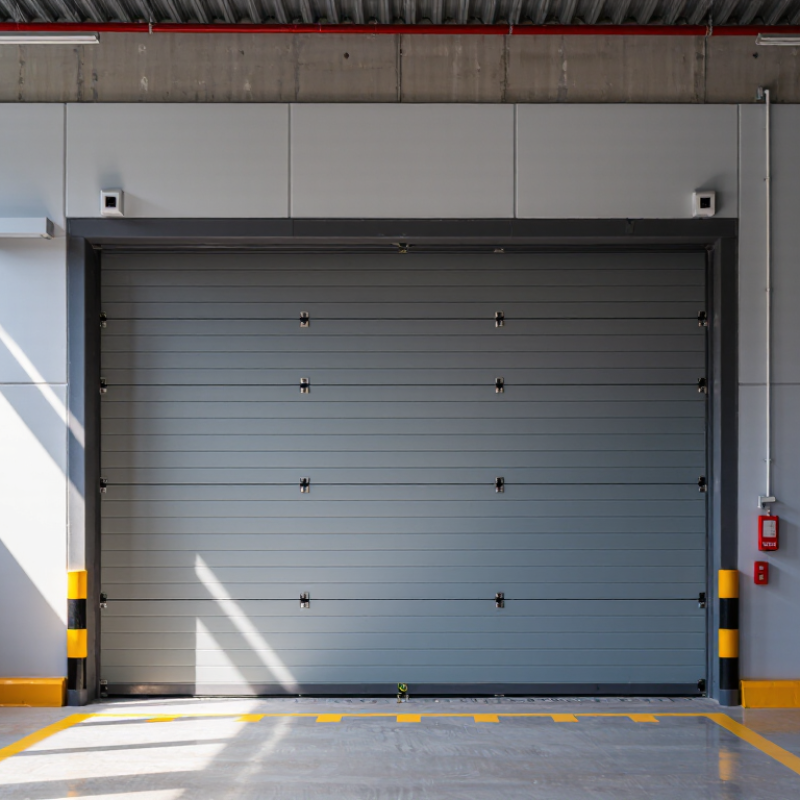
What Is the Best Steel Fire Rated Shutter in 2026?

Define Steel Fire-Rated Shutters and UL 10B/10C Fire-Test Listings

Steel fire-rated shutters are assemblies designed to close an opening and limit fire and heat passage for a tested period. A typical unit includes interlocking steel slats, side guides, a bottom bar, a barrel, and a closing mechanism. Some systems close automatically when triggered by a fire alarm or heat-responsive device. The shutter is only as dependable as its complete installation.

UL 10B and UL 10C identify different fire-test methods for door assemblies. UL 10B evaluates fire exposure under neutral-pressure conditions; UL 10C uses positive pressure near the door opening. A listing should identify the tested assembly and its permitted rating, not merely say “fire rated.” Check the label, approved drawings, and installation instructions. Small changes matter.

A shutter’s listing applies to a defined configuration, including guides, hood, hardware, operator, and mounting details. Verify that the opening size and wall construction match the listed conditions. Also confirm how the unit releases, closes, and resets during routine testing. Those details are easy to overlook. UL 10B or 10C alone does not establish suitability for every opening; project requirements and local review still matter. Labels can be hard to interpret, so request complete documentation rather than relying on a sales description.

What Is the Best Steel Fire Rated Shutter in 2026? — Define Steel Fire-Rated Shutters and UL 10B/10C Fire-Test Listings
Comparison Dimension What to Know How to Choose
Definition A steel fire-rated shutter is a listed opening-protective assembly, typically made with a steel curtain, guides, barrel, hood, and a release or closing system. It is designed to close a wall opening during a fire. Evaluate the complete listed assembly, not just the steel curtain or its material thickness.
What “best” means There is no single best shutter for every building. The appropriate choice is one whose fire-test listing, rating, size, mounting arrangement, and operation suit the specific opening and applicable code. Start with the opening’s required protection and project specifications, then verify the exact product configuration.
UL 10B UL 10B is a fire-test standard for fire door assemblies. It uses a neutral-pressure fire-test method. A listing to UL 10B identifies the assembly and conditions covered by that listing. Confirm that UL 10B is accepted by the applicable code, authority having jurisdiction (AHJ), and project specification.
UL 10C UL 10C is a fire-test standard for fire door assemblies using a positive-pressure fire-test method. Its test method is distinct from UL 10B; the standards should not be treated as interchangeable. Where the code or specification calls for positive-pressure testing, select an assembly specifically listed for UL 10C.
Fire-test listing A listing applies to the tested and certified assembly within stated limits. Permitted sizes, wall conditions, mounting details, hardware, release devices, and other options can vary by listing. Check the listing documentation for the exact model or assembly, maximum size, installation method, and approved components.
Fire-protection rating Rated durations are product- and configuration-specific. Common fire-door protection ratings include 45 minutes, 1 hour, 1½ hours, and 3 hours, but not every shutter is available at every rating. Match the listed rating to the opening-protective rating required by the applicable building code and the fire-resistance rating of the surrounding construction.
Curtain and guides The curtain and guide arrangement must be part of the tested assembly. Curtain profiles, dimensions, guide types, and installation clearances may affect which configurations are permitted. Verify the approved curtain, guides, clearances, and mounting details in the installation instructions and listing.
Closing and release system Fire shutters may use a fusible-link release, an approved electrical release, or another listed closing arrangement. The exact method depends on the assembly and applicable requirements. Confirm the release and closing method is listed, compatible with any fire-alarm interface, and coordinated with the building’s fire-protection design.
Smoke protection A fire-rated shutter listing does not by itself establish a smoke-control or smoke-and-draft-control rating. Those functions may require separate testing, labeling, or accessories. If smoke leakage control is required, verify that the specific assembly has the additional applicable approval; do not infer it from a fire rating alone.
Installation and inspection Fire performance depends on installation and maintenance consistent with the listing and the manufacturer’s instructions. Changes to listed components can affect compliance. Use qualified installers and follow the required inspection, testing, and maintenance provisions for the project and jurisdiction.
Practical selection checklist Identify the required rating, accepted test standard, opening dimensions, wall type, mounting conditions, operation, release method, and any smoke-control needs. The strongest choice is the listed steel shutter that satisfies every project requirement in its exact installed configuration—not simply the one with the longest advertised rating.
Important: Fire-door requirements and accepted test standards depend on the adopted code, project documents, and AHJ. Verify current listing documentation and obtain approval for the specific opening before selection.

Compare Listed Fire Ratings, Including Models Rated Up to 4 Hours

Choosing the best steel fire-rated shutter in 2026 starts with the listed rating, not the thickest-looking curtain. Options may range from shorter ratings to models listed for up to four hours. The right choice depends on the opening, the surrounding wall, and the building’s required protection. Details matter.

A four-hour rating can suit certain openings, but it is not automatically the safest or most suitable option. Ratings apply to specific tested assemblies and installation conditions. Check the product label and listing for the permitted wall type, maximum opening size, guides, hood, and operating system. A shutter installed outside those conditions may not deliver its listed performance.

Compare the required rating with the project documents and locally adopted building and fire codes. Also confirm whether the listing requires a particular closing device, inspection access, or release mechanism. These details can be easy to overlook on a drawing. A qualified fire-protection professional or building official can help verify the selection before purchase. I would not choose a four-hour model based on the number alone; the assembly and installation matter just as much.

Match the Shutter’s Listing to the Wall and Opening Protection Requirement

What Is the Best Steel Fire Rated Shutter in 2026?
Match the Shutter’s Listing to the Wall and Opening Protection Requirement

The best steel fire-rated shutter is the one listed for the actual wall and opening—not simply the one with the highest rating on a brochure. Check the project documents for the required opening-protection rating, wall construction, and maximum opening size. A shutter tested for one assembly may not suit a different wall type or installation. Small details matter.

Review the listing and installation instructions together. Confirm permitted dimensions, guides, brackets, anchors, clearances, and operating controls. On site, a concrete block wall and a framed wall can present very different attachment conditions. This is easy to miss when a schedule names only the shutter rating. I would recheck the wall details before ordering; drawings can be incomplete, and assumptions are not a substitute for verification. Also confirm that the proposed installation matches the approved documents and the project’s applicable requirements. Ask the design professional or approving authority to resolve discrepancies before work begins. After installation, keep the listing information accessible for inspection and maintenance.

What Is the Best Steel Fire-Rated Shutter in 2026?

Match the shutter’s listed fire-protection rating to the opening-protection requirement for the specific wall and opening.

The chart shows example rating relationships from the 2021 International Building Code, Table 716.1(2): a 2-hour fire barrier corresponds to a 90-minute opening protective, a 1-hour fire barrier to 60 minutes, a 1-hour fire partition to 45 minutes, and a ½-hour fire partition to 20 minutes. Confirm the locally adopted code, wall type, opening location, and the shutter’s complete listing before selection.

Assess Release, Smoke-Control, and Safety Features Against Applicable Codes

A strong steel fire-rated shutter is not defined by its curtain alone. Its release sequence, smoke performance, and safe closing behavior matter just as much. Confirm the required fire-resistance period against the approved building design and locally adopted code edition. Depending on its tested configuration, a shutter may close through an alarm signal, a thermal device, or both. The control panel should show faults clearly, and backup power should be checked under load. Test the whole sequence.

Smoke control needs separate scrutiny. A fire-rated curtain does not automatically limit smoke leakage; check for applicable test evidence and compatible perimeter seals. Inspect the headbox, side guides, floor gap, and adjoining wall construction. Small gaps can compromise the assembly. During a witnessed drop test, verify warning signals, controlled descent, obstruction response, and reset procedures. Keep people clear. Ask the relevant code authority and a qualified installer to confirm acceptance criteria, inspection intervals, and alarm interfaces. A neat specification can still miss a crooked guide. Match the documentation to the actual opening, control logic, and maintenance plan—not just the fire rating.

Compare Maintenance Needs Using NFPA 80’s Annual Inspection Requirement

When comparing steel fire-rated shutters in 2026, look beyond the rating label. NFPA 80 calls for fire door assemblies to be inspected and drop-tested at least annually, subject to the adopted code and local authority requirements. The inspection should confirm that the shutter closes fully, moves freely, and has no damage that could prevent operation. A technician may check the guides, curtain, bottom bar, release components, and nearby obstructions. Small defects matter. A bent guide or a box stored beneath the curtain can stop a proper closure.

Maintenance needs vary with the shutter’s design and condition. A straightforward assembly with accessible parts may be easier to inspect and service than one with complex controls or limited access. Ask how the shutter is tested, what adjustments require trained service, and whether replacement parts are readily available. Keep dated inspection records and note repairs rather than relying on a pass-or-fail tick. That takes time. A neat log can still miss a sluggish descent, so observe a full test where permitted and safe. Exact procedures depend on the applicable NFPA 80 edition and site conditions.

Plug & Play Installation

Our installation services are top-notch, delivering modular systems for any application on time in plug & play condition. We leave nothing for you to figure out, set up, or fix. All you’ve to do is just step in, and get going with your business.

Dismantling & Reassembling

We hold a long-term view when we build modular rooms taking into consideration your changing needs. Whether it’s shifting your workspace to a new site, redesigning your unit to fit new requirements, or simply clearing the area at the end of the project, our Dismantling & Reassembling teams are pressed into service to get the job done in the quickest possible time and minimum resource wastage.

Interior Designing

Our interior designs combine both functional and aesthetic aspects to provide you with physical and emotional comfort. We ask you for your preferences and give the best possible solutions aligned to your tastes. Our units are built to be modern, stylish, and elegant.

Bespoke Solutions

We understand that every project is unique and therefore has a different set of requirements. That’s why we believe in customizing our solutions to fit individual needs. We are equipped with the right talents, technology, and skillset to offer bespoke modular units, without compromising on turnaround time or quality.

Aftersales Service

The benefits of choosing Containers ME continues long after the installation of the units as we provide aftersales service for as long as you need. All you have to do is sign the Annual Maintenance Contract (AMC) and enjoy technical support for all the maintenance-related issues. By signing the contract, you can rest assured that a highly professional team of dedicated staff are at your service all year round to attend to your needs.

Customized Container Solutions

We specialize in Customized Container Solutions designed to meet diverse needs across the UAE. Our offerings include customized modular containers that cater to various applications, from tailor-made container solutions to bespoke container designs.

Whether you’re looking for personalized container homes or custom modular containers, we have you covered. Our customized container offices provide functional workspaces, while our customized portable containers ensure flexibility on-site. Explore our range of custom container storage units and customized cargo containers to optimize your space.

We also offer custom container leasing and custom container fabrication services, along with customized sea containers designed for secure transport. For specialized needs, our specialized container modifications will help you create the perfect solution for your requirements in both Dubai and the broader UAE.

Get a quote

Get a quote