Choosing the China best Flat Bottom Pouches manufacturer requires more than comparing prices. The right partner should combine material expertise, stable production, accurate printing, and dependable quality control. A pouch may look simple on a product shelf. Inside, however, it must manage moisture, oxygen, heat, weight, and repeated handling.
Alison Keane, president and CEO of the Flexible Packaging Association, has said, “Packaging must protect the product while using resources responsibly.” That principle fits Flat Bottom Pouches well. A strong manufacturer should recommend suitable films, barrier layers, zipper systems, and seal structures for each product. Coffee, pet food, snacks, and powdered goods rarely need the same construction. Small differences matter. A weak seal can ruin an otherwise attractive package.
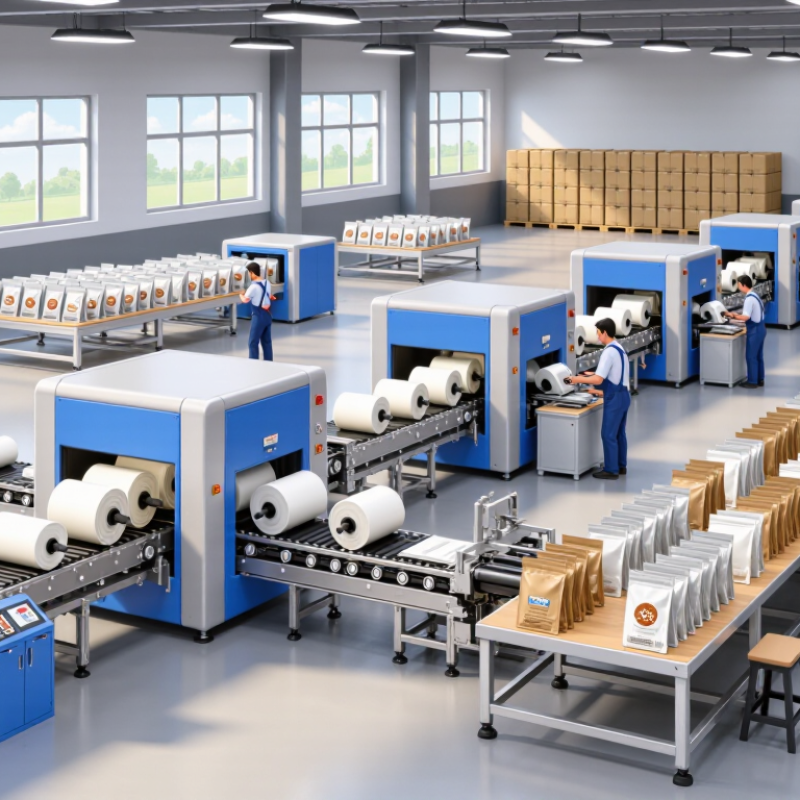
Look closely at the factory, not only the catalog. Ask about pouch-making equipment, inspection procedures, production tolerances, and sample approval. Request evidence of batch consistency. Check whether the supplier can support artwork adjustments, filling trials, and after-sales communication. Certifications can help, but they do not replace practical verification.
This is where buyers sometimes make mistakes. The lowest quotation may hide thinner materials, slower troubleshooting, or inconsistent dimensions. A beautiful sample is not enough. The pouch must perform during filling, transport, storage, and retail display.
There is no universal best manufacturer. The better choice depends on product sensitivity, order volume, target market, and packaging goals. This guide compares key capabilities, common risks, and selection criteria for identifying a reliable China Flat Bottom Pouches supplier.
China Best Flat Bottom Pouches Manufacturer?
What Is a Flat Bottom Pouch and Why Is It Used in Flexible Packaging?
A flat bottom pouch uses a reinforced base and side gussets. This structure lets the pouch stand upright on shelves, counters, and warehouse pallets. Its squared shape creates a wider display face than many traditional pillow bags. It also supports stable filling and convenient resealing.
The Flexible Packaging Association’s 2023 U.S. Industry Report valued the sector at about 39 billion dollars. It also reported that flexible packaging represented roughly 21% of the U.S. packaging market by value. These figures explain the demand for lightweight, space-efficient formats. Smithers’ global flexible packaging research also identifies pouch growth as a major market trend, driven by portability and material efficiency.
Practical testing still matters. A well-made flat bottom pouch should remain upright after filling, stacking, and repeated opening. The base seal needs careful inspection. Poor gusset alignment can create tipping or leakage risks. Barrier selection depends on the product’s oxygen, moisture, light, and aroma sensitivity. Some pouches use less material than rigid containers, but that advantage is not automatic. Design teams should compare the full package system, including transport protection and end-of-life conditions. The best manufacturer should provide seal-strength records, dimensional checks, and migration documentation. Small details matter here.
| Data Dimension | Typical Flat Bottom Pouch Information | Why It Matters in Flexible Packaging | Common Industry Reference or Selection Consideration |
|---|---|---|---|
| Basic Definition | A preformed pouch with a flat base and gusseted side panels. It can stand upright and generally provides a broad front and back display area. | Combines the shelf presence of a rigid container with the lower material use and flexibility of a pouch. | Often described as a box pouch, block-bottom pouch, or flat-bottom stand-up pouch. |
| Typical Panel Configuration | Common formats include front, back, bottom, and two side gussets; some designs use additional folded panels or a top gusset. | More panels can improve shape retention, printable surface area, and product presentation. | Panel count should be matched to filling equipment, forming method, and desired appearance. |
| Typical Capacity Range | Approximately 250 g to 5 kg for many dry-food and pet-food applications, with larger or smaller formats possible. | Capacity depends on product bulk density, pouch dimensions, seal width, headspace, and filling process. | Capacity should be specified by both product weight and product volume; powders, granules, and flakes occupy different volumes. |
| Base Stability | High A properly formed flat base allows the pouch to stand on shelves, pallets, and display surfaces. | Improves visibility and reduces the need for secondary cartons or rigid containers in many applications. | Stability is affected by base geometry, film stiffness, seal design, fill level, and product distribution. |
| Space Efficiency | Uses less empty structural material than many rigid containers and can be shipped and stored in a relatively compact form before filling. | May reduce packaging volume, warehouse requirements, and transport inefficiency. | Actual savings depend on the filled shape, pallet pattern, case pack, and distribution conditions. |
| Common Product Applications | Dry pet food, coffee, tea, snacks, grains, nuts, confectionery, powdered foods, supplements, detergents, and non-food granules. | The format supports products that benefit from resealing, upright display, and protection from moisture or oxygen. | Product-specific testing is required for sharp edges, oily contents, fine powders, and heavy fills. |
| Typical Closure Options | Press-to-close zipper, child-resistant zipper, slider zipper, hook-to-hook closure, tear notch, laser score, or spout. | Closures improve convenience, portion control, and protection after the first opening. | Closure selection should consider product size, powder contamination, opening force, and applicable safety requirements. |
| Typical Film Structures | Common structures include PET/PE, PET/CPP, OPP/PE, PET/PE with barrier layers, and recyclable PE-based or PP-based structures. | Different layers provide combinations of printability, stiffness, heat sealing, puncture resistance, and barrier performance. | Material selection should be based on shelf life, filling temperature, seal conditions, product chemistry, and recycling infrastructure. |
| Moisture Barrier | Can range from basic moisture resistance to high moisture barrier, depending on the polymer layers and barrier coating or foil used. | Helps protect hygroscopic products from caking, softening, loss of crispness, and quality deterioration. | Water vapor transmission rate should be specified when moisture sensitivity is important. |
| Oxygen and Aroma Barrier | Barrier levels vary widely. Metallized films, EVOH, polyamide, coatings, or aluminum foil may be used when stronger protection is required. | Helps reduce oxidation, aroma loss, flavor changes, and color degradation. | Oxygen transmission rate, aroma retention, and headspace control should be evaluated together. |
| Light Protection | Clear films provide product visibility; opaque, metallized, or foil-containing structures provide greater protection from light. | Useful for light-sensitive foods, ingredients, chemicals, and products affected by ultraviolet exposure. | Choose transparency or opacity according to product stability and merchandising requirements. |
| Seal Performance | Heat-sealed top, side, and bottom seams are designed to provide package integrity under normal handling and distribution conditions. | Strong, clean seals help prevent leakage, contamination, and loss of barrier performance. | Seal strength, hot-tack performance, seal-through-contamination ability, and leak testing should be verified. |
| Filling Compatibility | Can be filled manually, on semi-automatic equipment, or on automated premade-pouch filling and sealing lines. | Supports different production volumes and product types without requiring a single packaging process. | Important equipment variables include pouch dimensions, opening method, fill weight, zipper position, and sealing temperature. |
| Print and Branding Area | Provides large front and back panels suitable for rotogravure, flexographic, or digital printing, subject to the selected film structure. | Creates strong shelf visibility while leaving room for product information, instructions, and regulatory statements. | Artwork should allow for gusset folds, seals, zippers, tear notches, barcodes, and required quiet zones. |
| User Convenience | Lightweight format with options for resealing, easy opening, carrying handles, rounded corners, and controlled dispensing. | Improves storage, repeated use, and consumer handling compared with some single-use rigid formats. | Opening force and zipper usability should be tested with representative users and product conditions. |
| Material Efficiency | Generally uses less material by weight than many rigid packaging formats for an equivalent product quantity, although the result varies by design. | Lower package weight can support efficient transport and reduce packaging material consumption. | Compare the complete pack system, including secondary packaging, product protection, waste, and distribution losses. |
| Recyclability Consideration | Mono-material PE or PP structures may be designed for improved recycling compatibility where suitable collection and recycling systems exist. | Material simplification can support end-of-life recovery, but performance requirements may limit the available structure. | Recyclability depends on local guidelines, structure, inks, adhesives, closures, size, and actual recycling infrastructure. |
| Sustainability Trade-Off | Potential benefits include low package weight, efficient logistics, and reduced rigid-material use; multilayer barriers can make recycling more difficult. | Packaging sustainability should be evaluated through a complete life-cycle perspective rather than material weight alone. | Consider product protection, shelf-life extension, material efficiency, recycled content, reuse potential, and end-of-life options. |
| Quality-Control Tests | Typical tests include visual inspection, dimensional checks, seal strength, leak testing, drop testing, zipper function, compression, and barrier testing. | Testing confirms that the pouch can withstand filling, transport, storage, opening, and repeated use. | Test conditions should represent the actual product, fill weight, temperature, humidity, transport route, and expected shelf life. |
| Best-Fit Product Profile | Products that need upright display, broad printable panels, resealable access, moderate-to-high barrier protection, and efficient shipping. | Flat bottom pouches are especially useful when presentation and functionality are both important. | They may be less suitable when the product requires rigid protection, high stacking strength, or a fully transparent container. |