
China has become a major manufacturing base for global Video Entry Phone buyers. Its factories offer broad options, from compact apartment panels to weather-resistant villa stations with 7-inch indoor monitors. However, “best” cannot mean the lowest quoted price. It must reflect reliability, integration, support, and measured security.
Industry data supports this growing opportunity. MarketsandMarkets estimates that the smart doorbell market could grow from about USD 5.4 billion in 2023 to USD 11.5 billion by 2028. Grand View Research also reports strong expansion in global smart home security equipment. These categories overlap with Video Entry Phone demand, especially where IP connectivity, mobile alerts, and access management are required. Still, market forecasts are not product guarantees.
Performance matters more.
Bruce Schneier, a widely respected cybersecurity expert, states, “Security is a process, not a product.” This principle applies directly to connected entry systems. A dependable Chinese supplier should explain firmware updates, password policies, encryption, remote management, and data handling. Buyers should also test night vision, microphone clarity, relay response, and operation after repeated outdoor exposure.
This guide compares China-made Video Entry Phone solutions through a global buyer’s lens. It considers certifications, protocol compatibility, installation experience, warranty terms, and after-sales communication. Some conclusions may remain imperfect, because factory claims and field performance can differ. A polished brochure cannot replace a sample test. That uncomfortable gap deserves attention.
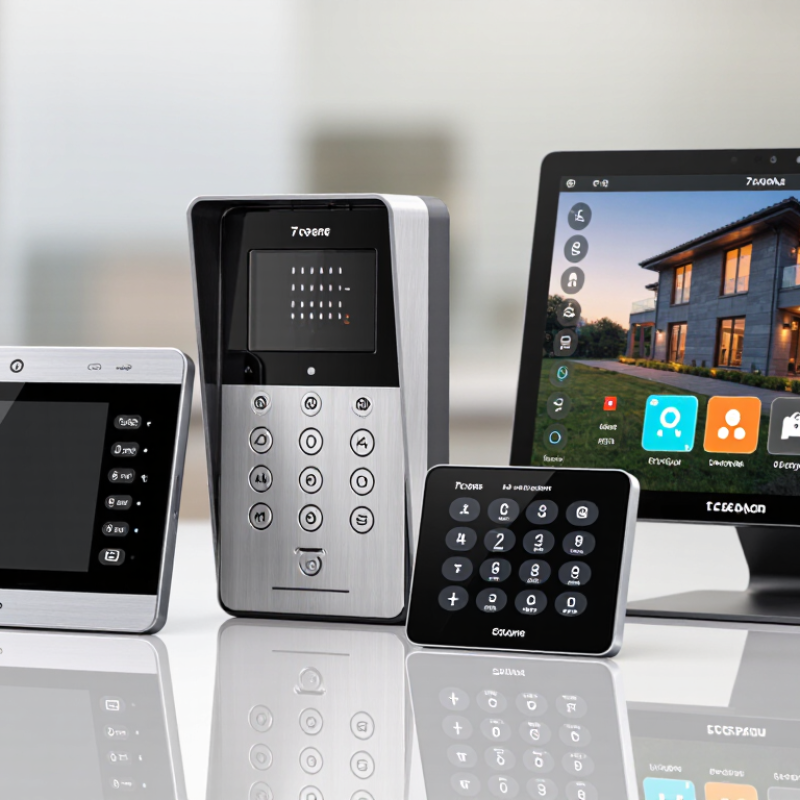
A suitable video entry phone must work beyond its factory showroom. MarketsandMarkets valued the global smart home market at about USD 154.4 billion in 2024. That figure covers many products, not entry phones alone. Still, it signals strong demand for connected residential security. Global buyers should check 100–240V power support, PoE options, multilingual menus, and compatibility with common network standards. A clear installation guide matters too.
Weather resistance is practical, not decorative. An outdoor unit with an IP65 rating can better handle dust and water exposure under IEC 60529 testing conditions. Buyers should also inspect camera performance at night, microphone clarity, and door-release response. A visitor standing in rain needs a visible button, not a hidden icon. Local storage and encrypted communication may reduce unnecessary data exposure. Firmware updates should have a defined schedule.
Accessibility deserves equal attention. The World Health Organization reported in 2022 that about 1.3 billion people experience significant disability. Large text, strong contrast, adjustable volume, and tactile controls can help more households. Connectivity also needs a fallback plan. The ITU reported 5.4 billion internet users in 2023, yet many communities remain offline or unstable. Local calling, backup power, and indoor monitoring can preserve basic access. Cloud-only operation sounds modern, but it is not always dependable.
I would test every feature after disconnecting the internet. That small test often reveals the real product.

For global buyers, a strong video entry phone begins with clear imaging, not decorative specifications. Modern units should provide at least 1080p video, wide dynamic range, infrared night vision, and distortion control. These features keep faces readable beside bright entrances or under weak corridor lighting. MarketsandMarkets’ 2024 Video Doorbell Market report projects growth above 10% annually through 2029. That trend reflects demand for remote access, visitor records, and safer apartment management. Still, forecasts are not field evidence. Buyers should test winter starts, humid walls, audio delay, and camera glare before ordering from Chinese suppliers.
Connectivity matters as much as pixels. SIP support can connect indoor monitors, guards, and mobile applications across different network environments. ONVIF compatibility may simplify integration with existing security systems, while PoE reduces entrance wiring. Look for TLS encryption, signed firmware, role-based access, and transparent update policies. Parks Associates’ 2024 smart-home research places connected-device ownership above half of U.S. broadband households, but interoperability remains uneven. Local storage can reduce cloud dependence, although retention settings require careful configuration. AI recognition sounds impressive. I would treat it cautiously when lighting changes or visitors wear masks. IP65 protection, IK08 impact resistance, and operation near minus 20°C may matter more than another software feature. Export-ready manuals, multilingual prompts, spare parts, and responsive firmware support often determine whether a good device stays reliable.
For global buyers, the best video entry phone is not simply the sharpest camera. It must protect residents, stay connected, and remain easy to use.
The 2024 Verizon Data Breach Investigations Report found that the human element appeared in 68% of breaches. Therefore, security needs more than passwords.
Look for encrypted video transmission, role-based access, signed firmware updates, tamper alerts, and clear audit logs.
Test whether an administrator can remove a former user in seconds. Small details matter.
Connectivity deserves practical testing.
Ericsson’s June 2024 Mobility Report estimated 5G subscriptions would reach about 2.3 billion worldwide by the end of 2024.
Yet many buildings still depend on unstable Wi-Fi or older wired networks. Compare Ethernet, cellular backup, Wi-Fi bands, and offline door-release functions.
Check performance through concrete walls and during network recovery. A device that works only beside the router is not globally dependable.
Ask about regional frequency support, cloud data location, and update availability.
User experience is often underestimated.
The camera should show a visitor’s face clearly at night, without turning the screen into a bright blur. Audio should remain understandable beside traffic or rain.
Interfaces need large controls, multilingual prompts, and accessible viewing angles.
Standards such as ETSI EN 303 645 provide useful IoT security guidance, but compliance alone cannot guarantee smooth daily use.
No scorecard is perfect. My own comparison would include elderly users, delivery staff, and first-time installers.
Their hesitation may reveal more than a specification sheet.
A suitable video entry phone depends on regional standards, wiring, and user habits. Grand View Research valued the global smart doorbell market at about USD 4.7 billion in 2023, with continued growth expected through 2030. That growth does not mean one model fits every country. European projects may require CE and RED compliance, while North American installations often check FCC requirements. Australia and New Zealand commonly review RCM-related conformity. These marks support market access, but they do not replace local verification.
Installation conditions matter more than attractive screen size. Existing two-wire systems may need bus compatibility or a new power supply. Larger buildings often prefer PoE, SIP, ONVIF, or relay integration. Wi-Fi can simplify retrofits, yet concrete walls and metal doors can weaken signals. Omdia’s smart home device research shows strong connected-device adoption, but connectivity still depends on reliable networks and professional setup. A specification sheet cannot show a weak cable path. I would not pretend it can.
Tips: Confirm voltage, frequency, connector type, and mounting depth before ordering. Ask for test units when regional batches differ. Check whether firmware supports local time zones, languages, and network encryption. Review data-storage settings with the installer. MarketsandMarkets identifies interoperability as a continuing smart-home challenge, so confirm protocol support in writing. The cheapest device may create the most expensive rework.
China Best Video Entry Phone for Global Buyers?
How to Select the Best Video Entry Phone for Different Markets
A suitable video entry phone starts with local conditions, not factory price. According to MarketsandMarkets, the smart home market is projected to grow strongly through 2028. However, adoption differs by housing type, income, and internet access. In Europe, buyers often value privacy controls and clean design. In Southeast Asia, weather resistance and stable mobile access may matter more. In the Middle East, heat tolerance and clear night video deserve close testing. Latin American projects may prioritize simple wiring and affordable maintenance.
Check the camera resolution, viewing angle, infrared performance, and speaker volume. A wide angle helps when visitors stand beside the door. Two-way audio should remain clear near traffic or rain. Confirm support for common network standards and local power systems. Review operating temperatures, enclosure protection, language options, and replacement-part availability. The International Data Corporation has repeatedly identified cybersecurity and device management as key smart-home concerns. Therefore, require encrypted communication, controlled administrator access, update policies, and transparent data handling. A low price is not always a low total cost. I have seen installation delays caused by small connector differences. Specifications can hide practical problems.
Tips: Test one sample in real weather before placing a large order. Ask installers to check wall depth, cable length, and mounting height. Compare warranty response times, not only warranty duration. Do not assume one interface suits every country. Even experienced buyers can overlook local habits. That deserves a second review.
Subscribe to our newsletter for the latest news and exclusive offers.
We hold a long-term view when we build modular rooms taking into consideration your changing needs. Whether it’s shifting your workspace to a new site, redesigning your unit to fit new requirements, or simply clearing the area at the end of the project, our Dismantling & Reassembling teams are pressed into service to get the job done in the quickest possible time and minimum resource wastage.
We understand that every project is unique and therefore has a different set of requirements. That’s why we believe in customizing our solutions to fit individual needs. We are equipped with the right talents, technology, and skillset to offer bespoke modular units, without compromising on turnaround time or quality.
The benefits of choosing Containers ME continues long after the installation of the units as we provide aftersales service for as long as you need. All you have to do is sign the Annual Maintenance Contract (AMC) and enjoy technical support for all the maintenance-related issues. By signing the contract, you can rest assured that a highly professional team of dedicated staff are at your service all year round to attend to your needs.
We specialize in Customized Container Solutions designed to meet diverse needs across the UAE. Our offerings include customized modular containers that cater to various applications, from tailor-made container solutions to bespoke container designs.
Whether you’re looking for personalized container homes or custom modular containers, we have you covered. Our customized container offices provide functional workspaces, while our customized portable containers ensure flexibility on-site. Explore our range of custom container storage units and customized cargo containers to optimize your space.
We also offer custom container leasing and custom container fabrication services, along with customized sea containers designed for secure transport. For specialized needs, our specialized container modifications will help you create the perfect solution for your requirements in both Dubai and the broader UAE.




