
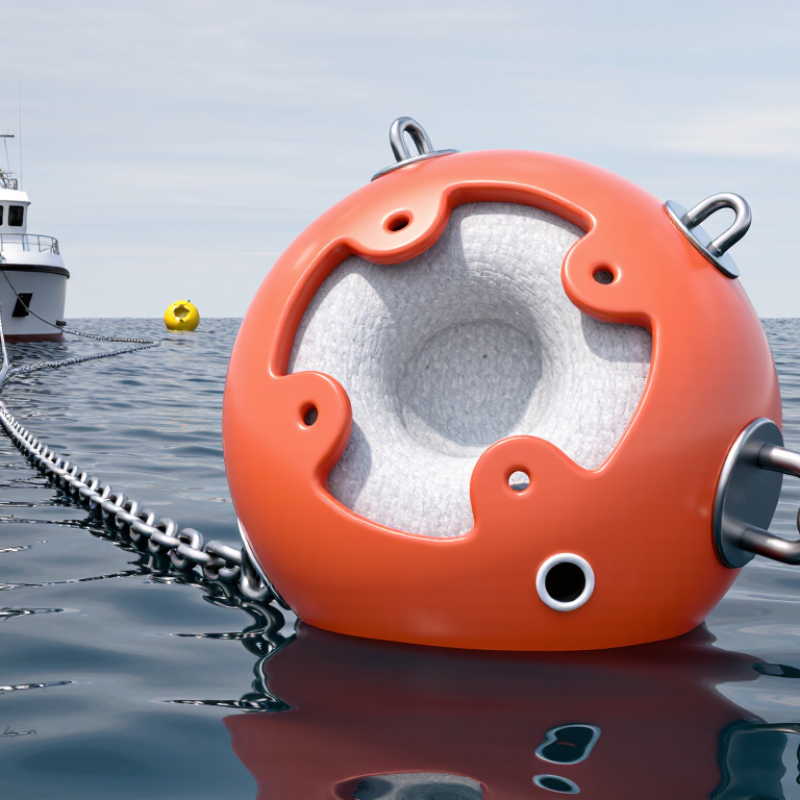
How to Choose a Foam-Filled Mooring Buoy in 2026?
Assess Foam Core, Shell Materials, and Buoy Construction
In 2026, compare documented test results, not just buoy size or advertised load. A foam core should resist water uptake and retain resilience after compression. ASTM D2842 specifies a water-absorption test for rigid cellular plastics; ask for results on the actual core material. Ask for batch records, too. A tidy specification sheet can still leave gaps.
The shell faces sunlight, salt spray, abrasion, and repeated contact with ropes. Rotomolded polyethylene can tolerate impacts, but check UV-resistance data and inspect wall thickness around lifting points. Steel shells may suit demanding handling, yet coatings and welds need regular inspection. Look closely at seams, attachment eyes, and drain or vent details. Small flaws matter.
Check construction as a system: core-to-shell fit, sealed openings, reinforced load paths, and accessible inspection points. The UNESCO/IOC TEOS-10 manual gives seawater density near 1,025 kg/m³ under typical conditions. Thus, 0.1 m³ of immersed volume displaces roughly 102.5 kg of seawater before subtracting the buoy’s own mass and fittings. That is not usable mooring capacity. Request a rated working load, reserve-buoyancy calculation, and inspection guidance for the intended sea state. I would still verify the finished buoy’s mass and dimensions; assumptions can drift between design and production.





