How to Choose CNC Milling Machines for Global Buyers?
Choosing Cnc Milling Machines for global production is not simply a matter of comparing spindle speed and price. Buyers must connect machine capability with real workshop conditions. A compact three-axis machine may suit aluminum brackets, while a rigid five-axis model may better support turbine components or medical housings. The difference appears on the shop floor: tool changes, coolant mist, floor space, operator training, and delivery reliability all influence results.
W. Edwards Deming, a respected manufacturing quality expert, said, “Quality comes not from inspection, but from the improvement of the production process.” His point remains valuable when evaluating Cnc Milling Machines. A machine should reduce variation before inspection catches it. Buyers should examine positioning accuracy, thermal stability, controller usability, service coverage, and spare-parts access. Ask for test-cut evidence, not attractive brochures. Request references from factories with similar materials and production volumes.
Small details matter.
A global buyer also needs to consider voltage standards, language support, software compatibility, shipping protection, installation, and local maintenance response. These factors are easy to overlook during a fast quotation process. That is a mistake. Still, no selection guide is perfect. A machine that performs well in one country may struggle elsewhere because operators, power quality, or supply chains differ. The safest decision combines measurable specifications with practical trial results, transparent ownership costs, and honest feedback from experienced users. This article explores those criteria, while recognizing that the cheapest machine is rarely the least expensive choice over several years.
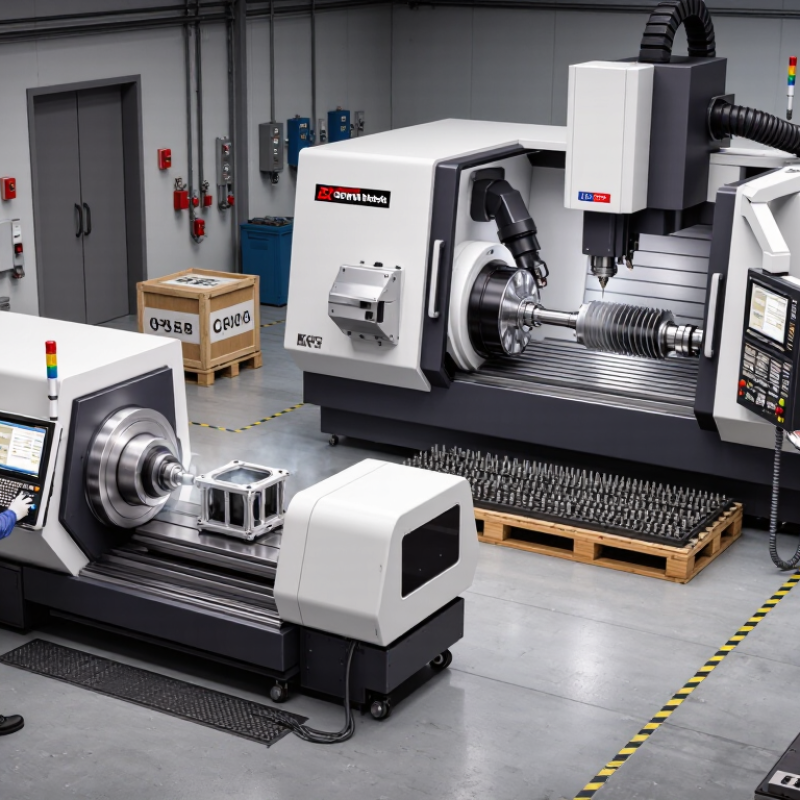
Understanding CNC Milling Machine Types and Their Applications
How to Choose CNC Milling Machines for Global Buyers?
Understanding CNC Milling Machine Types and Their Applications
Choosing a CNC milling machine starts with the part, not the machine catalogue. A three-axis vertical mill suits plates, brackets, and general maintenance work. It offers simpler programming and lower setup costs. A four- or five-axis machine reaches angled surfaces with fewer repositioning steps. That matters for aerospace fixtures, medical components, and complex molds. Horizontal mills perform well when chips must leave deep cavities quickly. Gantry mills handle large frames, panels, and heavy workpieces.
Application changes the decision. A shop producing aluminum housings may value high spindle speed and automatic tool changes. A manufacturer cutting hardened steel needs rigidity, torque, and reliable thermal control. In my machine evaluations, operators often focus on travel size first. That can be a mistake. Workholding space, tool capacity, coolant management, and local service support can affect output more than advertised travel.
Market data supports careful comparison. Grand View Research estimated the global CNC machine market at about USD 83.99 billion in 2023, with strong growth expected through 2030. MarketsandMarkets also identifies automation and high-precision production as major demand drivers. These reports indicate expanding investment, but they do not prove that a larger machine is better. A smaller five-axis mill may reduce handling time, yet its maintenance demands can surprise new users. Check tolerance records, cycle-time tests, energy data, and training requirements before ordering. Ask for a real sample cut. Specifications alone are incomplete.
Defining Production Needs, Materials, and Machining Requirements
How to Choose CNC Milling Machines for Global Buyers?
Defining production needs comes before comparing machine specifications. Estimate monthly volume, part size, tolerance, and expected machine hours. A compact three-axis machine may suit aluminum brackets and prototypes. Steel housings often need greater rigidity, torque, and controlled coolant delivery. Large workpieces require enough table travel and clearance. Measure your largest fixture, not only the finished part.
Material behavior should guide the spindle and tooling decision. Aluminum removes quickly but can produce long chips. Stainless steel generates heat and demands stable cutting conditions. Hardened materials may require slower speeds, stronger tools, and better vibration control. Tight tolerances also depend on thermal stability, probing, fixturing, and operator skill. A machine’s brochure cannot guarantee final accuracy.
I once underestimated fixture deflection, and the programmed dimensions looked correct but the parts failed inspection.
Tips: List five real parts before requesting quotations. Record material, dimensions, tolerance, batch size, and cycle time. Ask for sample machining data, repeatability results, installation requirements, and local service coverage. Check electrical standards, training options, spare-part access, and software compatibility in your region. Leave capacity for future work, but avoid paying for unused axes. That balance is easy to miss.
Comparing Machine Specifications, Accuracy, and Automation Features
How to Choose CNC Milling Machines for Global Buyers?
Global buyers should compare specifications against real production needs, not impressive numbers alone. Review spindle speed, torque, table size, travel distance, and maximum workpiece weight. A 12,000 rpm spindle suits many aluminum parts, while harder materials may require stronger low-speed torque. Working space matters. A large machine can still waste floor space and energy.
Accuracy requires closer inspection. Check positioning accuracy, repeatability, thermal stability, and backlash compensation. Request test reports measured under defined conditions. A 0.01 mm claim means little without temperature, material, and measurement details. Allow the machine to warm up before testing. Small details matter. Practical trials should include your actual cutters, fixtures, and part tolerances. A machine may perform well in a showroom, then struggle during long production cycles.
Automation should reduce mistakes, not merely increase the feature list. Tool changers, probing systems, pallet changers, chip management, and remote monitoring can shorten setup time. Confirm how easily operators can edit programs and recover after alarms. Also check voltage compatibility, training, documentation, service response, and spare-part access in the destination country. My earlier preference for maximum automation was too simple; complex systems can create new maintenance delays. Choose automation that your team can operate confidently every shift.
Evaluating Suppliers, Certifications, Costs, and Global Support
How to Choose CNC Milling Machines for Global Buyers?
Selecting a CNC milling machine requires more than comparing spindle speed and table size. Supplier reliability matters equally. Request factory photographs, production records, and customer references from similar industries. A trustworthy supplier should explain accuracy, repeatability, material compatibility, and maintenance intervals clearly. Ask for inspection reports, not only attractive catalog figures. Standards such as ISO 9001 can indicate controlled processes, while electrical and safety certifications must match your destination market. Certification alone is not proof of machine quality.
Tips: Request a sample machining test before signing. Check tolerances on a real part. Confirm whether the supplier provides calibration records, manuals, installation guidance, and operator training. Clarify warranty coverage in writing, including travel costs and replacement parts. Support should include responsive communication, remote troubleshooting, and practical assistance across time zones. A beautiful machine can become expensive if one sensor waits six weeks for shipment.
Calculate total ownership cost carefully. Include freight, customs charges, tooling, software, power requirements, installation, and routine maintenance. A cheaper quotation may hide important exclusions. Ask for a five-year spare-parts estimate and service response times. Payment terms also deserve attention. No checklist is perfect. I still question overly precise promises without test evidence. Global buyers should compare documented performance, technical support, and long-term transparency, not just the first invoice.
How to Choose CNC Milling Machines for Global Buyers?
Supplier capability, certifications, total cost, and international support should be evaluated together.
The chart presents a practical 100-point procurement framework: supplier capability and total cost receive the highest weighting, while certifications, global support, and delivery performance help reduce operational and compliance risks. Actual priorities should be adjusted for machine size, material, tolerance, destination market, and production volume.






