
Blogs

How to Choose the Best Feed Pellet Mill for Your Business?

Choosing the right Feed Pellet Mill can shape daily production, pellet quality, and operating costs. The best model is not always the largest or most powerful. It should match your ingredients, target output, and available space. A small farm processing dry grain has different needs from a feed plant handling several formulas each day. That difference matters.

Start with the material. Corn, soybean meal, and fibrous ingredients can respond differently to grinding, moisture, and compression. Check the mill’s rated capacity against your expected workload, but treat advertised figures as a guide, not a guarantee. Ask how tests were performed and whether the stated output reflects your feed mix. Real conditions vary. They often do.

The die and roller design, motor rating, spare-parts access, and cleaning requirements deserve close attention. A machine that is easy to inspect may save time when a roller needs adjustment or a die becomes worn. Request clear maintenance instructions and confirm what support the supplier provides after installation. If possible, test a sample of your own ingredients before buying. Feel the pellets. Check their size, firmness, and consistency. No mill suits every operation, and even careful comparisons leave some uncertainty. That is worth acknowledging. A practical choice balances production goals with repair skills, power availability, and budget, rather than relying on a single specification. This guide explains the key questions to ask before investing.
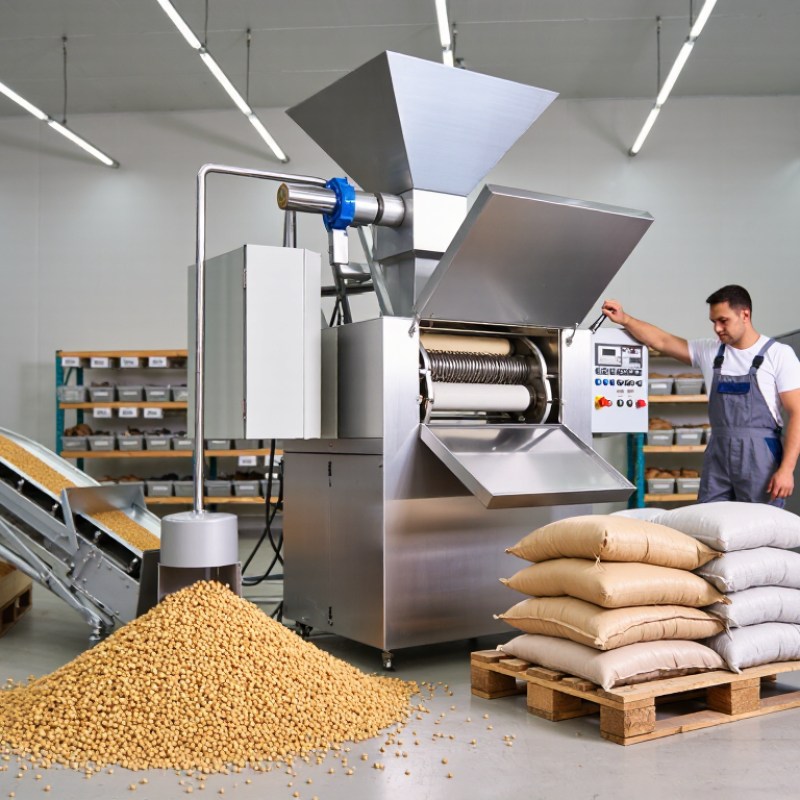
How to Choose the Best Feed Pellet Mill for Your Business?

Define Your Feed Production Requirements

Before comparing pellet mills, write down what your operation actually needs to produce. List each feed type, the daily tonnage, and the pellet diameters you expect to make. A small farm producing one ration has different demands from a mill switching between poultry, cattle, and fish feeds. Be specific. “Several tons” is not enough.

Estimate both average production and peak demand. Record how many hours the mill will run, how often recipes change, and whether supply arrives steadily or in batches. Note the moisture and texture of your ingredients, too. Fibrous material may behave differently from a finely ground grain mix. Keep a sample of your usual formula and discuss its characteristics with a qualified equipment supplier. Numbers help, but actual material tells more.

Include the whole production line in your estimate. A pellet mill cannot compensate for a grinder, mixer, or cooler that restricts throughput. Check available power, floor space, dust control, and who will operate and maintain the equipment. Leave some room for growth, but avoid buying capacity based on optimistic forecasts. My own estimates would need revisiting after a few months of real production. Operators often discover that changeovers and cleaning take longer than planned. Track those minutes, along with rejected pellets and downtime, before settling on a machine size.


Compare Feed Pellet Mill Types and Pelletizing Mechanisms

How to Choose the Best Feed Pellet Mill for Your Business?

Compare Feed Pellet Mill Types and Pelletizing Mechanisms

Flat-die and ring-die mills compress conditioned mash in different ways. In a flat-die mill, rollers force mash through holes in a stationary, flat die. This simpler layout can suit smaller batches, but output and pellet consistency depend heavily on operator settings. Ring-die mills press mash through holes in a rotating circular die. They are commonly used for continuous, higher-volume production, though their dies and rollers require careful adjustment and maintenance.

The mechanism matters. Steam conditioning softens feed particles and can improve binding before compression. A farm producing short runs may value quick cleaning and flexible recipes more than maximum throughput. A commercial line may prioritize steady output, pellet durability, and access to replacement dies. Check the actual feed formula, moisture, target pellet diameter, motor load, and cooling capacity. A shiny pellet is not necessarily a durable one.

Scale should guide the comparison, not reputation. Alltech’s 2024 Agri-Food Outlook estimated global feed production at 1.29 billion metric tonnes in 2023, underscoring the scale and diversity of feed manufacturing. That figure does not identify the right mill for an individual operation. Test representative mash and inspect fines after cooling. Real batches can behave differently from showroom samples. I would also leave room in the budget for die wear; that cost is easy to underestimate.

Evaluate Capacity, Power, and Pellet Specifications

Choose a feed pellet mill by matching its working capacity to your daily demand, not just its advertised maximum. Ask for the expected output using your actual recipe, since fiber content and moisture can change production rates. A mill rated for 500 kilograms per hour may deliver less with a fibrous mix or frequent pauses. Leave room for growth, but avoid paying for capacity that will sit idle.

Power needs deserve the same attention. Check motor kilowatts, voltage, phase, and whether your site can support continuous operation. A motor that struggles under load may overheat or produce uneven pellets. Keep a little margin. Also consider the feeder and conditioner; they affect output, too.

Define the pellet you need before comparing machines. Specify diameter, length, hardness, and how well pellets should hold together during handling. Die-hole size and compression ratio influence shape and durability, while ingredients and moisture still matter. Test a representative batch if possible, then inspect the pellets for cracks, dust, and variation. The result may not be perfect on the first run. Record the settings and adjust one variable at a time.

Assess Operating Costs, Maintenance, and Safety

When comparing feed pellet mills, look beyond purchase price and calculate energy, labor, wear parts, and downtime per tonne. Alltech’s 2024 Agri-Food Outlook estimated global feed production at 1.29 billion metric tons in 2023, underscoring the scale of the market—but your own production mix matters more. Ask suppliers for measured electricity use under a stated recipe and capacity. Then verify it during a trial run: record kilowatt-hours, tonnes produced, and pellet quality. Small differences add up. A spreadsheet helps, but only if its assumptions match your shifts and feed ingredients.

Maintenance costs often hide in die and roller replacement, blocked conveyors, and time spent cleaning. Check how quickly workers can inspect bearings, change wear parts, and reach lubrication points without awkward lifting. Request a maintenance schedule and expected component life, then compare those figures with local parts availability. I would treat quoted service life as a starting point, not a promise; abrasive ingredients and inconsistent moisture can change it. Keep a simple log of stoppages and repair hours.

Safety deserves the same scrutiny as output. OSHA’s grain-handling standard, 29 CFR 1910.272, sets a 1/8-inch dust-accumulation threshold for specified priority housekeeping areas. Ask how the mill contains dust at transfer points and how operators isolate power before clearing jams. Walk the site if possible. Look closely at guards, emergency stops, and the floor around the press. A clean demonstration room is not the whole story.

Verify Suppliers and Choose the Right Mill

Before comparing feed pellet mills, verify the supplier’s experience with materials like yours. Ask for references from farms or feed plants with similar output needs. Request a live trial using your own grain mix, if practical. Watch pellet consistency, motor load, and the temperature near the die. Ask for written details on spare parts, service response, warranty coverage, and operator training. Promises sound easy, but documented support is more useful.

Match the mill to your actual operating hours, not the brochure’s maximum capacity. Check whether the die size, roller adjustment, and drive power suit your recipes and target pellet diameter. A mill that runs smoothly on one formula may struggle with another. Request noise and power readings during a representative test, and confirm what routine cleaning involves. If maintenance intervals are unclear, ask again. No setup is perfect. Capacity estimates can be wrong, so revisit them after a season.

Tips: Compare two or more written quotations. Check references yourself, and record each test’s conditions. Ask who handles local service. Leave room for growth, but avoid paying for capacity you may never use.

Plug & Play Installation

Our installation services are top-notch, delivering modular systems for any application on time in plug & play condition. We leave nothing for you to figure out, set up, or fix. All you’ve to do is just step in, and get going with your business.

Dismantling & Reassembling

We hold a long-term view when we build modular rooms taking into consideration your changing needs. Whether it’s shifting your workspace to a new site, redesigning your unit to fit new requirements, or simply clearing the area at the end of the project, our Dismantling & Reassembling teams are pressed into service to get the job done in the quickest possible time and minimum resource wastage.

Interior Designing

Our interior designs combine both functional and aesthetic aspects to provide you with physical and emotional comfort. We ask you for your preferences and give the best possible solutions aligned to your tastes. Our units are built to be modern, stylish, and elegant.

Bespoke Solutions

We understand that every project is unique and therefore has a different set of requirements. That’s why we believe in customizing our solutions to fit individual needs. We are equipped with the right talents, technology, and skillset to offer bespoke modular units, without compromising on turnaround time or quality.

Aftersales Service

The benefits of choosing Containers ME continues long after the installation of the units as we provide aftersales service for as long as you need. All you have to do is sign the Annual Maintenance Contract (AMC) and enjoy technical support for all the maintenance-related issues. By signing the contract, you can rest assured that a highly professional team of dedicated staff are at your service all year round to attend to your needs.

Customized Container Solutions

We specialize in Customized Container Solutions designed to meet diverse needs across the UAE. Our offerings include customized modular containers that cater to various applications, from tailor-made container solutions to bespoke container designs.

Whether you’re looking for personalized container homes or custom modular containers, we have you covered. Our customized container offices provide functional workspaces, while our customized portable containers ensure flexibility on-site. Explore our range of custom container storage units and customized cargo containers to optimize your space.

We also offer custom container leasing and custom container fabrication services, along with customized sea containers designed for secure transport. For specialized needs, our specialized container modifications will help you create the perfect solution for your requirements in both Dubai and the broader UAE.

Get a quote

Get a quote



