
Blogs

How to Choose the Correct Medium Pump for Your Needs?

Choosing the Correct Medium Pump for your needs can be daunting. There are various types and specifications to consider. Understanding these factors is essential in making a reliable choice.

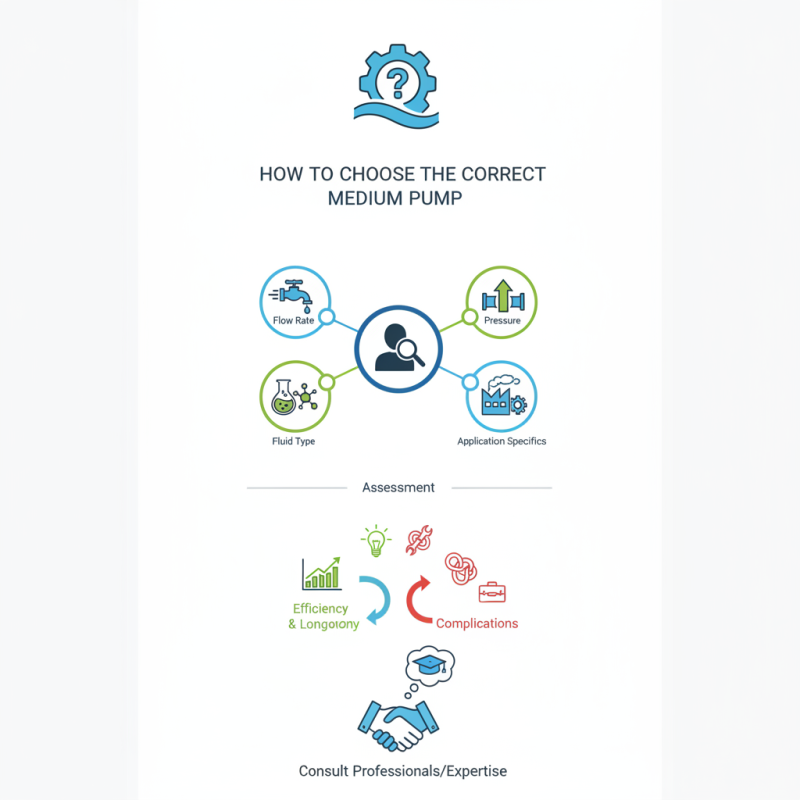
When selecting the correct medium pump, think about the specifics of your application. Consider the flow rate, pressure, and the type of fluid involved. Each element influences your decision significantly. A pump that works well for one scenario may fail in another. It's crucial to assess your requirements carefully.

Selecting the correct medium pump requires a blend of expertise and experience. Consult with professionals whenever possible. Their insights can help refine your choices. Remember, the right pump can lead to improved efficiency and longevity. Conversely, a poor selection may complicate your operations. Reflect on your needs and seek guidance to make an informed choice.
How to Choose the Correct Medium Pump for Your Needs?

Understanding Different Types of Medium Pumps and Their Applications

Choosing the right medium pump can significantly impact efficiency and cost. Understanding the various types is critical for making an informed decision. There are primarily centrifugal pumps, positive displacement pumps, and screw pumps, each serving specific needs. Centrifugal pumps are widely used for fluids with low viscosity, suitable for many industrial applications. According to market research, they account for over 70% of all pump types sold. Positive displacement pumps excel with more viscous fluids, making them crucial in chemical processing. Screw pumps are ideal for transporting substances like oil or thick slurries.


When selecting a pump, consider the application and fluid properties. Is the fluid corrosive? What is its viscosity? Each type has defined operational capabilities. Some pumps struggle under specific conditions, leading to inefficiencies. Always reference technical specifications. This data can guide your choice and help avoid costly mistakes.


Tip: Evaluate your system's total cost of ownership. This includes maintenance, energy consumption, and replacement parts. A pump may be cheaper upfront but costly over time. Also, consider pump sizing carefully. An oversized pump can create excessive energy use and potential wear. Always align the pump specifications with your operational needs to achieve the best performance.


Key Factors to Consider When Selecting a Medium Pump for Specific Tasks

Choosing the right medium pump involves understanding specific factors. First, consider the pump's flow rate. For tasks like irrigation, a pump with a flow rate of 20-30 gallons per minute may be optimal. Industry reports indicate that incorrect flow rates can lead to inefficiencies and increased operational costs.

Next, the pump's material should match the fluids being handled. Pumps made from stainless steel are ideal for corrosive materials, while plastic pumps work well for clean water. According to the American Society of Mechanical Engineers, choosing the right materials can extend a pump's lifespan by up to 40%.

Pump size is another critical factor. A pump too small for the task may lead to constant failure. Conversely, an oversized pump wastes energy. Studies show that the right size can improve overall energy efficiency by as much as 25%. Awareness of these elements is essential for ensuring reliable and effective pump performance.

How to Choose the Correct Medium Pump for Your Needs

This chart represents key specifications for choosing a medium pump. Consider flow rate, power consumption, maximum head lift, weight, and price when making your selection.

Evaluating Pump Specifications: Flow Rate, Pressure, and Efficiency

Choosing the right medium pump requires careful evaluation of specifications, particularly flow rate, pressure, and efficiency. Flow rate indicates how much fluid a pump can move in a given timeframe. If you need to transfer a significant volume quickly, a pump with a high flow rate is crucial. Conversely, if the application requires precision, a lower flow rate may suffice. It’s essential to assess the specific needs of your operations.

Pressure is another vital consideration. It measures the force exerted by the pump to move fluid. Pumps generate varying pressures depending on design and application. Ensure the pump can handle the required pressure for your system. Too much pressure can lead to failure, while too little may result in inadequate performance.

Efficiency ties it all together. An efficient pump minimizes energy consumption while maximizing output. It translates to lower operational costs and a more sustainable approach. Analyze performance curves and efficiency ratings carefully. They reveal how well the pump matches your criteria. Remember, every application is unique; what worked in one case may not suit another. Always reflect on past experiences and adjust your criteria accordingly.

How to Choose the Correct Medium Pump for Your Needs? - Evaluating Pump Specifications: Flow Rate, Pressure, and Efficiency

Pump Type Flow Rate (GPM) Max Pressure (PSI) Efficiency (%) Power Consumption (HP)
Single Stage Centrifugal 50 90 75 5
Multi-Stage Centrifugal 30 150 85 7.5
Positive Displacement 20 200 80 3
Submersible Pump 60 75 70 4

Comparing Material Durability and Compatibility for Various Mediums

Choosing the right medium pump involves understanding material durability and compatibility. The medium you want to pump significantly influences your choice. For example, corrosive chemicals require pumps made of robust materials like stainless steel or specialized plastics. These materials resist degradation and ensure longevity.

However, not all durable materials are suitable for every medium. Some plastics may withstand certain chemicals but fail under different conditions. It is essential to assess both the physical and chemical properties of your medium. A pump that works well for water may not be effective for oil or slurry.

Consider the pump's performance in extreme temperatures or pressures, too. Many users overlook this, leading to equipment failure. Testing your chosen pump in real conditions can highlight potential issues early. Reflecting on your selection process ensures a more reliable and efficient pumping solution.

Industry Insights: Costs and Maintenance of Different Medium Pump Models

Choosing the right medium pump involves understanding costs and maintenance. Different models can vary greatly in price. A basic pump may cost a few hundred dollars, while advanced models can reach thousands. Always consider your budget. A lower upfront cost may lead to higher maintenance.

Maintenance is crucial for keeping a pump operational. Daily checks on seals and connections are essential. Failure to do these checks can lead to leaks or inefficiency. Some pumps require oil changes regularly, while others may need filter replacements. Ignoring these needs can increase long-term costs.

Evaluate the specific requirements of your project. Not all pumps are created equal. You might find a cheaper model that ends up being more expensive due to maintenance issues. Researching user reviews will help. Understand the average lifespan of the pump. Take note of any common problems users report. This information can drive your decision-making process.

Plug & Play Installation

Our installation services are top-notch, delivering modular systems for any application on time in plug & play condition. We leave nothing for you to figure out, set up, or fix. All you’ve to do is just step in, and get going with your business.

Dismantling & Reassembling

We hold a long-term view when we build modular rooms taking into consideration your changing needs. Whether it’s shifting your workspace to a new site, redesigning your unit to fit new requirements, or simply clearing the area at the end of the project, our Dismantling & Reassembling teams are pressed into service to get the job done in the quickest possible time and minimum resource wastage.

Interior Designing

Our interior designs combine both functional and aesthetic aspects to provide you with physical and emotional comfort. We ask you for your preferences and give the best possible solutions aligned to your tastes. Our units are built to be modern, stylish, and elegant.

Bespoke Solutions

We understand that every project is unique and therefore has a different set of requirements. That’s why we believe in customizing our solutions to fit individual needs. We are equipped with the right talents, technology, and skillset to offer bespoke modular units, without compromising on turnaround time or quality.

Aftersales Service

The benefits of choosing Containers ME continues long after the installation of the units as we provide aftersales service for as long as you need. All you have to do is sign the Annual Maintenance Contract (AMC) and enjoy technical support for all the maintenance-related issues. By signing the contract, you can rest assured that a highly professional team of dedicated staff are at your service all year round to attend to your needs.

Customized Container Solutions

We specialize in Customized Container Solutions designed to meet diverse needs across the UAE. Our offerings include customized modular containers that cater to various applications, from tailor-made container solutions to bespoke container designs.

Whether you’re looking for personalized container homes or custom modular containers, we have you covered. Our customized container offices provide functional workspaces, while our customized portable containers ensure flexibility on-site. Explore our range of custom container storage units and customized cargo containers to optimize your space.

We also offer custom container leasing and custom container fabrication services, along with customized sea containers designed for secure transport. For specialized needs, our specialized container modifications will help you create the perfect solution for your requirements in both Dubai and the broader UAE.

Get a quote

Get a quote