Blogs

How to Choose the Right Laser Cut Parts Supplier?

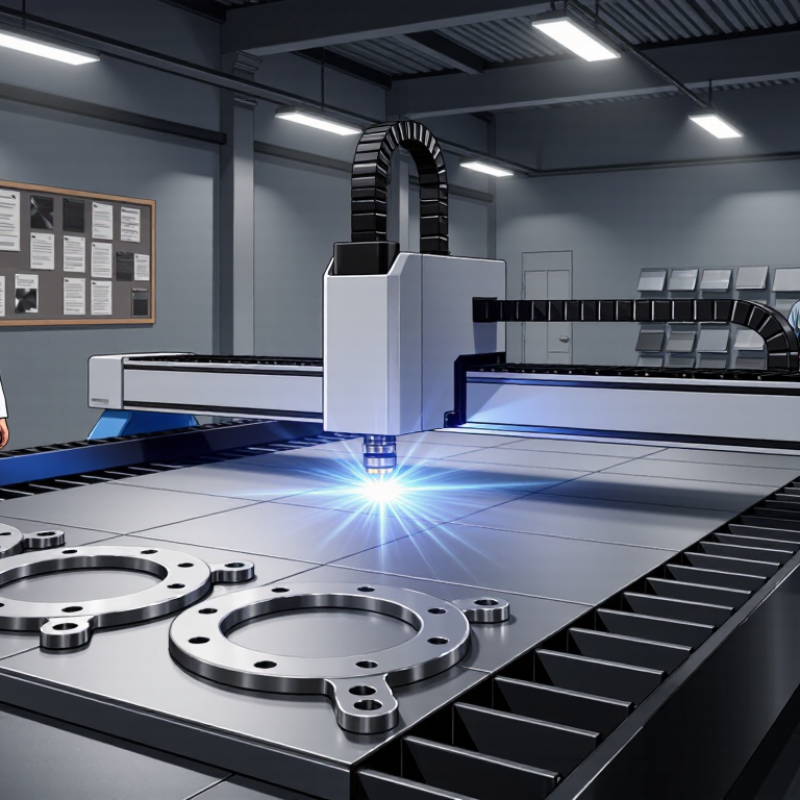
Choosing a Laser Cut Parts supplier is not just a price comparison. The right partner must turn a drawing into consistent components, with clean edges, accurate dimensions, and dependable delivery. As laser-processing researcher Professor Lin Li’s work suggests, material, process settings, and application need to be considered together. That principle matters when a part’s performance depends on a small hole, a narrow slot, or a precise bend allowance. Details matter.

A capable supplier should explain how they control tolerances, inspect finished parts, and handle material changes. Ask about the laser type, available sheet sizes, cutting limits, and how they manage burrs or heat discoloration. Request a sample made from the same material and thickness as your production order. A shiny sample alone proves little. Check its edges, dimensions, and fit against the mating component. Also review communication: clear questions about drawings can prevent expensive rework later.

Price still matters. But a low quote may exclude finishing, packaging, or realistic lead times. Compare the complete offer, not just the unit cost. A supplier’s certificates and inspection records can support confidence, yet they do not replace a useful technical conversation. Some details may be missed on a first review; that is worth acknowledging. A careful selection process helps buyers find a partner suited to their part, production volume, and quality needs—not simply the cheapest shop.
How to Choose the Right Laser Cut Parts Supplier?

Define Your Laser-Cut Part Requirements

Before comparing suppliers, define what the part must do. A flat bracket for a light enclosure has different needs from a panel that aligns moving components. Describe its function, mating parts, and any surfaces that must stay visible or smooth. A simple sketch can help, but a dimensioned drawing reduces guesswork.

Specify the material and thickness, such as 2 mm stainless steel or 3 mm acrylic, along with the required quantity. Mark critical dimensions and tolerances clearly; applying tight tolerances to every feature can raise cost without improving performance. Note hole sizes, bend locations, edge conditions, and whether protective film should remain during shipping. Include the file format and revision number, too. Small revisions matter.

Think about the finished part. Will sharp edges need deburring? Does the part need a brushed face, coating, or clean edges around small openings? These details affect both process choice and price. If you are unsure about a tolerance or finish, flag it for discussion rather than guessing. Early estimates are often imperfect. That is normal. A supplier can assess the drawing more reliably when the purpose, acceptance criteria, and likely order volume are stated together. Be specific, but leave room to revise assumptions after reviewing a sample.


Assess Supplier Equipment and Material Capabilities

A capable laser-cut parts supplier should explain its equipment in measurable terms. Ask for laser type, rated power, working-bed dimensions, positioning accuracy, and supported sheet thickness.

A large machine may handle full sheets, but that does not guarantee clean edges on thin stainless steel. Request a recent sample with the same alloy and thickness as your part.

Check the edge for burrs, heat discoloration, and taper. Small details matter.

Material capability deserves equal scrutiny. Ask whether the supplier stocks or processes carbon steel, stainless steel, aluminum, and other required grades, and how it verifies material identity. Mill certificates and lot traceability help prevent substitutions.

Deloitte’s 2024 Smart Manufacturing survey found that 86% of manufacturing executives expect smart manufacturing to be a primary competitiveness driver within five years.

That is a broad industry signal, not proof of any one shop’s quality. Ask how the supplier records machine settings, inspection results, and material batches. A polished sample can still hide variation between production runs.

One specification rarely tells the whole story. Request tolerances for your actual geometry, plus a first-article inspection report.

Probe the limits. A supplier’s honest “not yet” can be more useful than an unsupported promise.

Compare Quality Controls and Industry Certifications

A laser-cut part can look clean and still miss its drawing tolerance. Compare suppliers by checking how they control the work, not by collecting certificates alone. Ask for inspection records tied to your part number, revision, and material batch. For a thin stainless bracket, for example, check whether the supplier measures hole positions and edge condition after cutting, not just the overall length. Ask how often gauges are calibrated and what happens when a result falls outside tolerance. A certificate can still leave gaps.

The ISO Survey 2022 reported more than 1.26 million valid ISO 9001 certificates across 188 countries. That scale makes ISO 9001 a useful signal of a documented quality system, but it does not certify every cut part. Confirm that the certificate is current and covers the actual production site and relevant manufacturing scope. For automotive or aerospace work, ask whether IATF 16949 or AS9100 applies to the supplier’s certified scope. Check the certificate with its issuing body when the order carries high risk.

Useful evidence includes first-article inspection reports, material certificates, revision control, and documented nonconformance handling. Ask for a sample report before approving production. Look for actual measurements, acceptance limits, and clear part identification. Vague promises are not evidence. I would also ask how scrap and rework are tracked; suppliers may not present this clearly at first. That question can feel awkward. It is still worth asking.

Evaluate Pricing, Lead Times, and Communication

How to Choose the Right Laser Cut Parts Supplier?
Evaluate Pricing, Lead Times, and Communication

A low quote is useful only when it covers the same job. Compare material grade, thickness, quantity, cutting, deburring, and packaging. Ask whether setup costs or drawing changes are included. For example, two quotes for 3 mm stainless steel may differ because one includes edge finishing and the other does not. Small details add up.

Lead times need the same careful reading. Ask whether the estimate means production days or calendar days, and when the clock starts. Material availability, drawing approval, and finishing can all shift delivery. A supplier who flags a delay early is often more dependable than one who promises an unusually fast turnaround. Still, even clear estimates can miss a snag.

Communication is part of production quality. Notice how the supplier handles a question about a tight corner, a missing tolerance, or a marked-up drawing. Do they explain the issue plainly and confirm the revision before cutting? A brief update with a revised ship date is more useful than silence. I would also check how changes are recorded; this step is easy to overlook when a project is moving quickly. Ask who will contact you if the drawing and requested part do not match.

Verify Performance Through Samples and References

How to Choose the Right Laser Cut Parts Supplier?
Verify Performance Through Samples and References

A clean quote and polished website cannot show how a supplier handles real production. Request a sample made from the same material and thickness as your planned order. Check key dimensions with calipers, then inspect cut edges, hole positions, and any heat marks. Does the part sit flat on a workbench? Compare it with your drawing, not just your first impression. A neat sample can still hide variation between batches.

Ask how the sample was produced and whether it reflects the supplier’s normal process. Then contact references who ordered parts with similar tolerances or volumes. Ask about delivery consistency, communication, and how issues were handled. Specific examples matter more than general praise. A sample is only one data point; treating it as proof can be a mistake. I would also check whether the supplier explains measurement methods clearly.

Tips: Send a marked-up drawing with the sample request. Record a few critical dimensions and edge conditions before inspection. Ask references what changed after the first order. If answers feel vague, pause and request evidence.

Plug & Play Installation

Our installation services are top-notch, delivering modular systems for any application on time in plug & play condition. We leave nothing for you to figure out, set up, or fix. All you’ve to do is just step in, and get going with your business.

Dismantling & Reassembling

We hold a long-term view when we build modular rooms taking into consideration your changing needs. Whether it’s shifting your workspace to a new site, redesigning your unit to fit new requirements, or simply clearing the area at the end of the project, our Dismantling & Reassembling teams are pressed into service to get the job done in the quickest possible time and minimum resource wastage.

Interior Designing

Our interior designs combine both functional and aesthetic aspects to provide you with physical and emotional comfort. We ask you for your preferences and give the best possible solutions aligned to your tastes. Our units are built to be modern, stylish, and elegant.

Bespoke Solutions

We understand that every project is unique and therefore has a different set of requirements. That’s why we believe in customizing our solutions to fit individual needs. We are equipped with the right talents, technology, and skillset to offer bespoke modular units, without compromising on turnaround time or quality.

Aftersales Service

The benefits of choosing Containers ME continues long after the installation of the units as we provide aftersales service for as long as you need. All you have to do is sign the Annual Maintenance Contract (AMC) and enjoy technical support for all the maintenance-related issues. By signing the contract, you can rest assured that a highly professional team of dedicated staff are at your service all year round to attend to your needs.

Customized Container Solutions

We specialize in Customized Container Solutions designed to meet diverse needs across the UAE. Our offerings include customized modular containers that cater to various applications, from tailor-made container solutions to bespoke container designs.

Whether you’re looking for personalized container homes or custom modular containers, we have you covered. Our customized container offices provide functional workspaces, while our customized portable containers ensure flexibility on-site. Explore our range of custom container storage units and customized cargo containers to optimize your space.

We also offer custom container leasing and custom container fabrication services, along with customized sea containers designed for secure transport. For specialized needs, our specialized container modifications will help you create the perfect solution for your requirements in both Dubai and the broader UAE.

Get a quote

Get a quote