
Choosing a Portable Car Jump Starter in 2026 requires more than comparing peak amperage on a product page. Real-world reliability depends on battery capacity, cable quality, safety controls, charging speed, and storage conditions. A compact device may look powerful, yet fail after sitting in a cold trunk for several months. That detail matters.
This guide examines the features that deserve careful attention. It considers engine size, battery condition, operating temperature, clamp design, reverse-polarity protection, and USB-C charging. It also explains why advertised peak current can be difficult to compare between brands. A strong rating is useful, but it does not guarantee dependable starting performance. Independent test results and clear manufacturer instructions provide better evidence.
Look for practical details.
A trustworthy Portable Car Jump Starter should include clear indicators, insulated clamps, durable cables, and a casing that resists ordinary drops. The unit should feel secure in your hand, not slippery beside a roadside tire. Emergency lights, phone charging, and air-compressor functions can add value, although extra features may increase weight and failure points. That trade-off is easy to overlook.
No model is perfect. Some published specifications are confusing, and user reviews can be inconsistent. I would not treat one impressive result as final proof. Instead, compare repeated testing, warranty terms, safety documentation, and long-term owner experience. This approach may take longer, but it reduces unpleasant surprises when your engine refuses to start on a dark winter morning.
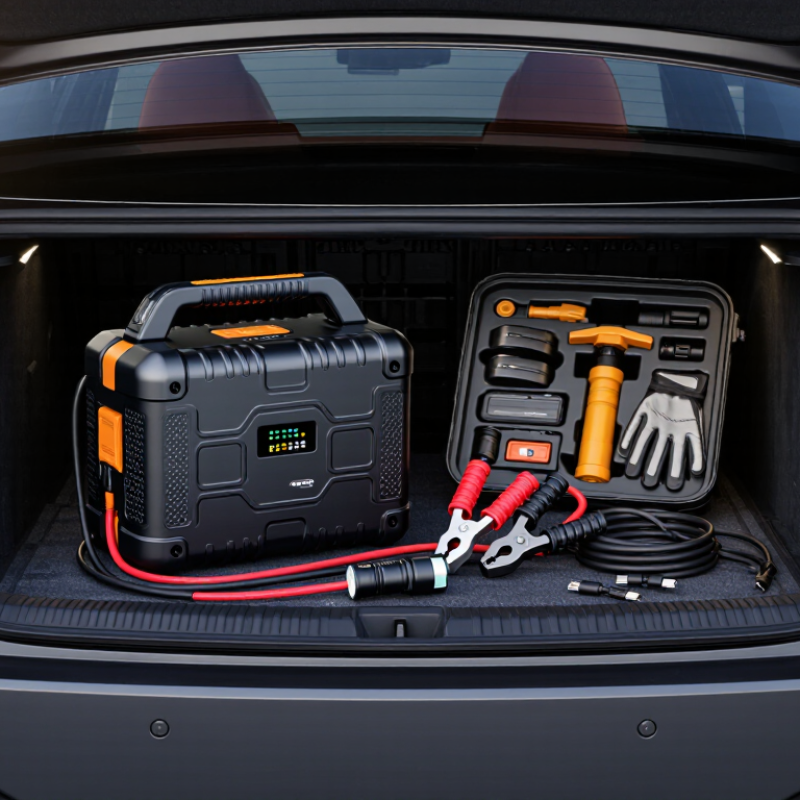
A portable car jump starter is an emergency battery, not a replacement battery. It sends stored electrical energy through clamps to help a weak vehicle battery start the engine. That matters when you are alone, parked outdoors, or far from roadside assistance. AAA reports more than 32 million roadside assistance calls annually, with battery problems among the most common requests. A small device can reduce waiting time, but only when used correctly.
Cold weather makes the problem sharper. AAA states that a battery can lose about 60% of its strength at 0°F, while the engine may require nearly twice its normal starting power. Choose a unit with clear cranking-current information, not only an impressive peak-current figure. Battery capacity, cable length, clamp quality, and reverse-polarity protection also deserve attention. Look for overcurrent and short-circuit protection. These details are less exciting, yet they affect real safety.
Testing is not perfectly simple. A starter that works well on a warm four-cylinder engine may struggle with a larger engine in freezing rain. Consumer Reports’ battery guidance emphasizes practical performance over isolated specification claims. I would also check operating-temperature limits and charging time. Some models include lights or USB ports, but those features do not replace starting power. Read the instructions beside the vehicle, with the engine off and clamps positioned carefully. A higher number can still mislead.

How to Choose a Portable Car Jump Starter in 2026?
Choosing a portable car jump starter in 2026 begins with matching output to the vehicle, not the device’s size. A small gasoline hatchback usually needs less starting power than a large diesel pickup. Check your owner’s manual for engine displacement, battery voltage, and recommended starting current. Most passenger cars use 12 volts, but the required peak current varies sharply. Cold mornings make this difference more noticeable.
For a compact four-cylinder gasoline engine, a unit rated around 800 to 1,200 peak amps may be suitable. A six-cylinder SUV may need 1,200 to 1,500 amps, especially with an aging battery. Large diesel engines often need 1,500 amps or more because thicker oil resists cranking. Do not treat peak amps as the whole story. Starting current and sustained current are not identical measurements. A model with clear testing data is more trustworthy than one using oversized numbers.
I would leave a safety margin of about 20 to 30 percent for winter, battery wear, and repeated attempts. That margin is practical, not magical. During roadside testing, keep the clamps clean and firmly attached, then wait briefly before cranking. A jump starter rated for a motorcycle may disappoint beside a diesel van. I once focused too much on compact size and ignored reserve capacity. That was a poor trade. Choose enough power, but avoid carrying an unnecessarily heavy unit every day.
| Vehicle Type | Typical Engine Size | Typical Battery System | Suggested Peak-Current Rating | Practical Battery Capacity | Recommended Cable Features | Best Use Case | Important Buying Check |
|---|---|---|---|---|---|---|---|
| Motorcycle, scooter, or small ATV | Up to 0.8 L gasoline | 12 V lead-acid or lithium starter battery | 300–600 A | 37–55 Wh Approximately 10,000–15,000 mAh at 3.7 V | Short, flexible leads; low-current protection; motorcycle-compatible clamps | Occasional starting assistance for small engines and powersports vehicles | Confirm that the unit supports small batteries and does not require a large minimum voltage before activation |
| Compact car or hatchback | 1.0–2.0 L gasoline | 12 V starting battery | 600–1,000 A | 37–55 Wh Approximately 10,000–15,000 mAh at 3.7 V | Insulated clamps, reverse-polarity warning, short-circuit protection | Routine emergency backup for small gasoline vehicles | Choose a model rated for the vehicle’s engine size, not only its advertised USB capacity |
| Midsize sedan, crossover, or small SUV | 2.0–3.5 L gasoline | 12 V starting battery | 1,000–1,500 A | 55–74 Wh Approximately 15,000–20,000 mAh at 3.7 V | Heavy-duty clamps, low-temperature protection, clearly marked positive and negative leads | More reliable starting support for everyday family vehicles | Allow extra current headroom if the vehicle has high electrical loads or an aging battery |
| Large SUV, pickup, or performance car | 3.5–5.0 L gasoline | 12 V starting battery | 1,500–2,000 A | 74–93 Wh Approximately 20,000–25,000 mAh at 3.7 V | Thicker cables, robust clamps, thermal protection, and a high-current safety controller | Higher-demand gasoline engines and vehicles used in cold or remote conditions | Compare the stated engine-size support and continuous output; peak current alone is not a complete specification |
| Small or midsize diesel vehicle | 1.5–3.0 L diesel | 12 V starting battery | 1,500–2,000 A | 74–93 Wh Approximately 20,000–25,000 mAh at 3.7 V | Heavy-gauge cables, firm clamps, cold-weather capability, and over-temperature protection | Diesel cars, vans, and light-duty pickups with higher cranking resistance | Diesel engines generally need more starting current than similarly sized gasoline engines |
| Large diesel pickup or commercial van | 3.0–6.0 L diesel | 12 V; some vehicles use two batteries in parallel | 2,000–3,000 A | 93–111 Wh Approximately 25,000–30,000 mAh at 3.7 V | Long, heavy-duty cables; high-current clamps; protection against reverse polarity and overheating | Large diesel engines and vehicles with dual-battery starting systems | Verify whether the vehicle uses one 12 V battery or two parallel 12 V batteries before purchase |
| 24 V truck, bus, or heavy equipment | Usually above 6.0 L diesel | 24 V system or selectable 12/24 V system | Use only equipment specifically rated for 24 V | Depends on the dedicated 24 V design | Commercial-grade cables and clamps designed for the specified voltage | Heavy trucks, buses, construction equipment, and agricultural machinery | Do not connect a 12 V-only jump starter to a 24 V system; verify voltage compatibility first |
Choosing a portable car jump starter in 2026 means checking safety evidence, not just peak amperage. Look for reverse-polarity protection, short-circuit control, overcurrent protection, and automatic shutoff. Overtemperature protection is important when the unit sits in a hot trunk. Spark-resistant clamps add another layer of protection. Small details matter.
Check the label and manual for recognized certifications, such as UL 2743, IEC 62133-2, or relevant regional conformity marks. These references may cover the complete device, its lithium cells, or only specific components. Do not guess. A credible certificate should identify the exact model, manufacturer, testing scope, and issuing laboratory. UN 38.3 testing is also useful because it addresses lithium-battery transport safety, but it does not prove every operating feature is safe.
Inspect the unit before trusting it beside a dead battery. The cables should feel flexible, while the clamps should grip firmly without exposed metal near the handles. An IP rating can indicate resistance to dust or water, but it is not permission to use the starter in heavy rain. I once assumed a bright screen meant better protection; that was a poor shortcut. Read the warning sequence and test the charge level monthly. Certifications reduce uncertainty, yet careful handling still matters.
Choosing a portable car jump starter in 2026 starts with matching specifications to real driving conditions. Size matters when the unit must fit beside a spare tire or under a seat. A compact model saves space, but its clamps and cables may feel cramped in winter. I once preferred the smallest option, then found its short leads awkward on a large engine. That mistake changed my checklist. Measure storage space, cable reach, and handle comfort before comparing advertised power.
Capacity should not be judged by a large number alone. Check starting current, battery capacity, and performance ratings at low temperatures. Higher starting current can help with larger engines, but results depend on battery age and weather. Capacity also affects how many emergency starts are possible between charges. Read the manual carefully. Some ratings describe peak output, not sustained starting ability.
Tips: Choose protected clamps, clear charge indicators, and a sturdy case. USB-C input can simplify charging from modern adapters. A 12-volt socket may support useful accessories. A flashlight with an emergency signal is practical, but extra functions should not replace reliable jump-start performance. Recharge the unit every few months, even when unused. I sometimes forget this, and the device becomes less dependable when needed. Check temperature limits, charging time, warranty terms, and safety protections. Good comparisons leave room for doubt, because roadside conditions rarely match laboratory claims.
A safe jump starter begins with the correct electrical rating. Check your vehicle manual before buying or using one. Choose a unit designed for your engine type and battery voltage. Keep the vehicle switched off, including lights and climate controls. Inspect the cables for cuts, loose clamps, or melted plastic. Do not use damaged equipment.
Connect the red clamp to the positive terminal. Connect the black clamp to an approved ground point, if the manual recommends one. Keep both clamps apart. Start the vehicle only after checking every connection. Remove the clamps in reverse order after the engine runs. Stop immediately if you notice smoke, strong heat, swelling, or unusual sounds. I used to think a quick connection was enough, but a rushed check can create serious problems. Never jump a frozen, leaking, or visibly damaged battery.
Tips: Charge the unit after each use. Check its charge every two or three months. Store it in a cool, dry place away from direct sunlight. Avoid leaving it inside a hot car, especially during summer. Keep the cables neatly packed to prevent strain. A small label with the last inspection date can help. It sounds unnecessary. It is easy to forget. Pair the device with gloves and a flashlight, but keep everything clean and dry. Always follow the supplied instructions, because connection points and charging limits can differ between models.
Subscribe to our newsletter for the latest news and exclusive offers.
We hold a long-term view when we build modular rooms taking into consideration your changing needs. Whether it’s shifting your workspace to a new site, redesigning your unit to fit new requirements, or simply clearing the area at the end of the project, our Dismantling & Reassembling teams are pressed into service to get the job done in the quickest possible time and minimum resource wastage.
We understand that every project is unique and therefore has a different set of requirements. That’s why we believe in customizing our solutions to fit individual needs. We are equipped with the right talents, technology, and skillset to offer bespoke modular units, without compromising on turnaround time or quality.
The benefits of choosing Containers ME continues long after the installation of the units as we provide aftersales service for as long as you need. All you have to do is sign the Annual Maintenance Contract (AMC) and enjoy technical support for all the maintenance-related issues. By signing the contract, you can rest assured that a highly professional team of dedicated staff are at your service all year round to attend to your needs.
We specialize in Customized Container Solutions designed to meet diverse needs across the UAE. Our offerings include customized modular containers that cater to various applications, from tailor-made container solutions to bespoke container designs.
Whether you’re looking for personalized container homes or custom modular containers, we have you covered. Our customized container offices provide functional workspaces, while our customized portable containers ensure flexibility on-site. Explore our range of custom container storage units and customized cargo containers to optimize your space.
We also offer custom container leasing and custom container fabrication services, along with customized sea containers designed for secure transport. For specialized needs, our specialized container modifications will help you create the perfect solution for your requirements in both Dubai and the broader UAE.