Blogs

Top Concentric Reducer Fitting Manufacturers Worldwide?

Choosing the top Concentric Reducer Fitting manufacturers requires more than comparing catalogs or factory photos. Buyers need evidence of dimensional control, material traceability, welding discipline, and pressure performance. A dependable reducer should connect different pipe diameters without creating unnecessary turbulence or stressing nearby welds. Small details matter, especially in refinery, chemical, power, and water-treatment systems.

Roy A. Parisher, a respected piping-design author, offers a practical reminder: “A reliable piping system depends on the correct selection of every component.” That principle guides this worldwide review. It considers manufacturers’ experience, production capacity, quality systems, testing methods, and project support. Relevant references include ASME B16.9, MSS SP-75, EN 10253, and applicable material specifications. However, certification alone does not prove consistent workmanship.

This guide will examine established suppliers across Asia, Europe, North America, and other major manufacturing regions. It will compare carbon steel, stainless steel, alloy steel, and custom-grade options. It will also consider lead times, inspection records, surface finish, packaging, and export experience. These factors become visible when a fitting arrives with clear markings, protected bevels, and complete mill certificates.

No ranking is perfect. Supplier performance can vary by plant, batch, and application. A manufacturer that suits a large oil pipeline may not suit a small sanitary process line. That limitation deserves attention. The strongest choice is not always the cheapest or most famous. It is the supplier that can prove reliable performance for the actual service conditions.
Top Concentric Reducer Fitting Manufacturers Worldwide?

Concentric Reducer Fittings: Definition, Design, and Main Applications

Concentric reducer fittings connect pipes with different diameters along one common centerline. Their cone-shaped body reduces flow size gradually, unlike an eccentric reducer with offset centers. This geometry supports balanced loading and compact installation. It is widely used in water treatment, chemical processing, power generation, and general industrial piping.

A reliable design considers pressure, temperature, fluid velocity, corrosion risk, and wall thickness. Engineers typically select stainless steel, carbon steel, or alloy materials according to service conditions. The fitting should match the pipe schedule and connection type precisely. Poor alignment can create stress at the weld. Small errors matter.

In practical installation, concentric reducers often serve vertical lines, pump discharge sections, and process pipelines where air removal is not a concern. They can also simplify layout changes in crowded plant rooms. However, the shape may trap air in some horizontal liquid systems. That detail is easy to miss. Experienced manufacturers control forming accuracy, heat treatment, dimensional tolerances, and surface quality during production. Inspection may include visual checks, material verification, and non-destructive testing. No design is perfect. Engineers still need to review flow behavior and maintenance access before approval.

Top Concentric Reducer Fitting Manufacturers Worldwide? - Concentric Reducer Fittings: Definition, Design, and Main Applications
Technical comparison framework for evaluating concentric reducer fitting manufacturers and product capabilities worldwide
Evaluation Dimension Industry-Standard Data Technical Description Typical Applications What to Verify from a Manufacturer
Fitting Definition Butt-welding pipe fitting with a common centerline A concentric reducer connects a larger pipe to a smaller pipe while keeping the longitudinal axis aligned. The gradual taper helps provide a compact and symmetrical transition. Process piping, utility piping, water systems, power generation and industrial plants Dimensional conformity, end preparation, concentricity and traceability of raw material
Primary Design Standards ASME B16.9 MSS SP-75 EN 10253-2 JIS B2313 ASME B16.9 covers factory-made wrought butt-welding fittings. MSS SP-75 is commonly used for high-strength wrought butt-welding fittings. EN 10253-2 and JIS B2313 provide widely used European and Japanese dimensional and technical requirements. International oil and gas projects, chemical plants, European installations and Asian industrial projects Standard edition, dimensional tables, tolerance requirements and project-specific compliance
Size Range Commonly NPS 1/2 to NPS 48 or larger; DN 15 to DN 1200 or larger Available size ranges vary by manufacturing process, material grade, wall thickness and applicable standard. Large-diameter fittings are often produced as welded or specially formed components. Small-bore instrument and utility lines through large-diameter transmission and plant piping Available outside diameters, nominal sizes, wall thicknesses and custom dimensions
Typical Materials ASTM A234 WPB ASTM A403 WP304/316 ASTM A420 WPL6 ASTM A860 WPHY Carbon steel is widely used for general process piping. Austenitic stainless steel supports corrosive or hygienic service. Low-temperature carbon steel and high-yield-strength grades are selected for specialized operating conditions. Hydrocarbon processing, chemical service, cryogenic or low-temperature systems, and high-pressure transmission piping Material certificates, chemical composition, mechanical properties, heat treatment and impact-testing requirements
Manufacturing Methods Hot forming, cold forming, seamless production and welded construction Seamless fittings are formed from seamless pipe or billet, while welded fittings may use plate or welded pipe. Forming and heat treatment must be controlled to meet the specified material and dimensional requirements. Standard process piping, high-pressure services, large-diameter piping and corrosion-resistant systems Process qualification, forming temperature control, weld procedure qualification and heat-treatment records
End Preparation Beveled butt-welding ends Butt-welding ends are normally prepared with an outside diameter, wall-thickness and bevel geometry suitable for welding to matching pipe. The exact preparation depends on the governing standard and wall thickness. Permanent welded joints where leak resistance and structural integrity are required Bevel angle, root face, outside diameter, wall-thickness tolerance and surface condition
Pressure and Temperature Design Determined by material, wall thickness, design temperature and piping code Butt-welding fittings generally do not use a single universal pressure rating independent of the piping system. Allowable pressure depends on the fitting material, dimensions, temperature and the applicable design code. Refineries, power plants, chemical processing units and high-pressure pipelines Design calculations, pressure-temperature data, code compliance and project pressure class requirements
Quality Inspection Visual, dimensional, chemical, mechanical and non-destructive examination Common controls include visual inspection, dimensional inspection, hardness testing, tensile testing, hydrostatic or other specified testing, and non-destructive examination such as radiography, ultrasonic testing, magnetic-particle testing or liquid-penetrant testing. Safety-critical piping, sour-service systems, high-pressure lines and regulated projects Inspection and test plan, NDE personnel qualifications, test reports, calibration records and material traceability
Surface Treatment Blasting, pickling and passivation, painting or protective coating Carbon-steel fittings may receive cleaning, blasting, painting or temporary corrosion protection. Stainless-steel fittings may require pickling and passivation to restore corrosion resistance after forming or heat treatment. Outdoor pipelines, marine environments, chemical plants and hygienic or corrosion-sensitive systems Surface preparation grade, coating system, dry-film thickness, passivation procedure and packaging protection
Main Applications Oil and gas Petrochemical Chemical Power Water treatment Marine The fitting is used where a centered, gradual change in pipe diameter is preferred. Its symmetrical profile is suitable for many horizontal or vertical piping arrangements. Fluid transfer lines, pump and compressor piping, process units, cooling-water systems and utility headers Service compatibility, flow direction, installation orientation, corrosion allowance and project specifications
Concentric vs. Eccentric Design Concentric: aligned centerline; Eccentric: offset centerline Concentric reducers are suitable when a symmetrical transition is acceptable. Eccentric reducers are often selected to maintain a flat pipe elevation, prevent liquid accumulation or avoid gas-pocket formation in specific layouts. Concentric: vertical lines and general transitions; eccentric: pump suction, horizontal liquid lines and drainage-sensitive systems Engineering layout, flow-phase behavior, installation orientation and the project piping specification
Documentation Package Material test certificate, dimensional report and inspection records A complete supply package may include a certificate of conformity, heat-number traceability, chemical and mechanical test results, NDE reports, heat-treatment charts, coating records and packing lists. Turnkey projects, regulated industries, export orders and quality-controlled construction Document completeness, heat-number consistency, applicable standard, revision control and third-party inspection acceptance
Technical note: The applicable standard, material grade, dimensions, inspection scope and allowable operating conditions should always be confirmed against the project specification and the governing piping design code.

Key Standards for Evaluating Global Reducer Fitting Manufacturers

Evaluating global concentric reducer fitting manufacturers requires more than comparing prices. Start with dimensional compliance. ASME B16.9 defines key dimensions, tolerances, and testing expectations for wrought butt-welding fittings. ASTM A234 also helps verify material performance for pressure piping applications. European projects may require EN 10253 and EN 10204 material certificates.

Quality systems matter equally. The ISO Survey 2023 recorded 1,265,216 ISO 9001 certificates worldwide. Certification alone is not proof of excellent fittings. Ask for recent audit findings, heat-number traceability, and calibration records. Require material test certificates showing chemistry, tensile strength, yield strength, and impact results. For critical service, request positive material identification and independent inspection. A polished certificate can still hide weak traceability.

Digital control is becoming practical. Deloitte’s 2024 Smart Manufacturing and Operations Survey found that 86% of leaders expect smart manufacturing to support competitiveness within five years. Therefore, evaluate whether a manufacturer offers searchable inspection records, batch tracking, and automated dimensional reports.

Check welding procedures, operator qualifications, surface treatment, and packing protection. Small details matter. Reducers can arrive with dented edges or damaged bevels after long transport.

Tips: Compare at least three recent production lots. Visit the facility when possible. Confirm wall-thickness measurements at several points, not only one location. Ask how nonconforming products are isolated. Do not accept vague claims such as “international standard.” Request the exact clause, edition, and inspection scope. No audit score is perfect. Your specification may also need revision after field feedback.

Leading Concentric Reducer Fitting Manufacturers by Regional Market

Leading Concentric Reducer Fitting Manufacturers by Regional Market

Regional markets shape how concentric reducer fitting manufacturers design, test, and deliver products.

In North America, leading suppliers often emphasize traceability, pressure ratings, and compliance with established piping standards. Their fittings commonly serve oil, gas, water treatment, and industrial processing systems. Buyers usually expect clear material certificates and dependable delivery schedules.

European manufacturers tend to focus on precise machining, energy efficiency, and documented quality control. Stainless steel and alloy fittings are widely selected for chemical, food, and pharmaceutical applications.

Asian producers often compete through broad production capacity, flexible customization, and attractive pricing. However, buyers should inspect welding quality, dimensional accuracy, and inspection records before placing large orders. Low prices can hide extra testing costs.

Manufacturers in the Middle East frequently support desalination, power, and large infrastructure projects. Their strengths may include corrosion-resistant materials and experience with harsh operating conditions.

Latin American suppliers often serve mining, agriculture, and municipal water networks. Local stock and technical support can matter more than factory size. African markets may value durable fittings, export packaging, and practical after-sales communication.

No regional ranking is perfect. Supplier performance can change between factories, product lines, and individual projects. In my experience, a reliable evaluation combines factory audits, sample measurements, pressure-test reports, and verified delivery history. A polished catalog is not enough.

Manufacturing Processes, Materials, and Quality Control Practices

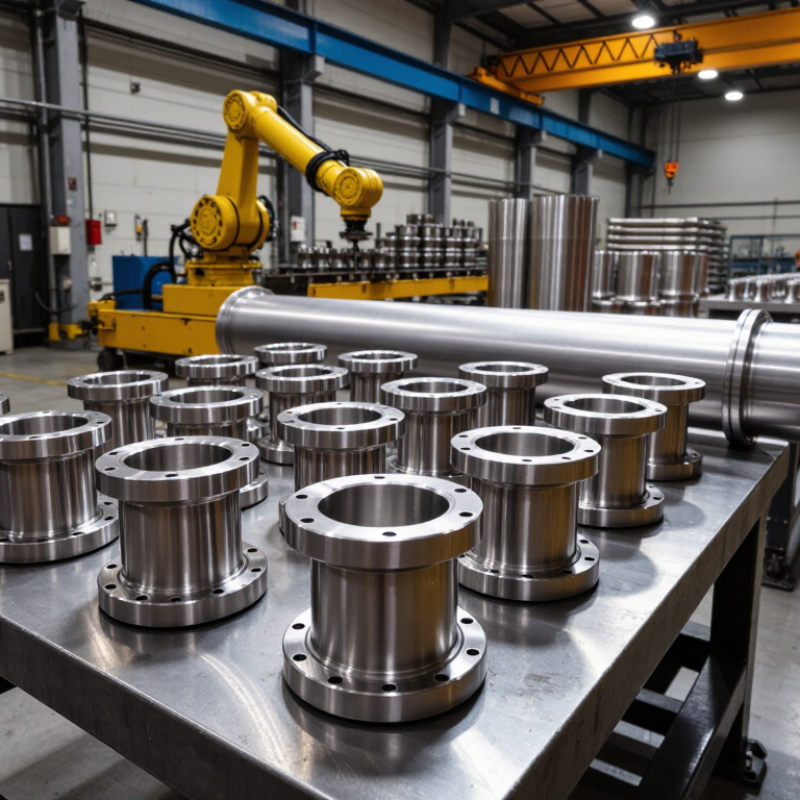
Leading concentric reducer fitting manufacturers distinguish themselves through controlled forming, not catalog size alone. Many use seamless pipe, hot forming, or welded plate, depending on diameter, wall thickness, and service demands. A heated blank is pressed or forged until both ends share one centerline. Temperature matters. Uneven heating can create ovality, thin spots, or residual stress. Experienced operators record furnace cycles and forming pressure for each batch. Some production lines use mandrels and hydraulic presses, while others use qualified welding procedures for large fittings. The best choice depends on application, not marketing language.

Material selection begins with fluid, pressure, temperature, and corrosion exposure. Carbon steel suits many general utility systems, while stainless steel supports cleaner or more corrosive duties. Low-alloy grades may offer better strength at elevated temperatures. Manufacturers verify heat numbers through mill certificates and positive material identification. Machining then controls bevel angle, end diameter, and face alignment. A few tenths of a millimeter can affect field fit-up. It happens.

Quality control should combine dimensional inspection, visual checks, hardness testing, and non-destructive examination where risk requires it. Inspectors may use ultrasonic testing to find internal discontinuities, dye penetrant testing for surface cracks, and hydrostatic testing to confirm pressure integrity. Calibrated gauges, traceable records, and independent review make results more credible. Packaging also matters; capped ends and dry storage help prevent damage and contamination. No factory process is flawless. Occasional rework, unclear records, or rushed inspections reveal weaknesses that serious manufacturers must examine rather than hide.

Concentric Reducer Fittings: Representative Material Strength

Minimum specified mechanical properties commonly used for materials manufactured to ASTM and ASME fitting specifications. Actual values depend on grade, wall thickness, heat treatment, and product standard.

Manufacturing processes
Concentric reducers are commonly produced by hot forming, cold forming, or welded fabrication, followed by sizing, heat treatment, machining, and surface finishing.
Material selection
Carbon steel is widely used for general industrial service, while austenitic stainless steel and duplex stainless steel are selected for corrosion resistance and higher strength.
Quality control
Typical controls include dimensional inspection, visual examination, positive material identification, hardness testing, hydrostatic or pneumatic testing, and radiographic or ultrasonic examination where specified.

Reference basis: representative minimum tensile and yield-strength requirements associated with ASTM A234 WPB, ASTM A403 WP304L/WP316L, and ASTM A815 UNS S32205 fitting materials. Verify the governing edition and purchase specification before use.

How to Select the Right Concentric Reducer Fitting Supplier

Top Concentric Reducer Fitting Manufacturers Worldwide?

How to Select the Right Concentric Reducer Fitting Supplier

Selecting a concentric reducer fitting supplier requires more than comparing prices. Start with material traceability, dimensional accuracy, and pressure ratings. Ask for mill certificates, inspection reports, and clear production records. A reliable supplier should explain how each fitting is formed, welded, heat-treated, and tested.

Look for experience with your pipe material, diameter range, wall thickness, and service temperature. Carbon steel, stainless steel, and alloy fittings require different controls. Confirm compliance with relevant standards, such as ASME, EN, or ISO requirements. Request sample drawings before production. Small dimensional errors can complicate installation.

Communication matters too. Can the supplier answer technical questions without vague promises? Check lead times, packaging methods, and replacement procedures. Protective caps and dry storage can prevent damaged ends and surface corrosion. Ask how nonconforming products are handled. Documentation should be complete, but not decorative.

A low quote may hide weak inspection practices. Be careful.

During supplier evaluations, I have found that polished catalogs can distract from basic evidence. No checklist is perfect. Recheck assumptions with a sample order, especially for critical piping systems. A supplier with transparent limitations may be more dependable than one claiming flawless performance.

Plug & Play Installation

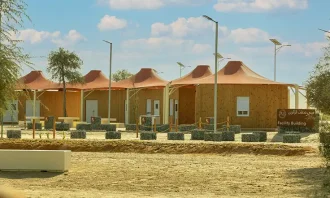
Our installation services are top-notch, delivering modular systems for any application on time in plug & play condition. We leave nothing for you to figure out, set up, or fix. All you’ve to do is just step in, and get going with your business.

Dismantling & Reassembling

We hold a long-term view when we build modular rooms taking into consideration your changing needs. Whether it’s shifting your workspace to a new site, redesigning your unit to fit new requirements, or simply clearing the area at the end of the project, our Dismantling & Reassembling teams are pressed into service to get the job done in the quickest possible time and minimum resource wastage.

Interior Designing

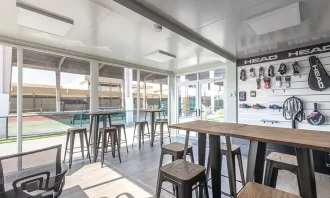
Our interior designs combine both functional and aesthetic aspects to provide you with physical and emotional comfort. We ask you for your preferences and give the best possible solutions aligned to your tastes. Our units are built to be modern, stylish, and elegant.

Bespoke Solutions

We understand that every project is unique and therefore has a different set of requirements. That’s why we believe in customizing our solutions to fit individual needs. We are equipped with the right talents, technology, and skillset to offer bespoke modular units, without compromising on turnaround time or quality.

Aftersales Service

The benefits of choosing Containers ME continues long after the installation of the units as we provide aftersales service for as long as you need. All you have to do is sign the Annual Maintenance Contract (AMC) and enjoy technical support for all the maintenance-related issues. By signing the contract, you can rest assured that a highly professional team of dedicated staff are at your service all year round to attend to your needs.

Customized Container Solutions

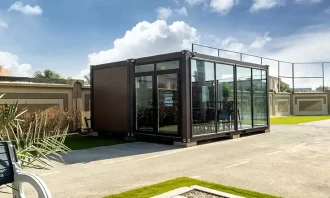
We specialize in Customized Container Solutions designed to meet diverse needs across the UAE. Our offerings include customized modular containers that cater to various applications, from tailor-made container solutions to bespoke container designs.

Whether you’re looking for personalized container homes or custom modular containers, we have you covered. Our customized container offices provide functional workspaces, while our customized portable containers ensure flexibility on-site. Explore our range of custom container storage units and customized cargo containers to optimize your space.

We also offer custom container leasing and custom container fabrication services, along with customized sea containers designed for secure transport. For specialized needs, our specialized container modifications will help you create the perfect solution for your requirements in both Dubai and the broader UAE.

Get a quote

Get a quote