
Blogs

7 Tips for Choosing Slim Frame Aluminum Sliding Doors

Slim frame aluminum sliding doors create broad views with less visible framing, but appearance alone cannot predict comfort or durability. A sleek panel may still leak air, rattle in wind, or feel cold beside the sofa. Small details matter.

The U.S. Department of Energy’s Energy Saver guidance estimates that heat gain and heat loss through windows account for about 25%–30% of residential heating and cooling energy use. This figure covers windows generally, not sliding doors alone. Still, it shows why glass selection and frame design deserve careful attention. Check the product’s NFRC-rated U-factor and solar heat gain coefficient, rather than relying only on brochure claims. A thermally broken frame, suitable glazing, and well-sealed meeting rails can affect real-world performance.

This guide shares seven practical checks for comparing Slim frame aluminum sliding doors, from frame proportions and panel size to rollers, drainage, and installation quality. Ask how the door performs in your climate, how its hardware handles the panel’s weight, and whether replacement parts are available. Standards and ratings help, but they cannot correct poor installation. That part is easy to underestimate. A sample corner, track, and handle can reveal more than a polished showroom display. Some choices remain trade-offs: slimmer sightlines may reduce visible framing, yet glass area, thermal performance, budget, and maintenance still need to fit the home.
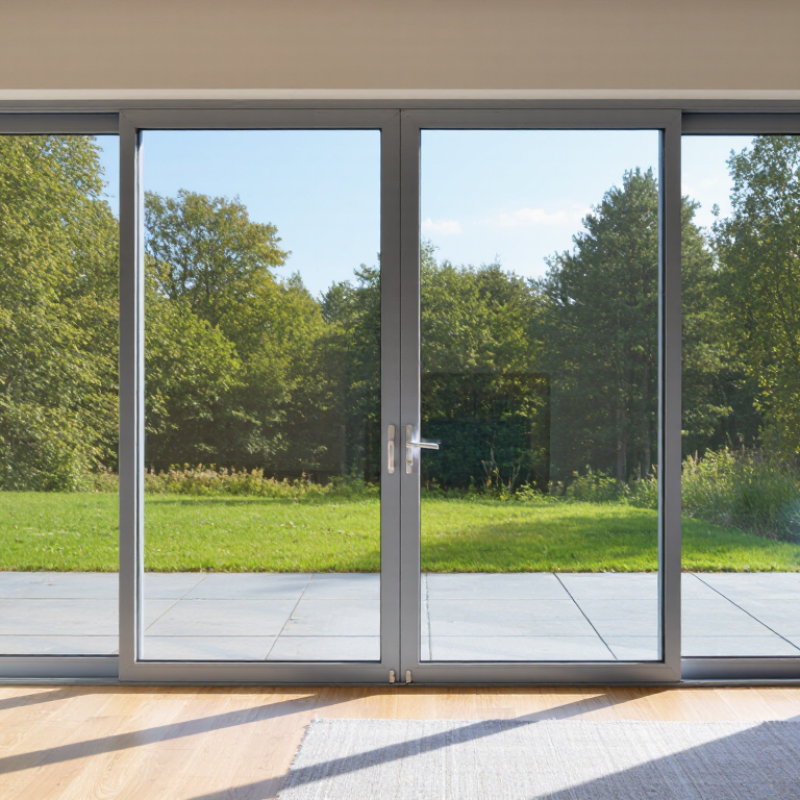
7 Tips for Choosing Slim Frame Aluminum Sliding Doors

Define the Door’s Size, Layout, and Opening Requirements

Tip: Measure the opening, not only the existing door. Record the width at the top, middle, and bottom, plus the height at both sides. Uneven walls are common. A small error can prevent smooth sliding.

Define the door’s final size and layout before choosing a slim frame aluminum system. Decide whether the panels will slide left, right, or meet in the center. Check the clear opening after panels, tracks, handles, and seals are installed. A four-panel layout may look impressive, but it can reduce the usable passage. Leave enough space for furniture, curtains, and daily movement.

Tip: Confirm the rough opening and installation conditions with an experienced installer. The sill needs a level, stable base, while the wall must support the frame without movement. Check drainage paths and the finished floor height before ordering. A low threshold may improve access, yet it may require careful water management in exposed locations.

These details are easy to miss. I have seen attractive layouts fail because the handle struck a nearby wall. Review the opening direction on a floor plan, then verify it on site. Measurements should be written down, dated, and checked by another person before production.


Compare Frame Profiles, Aluminum Grades, and Finishes

Slim Frame Aluminum Sliding Doors: Compare Frame Profiles, Aluminum Grades, and Finishes

A slim frame is not automatically better. I once inspected a showroom door with a narrow sightline but a weak roller system. It looked elegant and moved poorly.

Compare the visible profile, frame depth, and thermal-break design together. A deeper profile can improve stiffness, drainage, and glass support. Thermally broken aluminum also limits heat transfer through the frame. The 2023 IEA Global Status Report states that buildings consume about 30% of global final energy. Frame performance deserves attention.

Ask for the aluminum grade, not only the appearance. 6063 alloy is widely used for extrusions because it produces clean, detailed profiles. 6061 offers higher strength but can be less convenient for complex extrusion shapes.

Confirm temper, wall thickness, and engineering calculations. Thin walls may reduce sightlines, but they can increase deflection under wind loads. That trade-off is easy to miss.

For finishes, anodizing gives a hard metallic surface and visible grain variation. Powder coating offers broader colors and strong weather resistance when properly applied. Check coating thickness, salt-spray testing, and warranty terms.

The International Aluminium Institute reports that recycled aluminum requires roughly 95% less energy than primary production. Ask about recycled content and certification, but do not assume every “green” claim is verified.

A sample corner, operated repeatedly, often reveals more than a polished brochure.

Select Glass for Energy Efficiency, Comfort, and Safety

Glass selection strongly affects energy efficiency, comfort, and safety in slim frame aluminum sliding doors. Glass deserves careful attention.

I measure the room’s sunlight, climate, and window direction before choosing glazing. For cold climates, double glazing with a low-emissivity coating can reduce indoor heat loss. In sunny rooms, solar-control glass can limit heat gain and fading. U-value shows insulation performance, while SHGC indicates how much solar heat enters. Lower U-values usually improve insulation, but local conditions still matter. Ask for certified performance data, not vague claims.

Safety glass is essential for large moving panels. Tempered glass breaks into smaller pieces, reducing sharp edges after impact. Laminated glass holds together when cracked, offering better protection and noise control. Both have limits. Local building requirements should guide the final choice. A qualified installer should also check edge clearances, drainage, seals, and panel weight. These details influence comfort as much as the glass itself.

Warm-edge spacers can reduce condensation around the glass perimeter. Argon-filled cavities may improve insulation when sealed correctly. I once focused too heavily on center-glass performance and ignored the frame connection. That mistake created a cold strip near the door edge. Ask how the complete door system performs, not only the glass sample. Request installation details and maintenance guidance in writing. A small test panel can reveal glare, reflections, and privacy problems before installation.

7 Tips for Choosing Slim Frame Aluminum Sliding Doors - Select Glass for Energy Efficiency, Comfort, and Safety

Compare the complete door system—not glass alone. Performance varies with the door’s size, frame, glazing configuration, installation, and local climate. Lower U-factor means less heat transfer; SHGC indicates how much solar heat passes through the glazing.

Tip Glass or Feature to Consider What to Check Comfort and Safety Benefit
1. Compare whole-door energy ratings Insulating glass units (IGUs), commonly double-glazed; triple glazing may suit colder climates. Review the whole-door U-factor and SHGC on the product label or performance documentation. Compare products tested using the same method and size where possible. A lower U-factor generally reduces heat loss and heat gain through the door. The right SHGC depends on climate, orientation, shading, and heating or cooling needs.
2. Choose a suitable Low-E coating Low-emissivity (Low-E) coated glass, selected for the local climate and home orientation. Ask whether the coating is designed to limit unwanted solar heat, retain indoor heat, or balance both. Check the resulting whole-door ratings rather than relying on the coating name alone. Low-E coatings can reduce heat transfer while allowing visible daylight. The appropriate coating can help manage overheating or winter heat loss.
3. Match SHGC to sunlight exposure Solar-control glazing for strongly sunlit locations; higher solar-gain glazing may be useful where passive winter heat is desired. Consider the door’s direction, exterior shading, local climate, and nearby trees or buildings. Do not assume that the lowest SHGC is best for every home. A suitable SHGC can help control summer overheating while supporting useful daylight and, where appropriate, passive solar heating.
4. Check gas fill and edge details Sealed IGUs may use argon between panes; warm-edge spacers separate the panes around the glass perimeter. Confirm the specified glazing build-up and ask about spacer type, seal durability, and warranty. Gas-filled units depend on intact edge seals. Argon can improve insulation compared with air in an IGU. Warm-edge spacers can reduce heat transfer at the glass edge and help limit condensation in suitable conditions.
5. Specify safety glazing where required Tempered or laminated safety glass, as appropriate for the door location and applicable building rules. Check local code requirements for glazing in sliding doors and nearby impact-risk areas. Confirm which panes require safety glazing and request documentation. Tempered glass is designed to break into smaller, less sharp pieces. Laminated glass holds fragments together with an interlayer if it breaks; the two types provide different benefits.
6. Balance slim sightlines with glass performance A glazing unit compatible with the door’s narrow-frame design and available sash depth. Verify the maximum glass thickness, pane combination, and permitted glass weight for the specific door system. Ask for performance ratings for the exact configuration. A slim frame can increase the visible glass area, but the frame and sash still affect insulation, durability, and operation. Compatibility helps avoid choosing a glass build-up the door cannot support.
7. Consider glare, privacy, and maintenance Clear, tinted, patterned, or privacy glass; optional interior or exterior shading can also be considered. Check visible light transmission, appearance from both sides, cleaning instructions, and whether the glass option changes the door’s energy ratings. The right choice can improve daylight, privacy, and glare control. Exterior shading can reduce solar gain without permanently darkening the glass.

Evaluate Sliding Hardware, Weather Seals, and Security Features

Slim-frame aluminum sliding doors look elegant, but their performance depends on hidden components. The U.S. Department of Energy reports that windows can cause 25–30% of residential heating and cooling energy loss. Sliding doors deserve similar scrutiny.

Tip 1: Inspect the rollers. They should glide smoothly without scraping.
Tip 2: Choose adjustable stainless-steel or corrosion-resistant hardware.
Tip 3: Ask for tested operating force and cycle performance under recognized door standards. A beautiful panel is useless when it becomes difficult to move.

Tip 4: Examine the weather seals closely. Continuous compression gaskets should meet cleanly at corners.

Tip 5: Request tested air-leakage and water-penetration results. NFRC labels can provide useful U-factor and air-leakage information, although labels do not replace installation quality.

Tip 6: Check the drainage path beneath the track. Small debris can block it quickly.

Tip 7: Review security features, including multi-point locks, anti-lift blocks, and laminated safety glazing. Independent testing is more convincing than vague claims.

I once focused too heavily on frame sightlines and overlooked the track design. That was a costly lesson. Proper shimming, fastening, and perimeter sealing often decide whether a slim door stays quiet, dry, and secure.

Check Installation Standards, Warranty Coverage, and Maintenance Needs

Before ordering slim frame aluminum sliding doors, confirm that the opening and installation plan meet applicable building requirements. Ask how the installer will check the wall structure, sill support, drainage, and wind exposure. A level track matters: even a small dip can make a large panel slide unevenly. Request written measurements and details about flashing and water management. Standards vary by location, so a generic checklist may not cover your home.

Get warranty terms in writing, not just a verbal estimate. Check what is covered for the frame, glass, rollers, seals, and labor, and how long each part is protected. Note exclusions for coastal air, missed maintenance, or accidental damage. These details can feel tedious. They matter later. If the warranty is unclear about who handles service, ask before signing; I would not assume the installer and manufacturer share responsibility.

Maintenance should be practical for your space. Vacuum the track to remove grit, then wipe it with a soft cloth; trapped sand can wear rollers. Keep drainage openings clear, and inspect seals for gaps or brittleness a few times each year. Avoid harsh abrasives on the frame. If the panel begins to drag, do not force it. The cause may be simple, but repeated adjustment without the right tools can worsen alignment. A little upkeep helps, though it will not prevent every repair.

Plug & Play Installation

Our installation services are top-notch, delivering modular systems for any application on time in plug & play condition. We leave nothing for you to figure out, set up, or fix. All you’ve to do is just step in, and get going with your business.

Dismantling & Reassembling

We hold a long-term view when we build modular rooms taking into consideration your changing needs. Whether it’s shifting your workspace to a new site, redesigning your unit to fit new requirements, or simply clearing the area at the end of the project, our Dismantling & Reassembling teams are pressed into service to get the job done in the quickest possible time and minimum resource wastage.

Interior Designing

Our interior designs combine both functional and aesthetic aspects to provide you with physical and emotional comfort. We ask you for your preferences and give the best possible solutions aligned to your tastes. Our units are built to be modern, stylish, and elegant.

Bespoke Solutions

We understand that every project is unique and therefore has a different set of requirements. That’s why we believe in customizing our solutions to fit individual needs. We are equipped with the right talents, technology, and skillset to offer bespoke modular units, without compromising on turnaround time or quality.

Aftersales Service

The benefits of choosing Containers ME continues long after the installation of the units as we provide aftersales service for as long as you need. All you have to do is sign the Annual Maintenance Contract (AMC) and enjoy technical support for all the maintenance-related issues. By signing the contract, you can rest assured that a highly professional team of dedicated staff are at your service all year round to attend to your needs.

Customized Container Solutions

We specialize in Customized Container Solutions designed to meet diverse needs across the UAE. Our offerings include customized modular containers that cater to various applications, from tailor-made container solutions to bespoke container designs.

Whether you’re looking for personalized container homes or custom modular containers, we have you covered. Our customized container offices provide functional workspaces, while our customized portable containers ensure flexibility on-site. Explore our range of custom container storage units and customized cargo containers to optimize your space.

We also offer custom container leasing and custom container fabrication services, along with customized sea containers designed for secure transport. For specialized needs, our specialized container modifications will help you create the perfect solution for your requirements in both Dubai and the broader UAE.

Get a quote

Get a quote



