Blogs

7 Tips for Choosing the Right Hydraulic Couplers

Hydraulic Couplers connect hoses, tools, and equipment, but a small mismatch can cause leaks, pressure loss, or difficult connection. Choosing the right model takes more than matching thread size. Working pressure, flow rate, fluid type, temperature range, and connection style all matter. A coupler that fits physically may still restrict flow or wear quickly under demanding cycles.

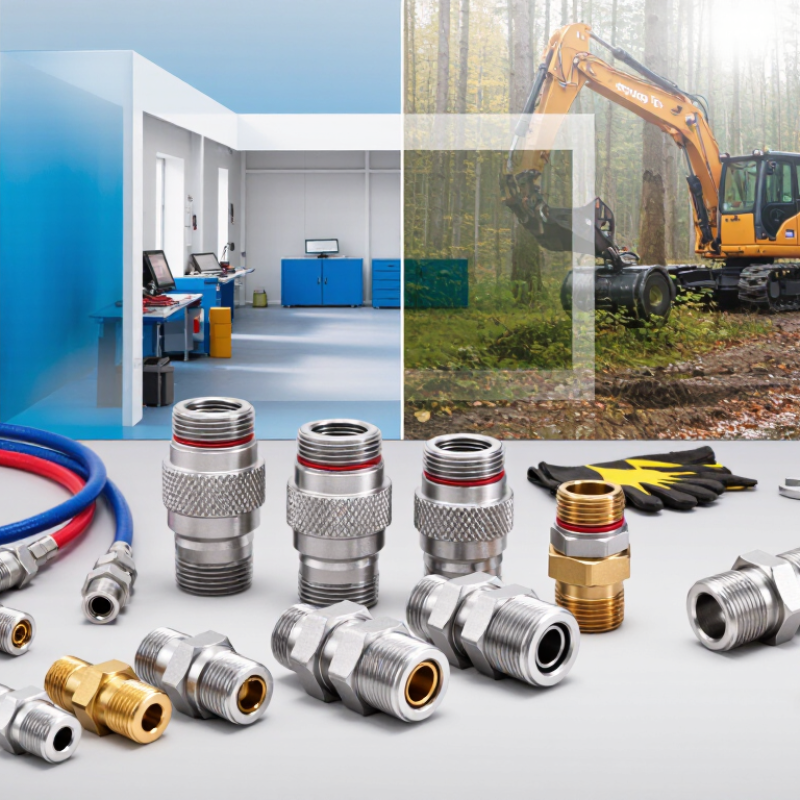
This guide explains seven practical checks for selecting Hydraulic Couplers with confidence. It covers application requirements, materials, sealing methods, interchangeability, connection and disconnection, maintenance, and supplier documentation. For example, a forestry attachment exposed to grit and rain may need different protection than a clean indoor test rig. A workshop tool that is changed several times each day also brings different priorities, such as connection ease and reduced downtime. Check the machine manual and coupler specifications, then verify that both halves are compatible before installation. Small details count.

Good selection also depends on how equipment is actually used. Frequent tool changes can make ease of connection important, while high-pressure service calls for careful ratings review. Do not rely on appearance alone. A familiar fitting can hide a different seal or pressure limit. Product data from a reputable manufacturer helps, but field conditions still deserve attention. No checklist removes every uncertainty; even experienced technicians sometimes find an overlooked detail after a coupler is put to work. That is a reason to inspect, test safely, and revisit the choice when operating conditions change. Routine checks for visible damage, leakage, or difficult connection can also flag problems early. The following tips offer a clear starting point for making a durable, practical match.
7 Tips for Choosing the Right Hydraulic Couplers

Identify the Equipment, Application, and Operating Requirements

Choosing a hydraulic coupler starts with identifying the equipment it must serve. Check the machine’s model documentation, existing connection type, hose size, and available space. Measure the mating ends rather than relying on appearance; similar-looking profiles may not connect or seal correctly. Small details matter. Note whether the circuit powers a cylinder, motor, or other attachment, and whether flow direction changes during operation.

Then match the coupler to real working conditions. Confirm the system’s maximum pressure, expected flow rate, fluid type, and operating temperature, including brief pressure spikes when equipment starts or stops. A coupler with an inadequate flow capacity can restrict performance and generate heat. Dirt is another concern: dusty job sites and frequent attachment changes call for careful connection and cleanliness practices. Do not guess. Compare measurements and ratings with reliable equipment documentation, and ask a qualified hydraulic technician when specifications are unclear. I have seen selection decisions focus on pressure alone; that can overlook flow, fit, or exposure to weather. A short check of all operating requirements can prevent leaks, difficult connections, and premature wear.


Choose a Coupler Type That Fits the Hydraulic System

Choosing a hydraulic coupler starts with the system’s working conditions, not its appearance. Check operating pressure, peak pressure, flow rate, fluid type, and how often connections are made. A coupler that fits the hose may still restrict flow or exceed its pressure rating. Small details matter.

Flat-face couplers help limit fluid loss during connection and disconnection, which can be useful around dusty equipment. Poppet-style couplers provide a dependable seal, but trapped pressure may make reconnection difficult. Threaded couplers resist loosening under vibration, though they take longer to connect. There is no perfect type. A chart cannot capture every muddy, cold jobsite.

Match the coupler’s size, material, seal, and connection profile to the hose and equipment specifications. Nominally similar couplers may not be interchangeable. Check both halves, and confirm the system’s required flow rather than relying on port size alone. If operators connect tools repeatedly, handling effort matters too. Test the choice under normal operating conditions, while following the equipment manual and depressurizing the system before inspection. A rushed fit can become a persistent leak.

7 Tips for Choosing the Right Hydraulic Couplers

Choose a Coupler Type That Fits the Hydraulic System

Tip Selection Dimension What to Check Practical Guidance
1 Working pressure The system’s maximum operating pressure, pressure spikes, and the coupler’s rated working pressure. Choose a coupler rated for the system conditions. Check pressure ratings for both connected halves and follow the equipment manufacturer’s specifications.
2 Flow and pressure drop Required flow rate, coupler passage size, and pressure-drop data at the intended flow. Match the coupler size to the circuit’s flow needs. A restriction can increase pressure loss and heat; compare flow curves where available.
3 Connection style Whether the system needs push-to-connect, screw-to-connect, or another specified coupling mechanism. Push-to-connect designs can support quick servicing; screw-to-connect designs can help resist separation under demanding conditions. Select for the actual operating procedure.
4 Valve and face design The required shutoff arrangement, connection frequency, and need to limit fluid loss or air entry during disconnection. Flat-face couplers are often chosen where minimizing spillage and simplifying cleaning are priorities. Poppet-style designs are common in many general hydraulic applications.
5 Fluid and seal compatibility Hydraulic fluid type, operating temperature range, and compatibility of wetted materials and seals. Confirm compatibility against the coupler specification. Do not assume a seal material or fluid rating suits every oil, fluid formulation, or temperature.
6 Connection standard and size Thread type, nominal size, mating profile, and any applicable dimensional or interchangeability standard. Verify the exact profile and thread specification for both halves. Similar-looking couplers may not be interchangeable or seal correctly.
7 Operating environment and safety Exposure to dirt, moisture, vibration, impact, and the possibility of connecting or disconnecting under pressure. Use protective caps and keep mating surfaces clean. Check whether the coupler is approved for connection under pressure; depressurize the circuit unless the specification explicitly permits otherwise.

Match Pressure, Flow Rate, and Connection Size

Choosing hydraulic couplers starts with matching working pressure, not just the machine’s advertised maximum. Check the rating of every component in the circuit, including hoses, adapters, and tools. The coupler must handle the system’s operating pressure and expected pressure spikes. A weak link can leak or fail. Small details matter.

Next, compare coupler flow capacity with the pump’s output and the tool’s demand. An undersized passage can restrict oil flow, generate heat, and slow a cylinder. A larger coupler is not automatically better; it may add bulk or create an unnecessary restriction elsewhere. Check flow charts where available, and consider how long the tool runs under load. Do not guess.

Connection size needs equal care. Measure the port and confirm its thread type, pitch, and sealing method; similar-looking threads may not fit safely. Also check the coupler’s internal passage, since the outside diameter alone does not reveal flow capacity. Dirt on a seal face can cause a persistent drip, even with a correctly sized connection. Keep mating surfaces clean, then test the connection at low pressure before returning the equipment to full service. If the old fitting’s size is uncertain, pause and verify it rather than forcing a match.

Check Material, Seal, and Fluid Compatibility

A hydraulic coupler can look sound and still fail when its seal meets the wrong fluid. Check the body material against pressure, temperature, and corrosion exposure. Then verify the seal against the exact fluid formulation, including additives and cleaning agents. Nitrile often suits petroleum-based oils, while EPDM is generally unsuitable for them; neither rule replaces a compatibility check. ASTM D471 immersion testing measures changes such as rubber volume, mass, and hardness. Ask for test data under conditions close to your operating temperature and exposure time. There is no universal swelling limit that guarantees a seal will work in every coupler. That part is easy to overlook.

Tip: Match the coupler’s wetted materials and seal to the fluid manufacturer’s compatibility data. Confirm the fluid’s operating temperature, too. ISO 4406:2021 codes particle cleanliness at three size thresholds: 4, 6, and 14 μm(c). Each one-code rise represents roughly twice the particle count in that size range. This is a useful cleanliness check after connection, not proof of chemical compatibility. Inspect seals for softening, cracking, or extrusion during service; a quick visual check can miss early damage. Keep a record of fluid changes and seal replacements. It may feel fussy, but it helps reveal patterns before leakage starts.

Evaluate Ease of Use, Maintenance, and Safety Features

Choosing a hydraulic coupler is not only about matching thread size and operating pressure. Check whether the connection can be made easily with the gloves you actually wear. A sleeve that sticks or a collar that needs two hands can slow work in tight spaces. Try the coupling motion before buying, if possible. That matters.

Look for clear engagement: the halves should seat fully, and the locking sleeve should return to position without forcing it. A visible mark or audible click can help, but neither replaces a hands-on check. After connecting, confirm the lock is engaged and inspect for leaks at low pressure, following the equipment’s operating instructions. Some couplers feel smooth in a showroom but awkward beside a machine. It is worth admitting that fit depends on the worksite.

Maintenance affects reliability. Choose a design that allows routine inspection of seals and locking parts, and keep protective caps nearby to limit dirt entering open ends. Wipe the connection before use; grit can damage sealing surfaces. Check for cracked seals, corrosion, or fluid weeping, and replace worn parts with compatible components. Safety features such as pressure-rated construction and secure locking reduce risk, but they do not make trapped pressure harmless. Never disconnect a pressurized line. Follow the system’s pressure-release procedure, and do not rely on memory alone. Small details count.

Plug & Play Installation

Our installation services are top-notch, delivering modular systems for any application on time in plug & play condition. We leave nothing for you to figure out, set up, or fix. All you’ve to do is just step in, and get going with your business.

Dismantling & Reassembling

We hold a long-term view when we build modular rooms taking into consideration your changing needs. Whether it’s shifting your workspace to a new site, redesigning your unit to fit new requirements, or simply clearing the area at the end of the project, our Dismantling & Reassembling teams are pressed into service to get the job done in the quickest possible time and minimum resource wastage.

Interior Designing

Our interior designs combine both functional and aesthetic aspects to provide you with physical and emotional comfort. We ask you for your preferences and give the best possible solutions aligned to your tastes. Our units are built to be modern, stylish, and elegant.

Bespoke Solutions

We understand that every project is unique and therefore has a different set of requirements. That’s why we believe in customizing our solutions to fit individual needs. We are equipped with the right talents, technology, and skillset to offer bespoke modular units, without compromising on turnaround time or quality.

Aftersales Service

The benefits of choosing Containers ME continues long after the installation of the units as we provide aftersales service for as long as you need. All you have to do is sign the Annual Maintenance Contract (AMC) and enjoy technical support for all the maintenance-related issues. By signing the contract, you can rest assured that a highly professional team of dedicated staff are at your service all year round to attend to your needs.

Customized Container Solutions

We specialize in Customized Container Solutions designed to meet diverse needs across the UAE. Our offerings include customized modular containers that cater to various applications, from tailor-made container solutions to bespoke container designs.

Whether you’re looking for personalized container homes or custom modular containers, we have you covered. Our customized container offices provide functional workspaces, while our customized portable containers ensure flexibility on-site. Explore our range of custom container storage units and customized cargo containers to optimize your space.

We also offer custom container leasing and custom container fabrication services, along with customized sea containers designed for secure transport. For specialized needs, our specialized container modifications will help you create the perfect solution for your requirements in both Dubai and the broader UAE.

Get a quote

Get a quote