
China’s railway equipment sector continues to attract global attention, making supplier selection more complex than comparing prices. The UNIFE World Rail Market Study 2024 reports continued long-term growth in the global rail supply market, supported by urban transit investment, fleet renewal, and freight modernization. This trend increases demand for reliable cast and forged railway components, including the Fr209e Type Coupler Body.
A capable Chinese supplier should demonstrate more than production capacity. Buyers need traceable steel certificates, controlled heat treatment, dimensional inspection, and repeatable casting performance. The AAR Manual of Standards and Recommended Practices provides widely recognized guidance for freight-car coupler components, while EN 15566 addresses mechanical requirements for railway vehicle draw gear. These references help purchasers compare factories using technical evidence instead of attractive catalog language.
Look closely at the details. Ask for material grades, ultrasonic testing records, hardness results, and sample inspection reports. Examine the machining area, not only the showroom. A qualified manufacturer should explain mold design, riser control, non-destructive testing, and corrective-action procedures clearly. Experience matters here.
However, no single report names one universal “top” supplier. Product quality depends on application, approval route, batch size, and after-sales discipline. That is an important limitation. This introduction therefore evaluates China-based Fr209e Type Coupler Body suppliers through manufacturing capability, quality systems, documentation, delivery performance, and engineering support. The strongest candidate is not always the largest factory. It is the supplier that can prove stable performance, communicate honestly, and support verification from first sample to regular production.
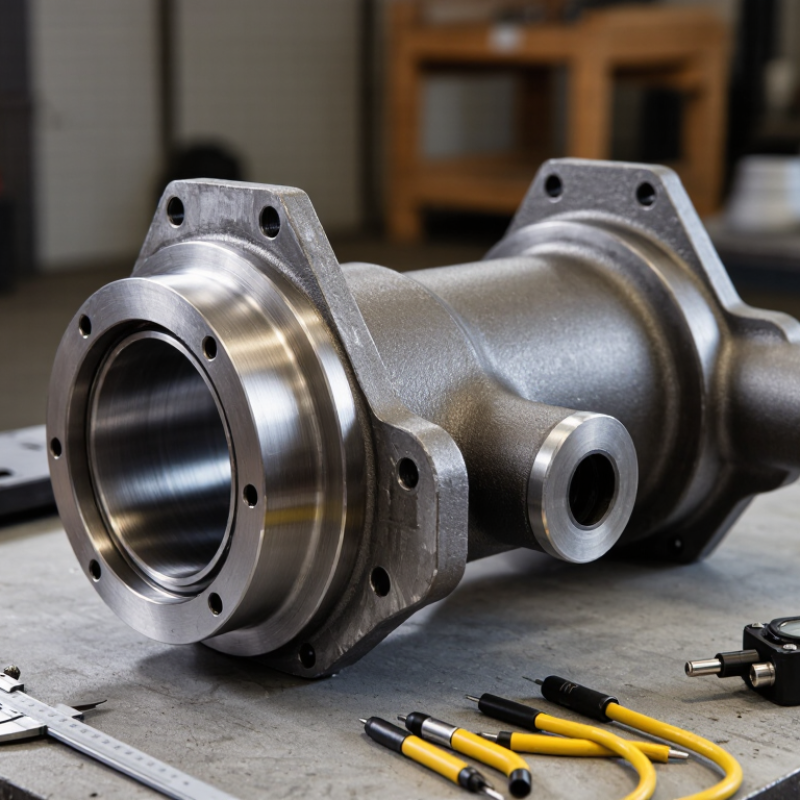
The FR209E type coupler body is the main structural housing of a railway coupler assembly. It supports the knuckle, locking parts, and connected operating components. Its shape helps maintain alignment between two rail vehicles during coupling and movement.
The body transfers draft and buff forces through the coupler system. It must resist pulling, compression, vibration, and repeated impact. A dependable coupler body normally requires controlled casting, accurate machining, and documented material testing. Inspections may include dimensional checks, surface examination, and non-destructive testing. Small errors matter. A drawing can look correct while an uneven contact surface creates unwanted stress. Practical supplier evaluation should include heat records, inspection reports, and traceable production batches.
Tips: Check critical dimensions against approved drawings. Inspect mounting surfaces for distortion or casting defects. Ask how repairs, rework, and final verification are recorded. Do not judge quality by appearance alone. That shortcut often fails. The best supplier also explains process limits clearly, even when a result needs correction.

China Top FR209E Type Coupler Body Supplier?
A reliable FR209E coupler body supplier should provide drawing-controlled dimensions, not vague catalog claims. Key checks include coupler-head profile, knuckle pocket geometry, shank alignment, and mounting-face accuracy. These features directly affect coupler engagement and draft-force transfer.
Material documentation matters. Heavy-duty railway coupler bodies commonly use cast alloy steel with tensile strength near 827 MPa and yield strength around 655 MPa, depending on the approved specification. The AAR 2024 Field Manual uses comparable mechanical benchmarks for high-load coupler components. Chemical analysis, heat numbers, hardness results, and impact-test records should accompany every production batch. Small gaps in traceability create large maintenance risks.
Typical inspection should include dimensional gauging, magnetic-particle testing, ultrasonic examination, and load verification. The ERA Railway Safety Performance Report 2024 shows that maintenance quality and inspection discipline remain important contributors to railway safety performance. The UNIFE World Rail Market Study 2024 estimates the global rail supply market at about €201 billion annually during 2021–2023, increasing pressure on suppliers to standardize quality.
Supplier audits should review furnace control, mold filling, heat treatment, and machining capability. A 3D scan can reveal a slight distortion near the shank. That detail is easy to miss. I would also question any supplier offering unusually low pricing without fatigue data. FR209E drawings, service loads, and acceptance criteria must be verified before approval.
A reliable FR209E type coupler body supplier must control materials from the first melt. The specified cast-steel grade should match approved drawings, service loads, and operating temperatures. Chemical composition needs testing before pouring. Carbon, manganese, silicon, phosphorus, and sulfur levels affect strength and toughness. Material certificates should connect each heat number to the finished coupler body.
Manufacturing quality begins with controlled patterns and stable casting parameters. Experienced foundries monitor mold condition, pouring temperature, riser performance, and cooling time. Heat treatment must be recorded, not simply reported as completed. Hardness and tensile testing can confirm consistency. Dimensional checks should cover the knuckle area, shank, draft pocket, and mounting surfaces. Small errors matter here. They can create uneven loads during service.
Non-destructive testing adds another layer of confidence. Visual inspection, magnetic particle testing, and ultrasonic examination can identify surface or internal defects. Inspectors should use calibrated equipment and written acceptance criteria. Traceability must remain visible through marking, inspection reports, and shipment records. A perfect-looking casting can still hide a serious flaw. No inspection plan is flawless. Suppliers should review rejected parts, investigate root causes, and improve process controls rather than only replace defective pieces. Audits, sample verification, and clear communication help buyers judge whether production quality is repeatable, not accidental.
How to Evaluate a Top China FR209E Coupler Body Supplier
A reliable FR209E coupler body supplier should provide clear technical evidence, not only attractive pricing. Request approved drawings, material specifications, heat-treatment records, and inspection standards. The body should match critical dimensions, including knuckle seating areas, pin holes, and mounting surfaces. Even a small mismatch can create installation delays.
Ask how the supplier controls production from raw material to final inspection. Traceability should connect each coupler body with a batch number, operator record, and test report. Check whether the factory uses coordinate measuring machines, hardness testers, and calibrated gauges. Independent inspection can add confidence before shipment. In my experience, factory photographs help, but physical samples reveal more. They also reveal problems we did not expect.
Tips: Compare one sample against the approved drawing. Check surface cracks, uneven machining, weld quality, and identification marks. Request a dimensional report with actual values, not only “qualified.” Review the supplier’s experience with similar railway components, production capacity, and response time. A supplier that answers technical questions clearly is usually easier to manage. However, certifications alone are not enough. Some documents may be current while shop-floor controls remain inconsistent. A trial order, witnessed inspection, and written acceptance criteria can reduce that risk. Keep communication specific. Vague promises often become expensive corrections.
Choosing a China Top FR209E Type Coupler Body Supplier requires more than comparing unit prices. During procurement, I request current drawings, material specifications, production capacity, and inspection procedures. The supplier should confirm tolerance requirements before accepting the order. Small misunderstandings can affect assembly.
A practical purchase order should state material grade, heat-treatment requirements, surface condition, marking, packing, and delivery terms. I also ask for sample approval before mass production. During inspection, check bore diameter, mounting holes, key dimensions, casting surfaces, hardness, and visible cracks. Calibrated gauges and traceable inspection records matter. Photographs alone are not enough. A third-party inspection can reduce uncertainty, especially for a new supplier.
After-sales support should be measured before shipment. Ask how defects are reported, who reviews evidence, and how corrective actions are documented. Reliable suppliers usually provide batch records, replacement procedures, and technical responses within an agreed timeframe. Keep spare coupler bodies only when storage conditions are suitable. Moisture and rough handling can damage finished surfaces. I once accepted a shipment after checking dimensions but overlooked inconsistent marking. The parts were usable, yet sorting consumed time. That mistake changed our inspection checklist. Supplier performance should be reviewed after each order, including response speed, packaging quality, dimensional consistency, and whether promised improvements actually appear in the next batch.
Subscribe to our newsletter for the latest news and exclusive offers.
We hold a long-term view when we build modular rooms taking into consideration your changing needs. Whether it’s shifting your workspace to a new site, redesigning your unit to fit new requirements, or simply clearing the area at the end of the project, our Dismantling & Reassembling teams are pressed into service to get the job done in the quickest possible time and minimum resource wastage.
We understand that every project is unique and therefore has a different set of requirements. That’s why we believe in customizing our solutions to fit individual needs. We are equipped with the right talents, technology, and skillset to offer bespoke modular units, without compromising on turnaround time or quality.
The benefits of choosing Containers ME continues long after the installation of the units as we provide aftersales service for as long as you need. All you have to do is sign the Annual Maintenance Contract (AMC) and enjoy technical support for all the maintenance-related issues. By signing the contract, you can rest assured that a highly professional team of dedicated staff are at your service all year round to attend to your needs.
We specialize in Customized Container Solutions designed to meet diverse needs across the UAE. Our offerings include customized modular containers that cater to various applications, from tailor-made container solutions to bespoke container designs.
Whether you’re looking for personalized container homes or custom modular containers, we have you covered. Our customized container offices provide functional workspaces, while our customized portable containers ensure flexibility on-site. Explore our range of custom container storage units and customized cargo containers to optimize your space.
We also offer custom container leasing and custom container fabrication services, along with customized sea containers designed for secure transport. For specialized needs, our specialized container modifications will help you create the perfect solution for your requirements in both Dubai and the broader UAE.




