In 2026, a Dressing Table is more than a place to store cosmetics. It can shape a bedroom’s look, support daily routines, and make a small corner feel considered. Popular styles range from clean-lined modern designs and warm Japandi-inspired pieces to vintage vanities with curved mirrors. Floating tables suit compact rooms, while Hollywood-style designs bring bold lighting and a touch of glamour. The best choice depends on how you use the space, not only on what looks striking in a photograph.
Practical details matter. A shallow drawer can keep brushes and skincare within reach, while a well-placed mirror and soft task lighting make grooming more comfortable. Check the table’s depth, legroom, and storage before buying; a beautiful piece can feel awkward if a chair cannot slide underneath. Small details matter. Materials also affect the mood: pale oak feels calm, painted finishes add color, and glass or glossy surfaces reflect light but may show fingerprints. These are useful trade-offs, not flaws to ignore.
This guide explores the leading Dressing Table styles for 2026, along with their defining features and the rooms they suit best. It considers scale, storage, materials, lighting, and everyday comfort, so readers can compare designs with clearer expectations. Trends can inspire a room, but they should not dictate it. Sometimes, the most photogenic choice is not the most practical one. A thoughtful fit often lasts longer than a fashionable finish.
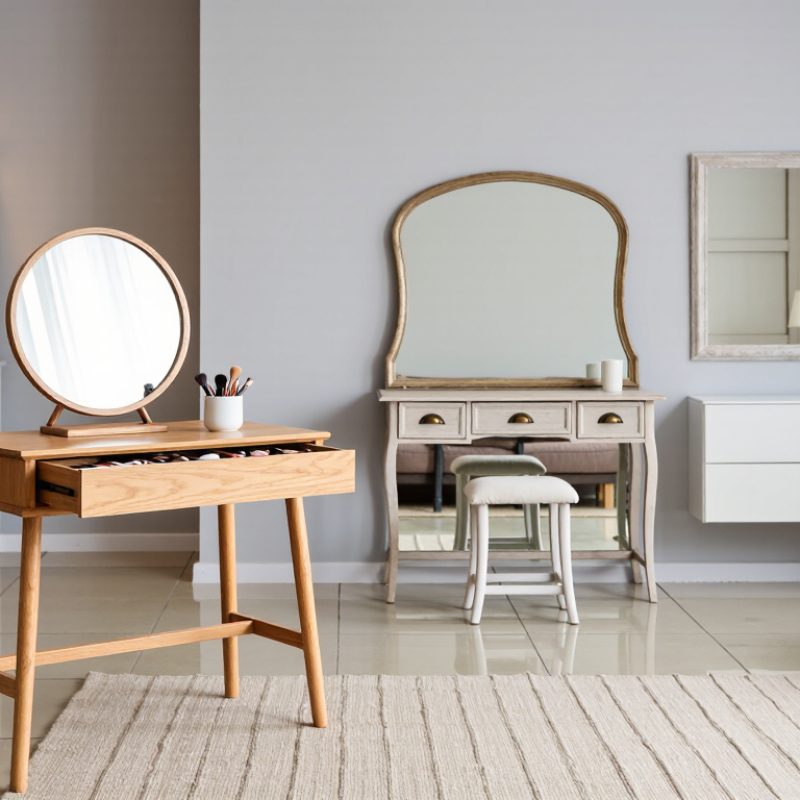
A dressing table is a grooming surface paired with a mirror and personal-item storage. Its defining feature is not a particular shape, but the way these parts work together. A shallow drawer can hold brushes and skincare; a clear tabletop leaves room for daily use. Freestanding designs offer flexible placement, while wall-mounted forms keep floor space open. Compact tables suit narrow bedrooms, though tiny drawers can become frustrating fast. Small, but useful.
For market context, Grand View Research valued the global furniture market at USD 677.09 billion in 2024 and forecast a 5.0% compound annual growth rate from 2025 to 2030. This figure covers furniture broadly, not dressing tables alone. It cannot prove which dressing-table style is selling best. It does show a substantial market for home furnishings, where space-efficient storage and adaptable layouts are practical considerations. When comparing styles, check mirror height, seated legroom, drawer depth, and whether the surface can hold a lamp without crowding everyday essentials. A polished finish looks appealing, but it may show fingerprints; that trade-off is easy to overlook.

Minimalist dressing tables suit small bedrooms: slim oak tops, one shallow drawer, and a round mirror keep the surface calm. Vintage styles bring carved legs, warm walnut, and aged brass; they feel personal, but can look heavy beside bulky wardrobes. Glam designs use mirrored finishes, soft upholstery, and warm lighting. Lovely at night. Yet fingerprints show quickly, and sparkle can overwhelm a narrow room. No style wins every room.
Smart designs add dimmable mirrors, charging points, and drawer organizers. These features are useful, though extra electronics can date faster than a solid wood frame. Grand View Research valued the global furniture market at US$677.09 billion in 2024, reflecting a broad, expanding industry—not a measured preference for any dressing-table style. Treat trend claims cautiously. A beautiful table still needs comfortable legroom and light that shows skin tones accurately.
Tips: Measure the chair space before buying; leave roughly 60 cm for seated movement. Test mirror lighting in the evening, when overhead bulbs can cast harsh shadows. Mix styles deliberately: a simple table with one vintage mirror often feels more natural than matching every finish.
How minimalist, vintage, glam, and smart designs compare across five common design characteristics.
How to read this: Ratings are illustrative editorial scores, not market-survey results. Higher scores indicate a stronger emphasis on that characteristic; for example, smart designs lead in tech integration, while vintage designs emphasize decorative detail.
In 2026, dressing-table size should follow the room, not a trend photo. Compact designs, often around 24–36 inches wide, suit bedrooms where a full drawer unit would crowd the bed. A shallow top, wall mirror, and one divided drawer can hold daily essentials without swallowing floor space. The NKBA’s bathroom planning guidance recommends 30 inches of clear width and 21 inches of clearance in front of a lavatory; these are useful reference points, not fixed rules for bedroom furniture. Measure the chair pulled out, too. Small, but workable.
Modular tables let you add drawers, shelves, or a side cabinet as needs change. They suit renters and shared rooms, though extra pieces can make a narrow corner feel cluttered. Built-ins use awkward alcoves well and can hide hair tools or skincare behind doors, but they are harder to alter later. Houzz’s 2024 U.S. Bathroom Trends Study tracks vanity and storage choices in renovation projects, a useful reminder that storage needs are practical, not purely decorative. One caveat: floor plans rarely show a drawer fully open. Measure its swing, cable access, and the space needed to sit comfortably. A neat design can still frustrate you if your knees meet the cabinet.
In 2026, a dressing table can be compact, sculptural, or built into a wardrobe. Its lighting matters more than its silhouette during grooming.
EN 12464-1:2021 sets 500 lux as a task-lighting benchmark for hairdressing salons, alongside a high colour-rendering requirement. This is a useful reference for a home vanity, not a rule that directly specifies domestic dressing tables. One detail is easy to miss. Lux measured on the tabletop may not show whether light reaches the face evenly.
Use diffused light at both sides of the mirror, or a broad, vertical light source near eye level. This helps reduce shadows beneath the eyes and nose.
Aim for roughly 500 lux where grooming happens, and check the face in daylight too. A bright overhead fixture alone can leave the mirror area uneven.
The U.S. Department of Energy’s Energy Saver guidance says LEDs use at least 75% less energy than incandescent lighting and can last up to 25 times longer. That supports choosing efficient lamps, but efficiency cannot correct glare or poor colour rendering.
In practice, a small mirror-side shadow can still be stubborn. Test the setup before fixing the lights permanently.
How to Choose a Style: Weigh Houzz Renovation Data, Space, and Budget
In 2026, popular dressing-table looks include slim floating designs, warm natural wood, and softly curved vintage-inspired forms. The right choice depends less on a trend photo than on your room. Measure the wall, drawer depth, and chair pull-out space. Check the door swing, too. Measure twice.
Houzz’s 2024 U.S. Houzz & Home Study reported a $24,000 median spend on home renovations in 2023. That figure covers broader renovation projects, not dressing tables, so it is context—not a vanity price guide. Set a firm allowance for the table, mirror, lighting, and installation before choosing finishes. A compact wall-mounted table may save floor space, but custom storage can raise the total quickly.
For a narrow bedroom, a shallow table with drawers keeps the walkway clearer; confirm that drawers can open without hitting the bed. In a larger room, a freestanding piece can create a useful getting-ready zone. Prioritize even face lighting and a mirror at a comfortable height. I would resist buying a dramatic design before testing its footprint with painter’s tape. It is easy to underestimate how much space a chair needs. Houzz renovation data helps frame spending decisions, but your room measurements and daily routine should guide the final style.
Subscribe to our newsletter for the latest news and exclusive offers.
We hold a long-term view when we build modular rooms taking into consideration your changing needs. Whether it’s shifting your workspace to a new site, redesigning your unit to fit new requirements, or simply clearing the area at the end of the project, our Dismantling & Reassembling teams are pressed into service to get the job done in the quickest possible time and minimum resource wastage.
We understand that every project is unique and therefore has a different set of requirements. That’s why we believe in customizing our solutions to fit individual needs. We are equipped with the right talents, technology, and skillset to offer bespoke modular units, without compromising on turnaround time or quality.
The benefits of choosing Containers ME continues long after the installation of the units as we provide aftersales service for as long as you need. All you have to do is sign the Annual Maintenance Contract (AMC) and enjoy technical support for all the maintenance-related issues. By signing the contract, you can rest assured that a highly professional team of dedicated staff are at your service all year round to attend to your needs.
We specialize in Customized Container Solutions designed to meet diverse needs across the UAE. Our offerings include customized modular containers that cater to various applications, from tailor-made container solutions to bespoke container designs.
Whether you’re looking for personalized container homes or custom modular containers, we have you covered. Our customized container offices provide functional workspaces, while our customized portable containers ensure flexibility on-site. Explore our range of custom container storage units and customized cargo containers to optimize your space.
We also offer custom container leasing and custom container fabrication services, along with customized sea containers designed for secure transport. For specialized needs, our specialized container modifications will help you create the perfect solution for your requirements in both Dubai and the broader UAE.