Who are the top manufacturers of Generator Sets in China? The answer depends on what buyers need: standby power for a hospital, prime power at a construction site, or compact units for rental fleets. These products share a name, but not the same duty cycle, engineering demands, or service requirements. The comparison matters.
The International Energy Agency’s Electricity 2024 report projected global electricity demand would grow by an average of 3.4% annually from 2024 to 2026. That forecast describes the wider power market, not generator-set sales. Still, it helps explain why dependable backup and distributed power remain important. On a factory floor, reliability means more than a headline output rating. It can mean stable operation under load, accessible parts, clear maintenance intervals, and technicians who can reach the site.
China’s supplier landscape includes established engine groups, specialist power-equipment makers, and export-focused assemblers. Their strengths vary by engine platform, fuel type, product range, testing capability, and after-sales coverage. A large catalogue is not proof of stronger field performance. Nor does a low quoted price tell the whole story. The picture is less tidy.
This guide compares manufacturers using publicly available company information and practical buying criteria. It considers product scope, technical capability, certifications, export experience, and service support. These signals cannot replace independent factory audits or reference checks. Treat any ranking as a starting point, not a verdict.
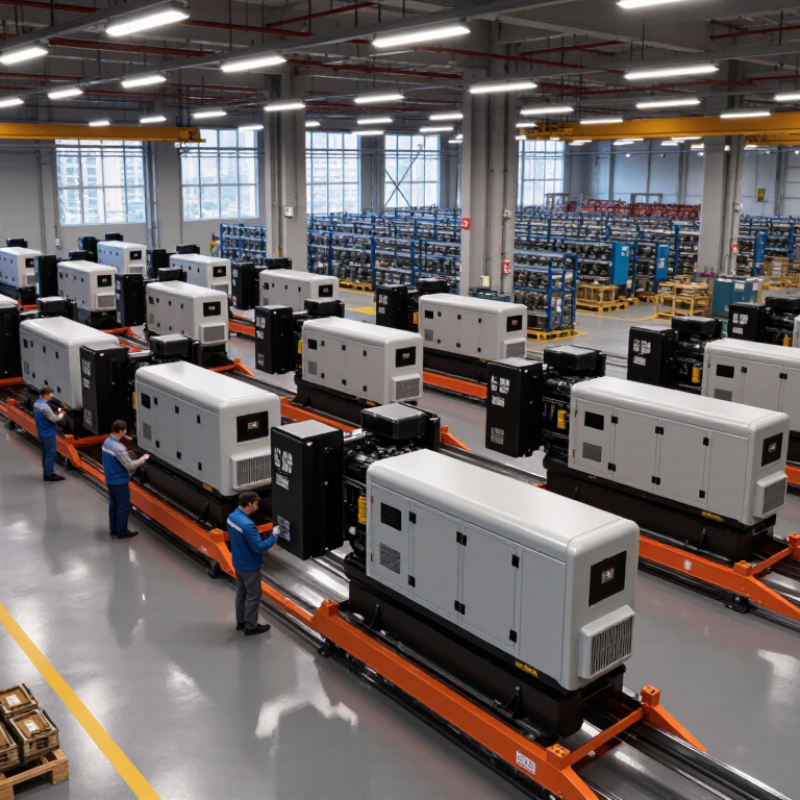
China’s generator-set industry benefits from a deep manufacturing base in engines, alternators, control systems, and precision components.
China Electricity Council data put the country’s installed power-generation capacity at about 2.92 billion kW by the end of 2023.
The International Energy Agency’s Electricity 2024 report also recorded 6.7% growth in Chinese electricity demand that year.
These figures describe the wider power system, not generator-set sales. That distinction matters.
Manufacturers serve varied needs, from construction sites and telecom facilities to hospitals and data centers. Buyers compare rated output, fuel use, noise levels, service access, and performance in heat or dust. Compact sets may suit temporary sites; larger units often require careful installation, ventilation, and load testing. Supply chains can support customization, but component quality and after-sales coverage still vary. Not every specification tells the whole story. A paper rating cannot replace a real load test, and that gap deserves more attention. For a clear industry picture, production capacity, export data, and end-user demand should be assessed separately.

A strong Chinese generator-set manufacturer should demonstrate repeatable production, not just offer an attractive quotation. Buyers can review factory records, quality-control procedures, and test reports for the exact configuration being considered. Ask whether each unit receives a documented load-bank test, and request readings for voltage, frequency, temperature, and fuel use. Details matter. A showroom display alone proves little.
Technical fit is equally important. Check that the rated output matches the intended load, including motor-starting demand and expected operating hours. Confirm the origin and specifications of major components, plus how substitutions are approved and recorded. Relevant certifications should be verifiable and applicable to the destination market. A factory visit can reveal assembly practices, parts storage, and testing equipment, though one visit cannot confirm long-term consistency. That limitation is easy to overlook.
After-sales capability separates a dependable supplier from a short-term seller. Ask for service response times, spare-parts availability, warranty terms, and references from installations with similar duty cycles. Request clear answers about noise limits, emissions data, and maintenance intervals. Compare written evidence, not promises. No checklist is perfect; a low price may still be reasonable, but unexplained gaps in test records or support deserve careful follow-up.
Criteria for identifying leading Chinese manufacturers
This illustrative evaluation framework assigns the greatest weight to product quality and reliability, followed by service capability and compliance. The percentages are suggested assessment weights—not measured company rankings or market statistics.
China’s generator-set manufacturers range from large industrial producers to regional firms focused on specific power needs. Major manufacturers often assemble engines, alternators, control panels, and cooling systems into complete sets. Some concentrate on standby units for factories and commercial buildings, while others produce mobile sets for construction sites or remote facilities. Their capabilities vary, so a large catalog alone does not prove a good fit.
Compare suppliers by rated output, fuel use, noise levels, and performance under local operating conditions. Ask for test records, service intervals, spare-parts availability, and clear warranty terms. A useful factory visit may include checking weld quality, cable routing, ventilation, and load-test procedures. Small details matter. Confirm that the quoted rating matches the intended duty, since standby and continuous-power ratings are not interchangeable. Request references for installations with similar loads and climates, then verify the details directly where possible. Specifications can look tidy on paper; real-world support is less easy to measure. That uncertainty deserves attention. A careful buyer should also ask how the supplier handles parts delays and technical questions after delivery.
| Manufacturer Segment | Indicative Output Range | Common Configuration | Typical Applications | Key Comparison Points |
|---|---|---|---|---|
| Portable and light-duty sets | Approximately 1–20 kVA | Usually compact, air-cooled gasoline or diesel engines; open-frame or enclosed designs | Small worksites, temporary power, outdoor activities, and household backup | Rated output, runtime, noise level, portability, and starting method |
| Small commercial and industrial sets | Approximately 20–500 kVA | Commonly liquid-cooled diesel engines with three-phase alternators; optional sound-attenuated enclosures | Commercial buildings, workshops, farms, and small industrial facilities | Prime or standby rating, fuel consumption, control-panel functions, and service access |
| Medium-duty industrial sets | Approximately 500–2,000 kVA | Typically liquid-cooled diesel systems designed for stationary installation and automatic transfer arrangements | Factories, hospitals, data facilities, infrastructure projects, and larger commercial sites | Load acceptance, transient response, paralleling capability, emissions requirements, and commissioning support |
| Large-power and project-engineered sets | Often above 2,000 kVA per unit; project capacity may use multiple units | Heavy-duty diesel or gas systems, frequently configured for synchronized operation and site-specific integration | Large industrial plants, utilities, mining operations, and major infrastructure projects | Project engineering, synchronization, redundancy, fuel-system design, and long-term parts support |
| Gas generator-set specialists | Available across a wide range, with capacity determined by engine and installation design | Spark-ignition engines configured for pipeline natural gas, biogas, or other approved gaseous fuels | Sites with suitable gas supply, combined heat and power projects, and some continuous-power applications | Gas quality, fuel pressure, heat-recovery options, site emissions limits, and maintenance intervals |
| Rental and mobile-power suppliers | Varies from small mobile units to large containerized packages | Transportable, weather-protected or containerized sets with connection and distribution equipment | Construction, events, temporary grid support, and emergency power | Delivery time, mobility, operating hours, connection compatibility, and on-site service |
Leading Chinese generator-set manufacturers offer diesel and gas models for standby, prime, and continuous-duty use. Product ranges may run from compact workshop units to containerized systems for factories, data rooms, and remote sites. Actual output depends on the engine, alternator, cooling package, and operating conditions. Buyers should compare ratings with their real load profile, not just a headline figure.
Common options include automatic transfer switches, digital control panels, sound-attenuated enclosures, and systems that synchronize multiple units. Some manufacturers also provide remote monitoring for alarms, operating hours, and fuel levels. Useful details include sensor accuracy, controller compatibility, and how clearly a fault is reported. Details matter. A polished screen alone does not prove a system is easy to maintain.
Engineering support can include load-bank testing, vibration checks, and commissioning guidance. Ask for test records and confirm which components are included in the quoted configuration. For sites with changing demand, parallel operation may improve flexibility, but it adds controls and maintenance needs. Not every feature helps. I would give more weight to service access and documented performance than to a long list of optional technology.
Generator sets serve different jobs, so manufacturers tailor output, controls, and cooling to the site. Construction crews often need mobile units that tolerate dust, vibration, and changing loads. Factories may need prime-power systems that run for extended shifts. China Electricity Council statistics show that secondary industry used 6.07 trillion kWh in 2023. This indicates the scale of industrial electricity use, though it does not measure generator-set demand.
Data centers require fast, stable backup power and careful coordination with uninterruptible power supplies. The International Energy Agency’s Electricity 2024 report estimated global data-center electricity use at about 460 TWh in 2022. It projected that demand could exceed 1,000 TWh by 2026. Telecom sites, by contrast, may need compact sets that start reliably at remote locations. Hospitals prioritize dependable standby power for critical equipment, with routine testing and maintenance built into the operating plan.
Manufacturers serving these applications adjust enclosure design, fuel capacity, control systems, and service support. A coastal site may need corrosion-resistant components; a high-altitude installation may require output derating. Small details matter. Buyers should compare rated duty, load response, noise, and maintenance access against actual site conditions. Even careful sizing can miss future load growth, so capacity assumptions deserve review rather than automatic acceptance.
Subscribe to our newsletter for the latest news and exclusive offers.
We hold a long-term view when we build modular rooms taking into consideration your changing needs. Whether it’s shifting your workspace to a new site, redesigning your unit to fit new requirements, or simply clearing the area at the end of the project, our Dismantling & Reassembling teams are pressed into service to get the job done in the quickest possible time and minimum resource wastage.
We understand that every project is unique and therefore has a different set of requirements. That’s why we believe in customizing our solutions to fit individual needs. We are equipped with the right talents, technology, and skillset to offer bespoke modular units, without compromising on turnaround time or quality.
The benefits of choosing Containers ME continues long after the installation of the units as we provide aftersales service for as long as you need. All you have to do is sign the Annual Maintenance Contract (AMC) and enjoy technical support for all the maintenance-related issues. By signing the contract, you can rest assured that a highly professional team of dedicated staff are at your service all year round to attend to your needs.
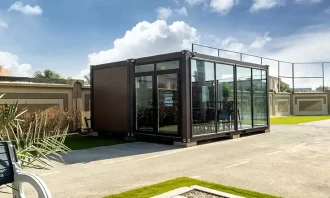
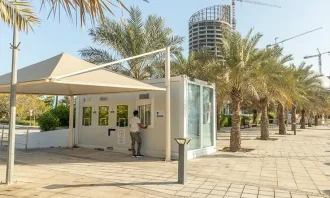
We specialize in Customized Container Solutions designed to meet diverse needs across the UAE. Our offerings include customized modular containers that cater to various applications, from tailor-made container solutions to bespoke container designs.
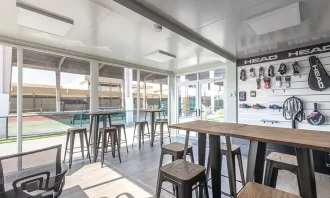
Whether you’re looking for personalized container homes or custom modular containers, we have you covered. Our customized container offices provide functional workspaces, while our customized portable containers ensure flexibility on-site. Explore our range of custom container storage units and customized cargo containers to optimize your space.
We also offer custom container leasing and custom container fabrication services, along with customized sea containers designed for secure transport. For specialized needs, our specialized container modifications will help you create the perfect solution for your requirements in both Dubai and the broader UAE.