
Blogs

Why Choose Custom Stainless Steel Coil?

Why Choose Custom Stainless Steel Coil?

Choosing the right coil begins with understanding the application, not simply selecting a shiny metal. Custom Stainless Steel Coil can be produced to suit specific thicknesses, widths, tempers, surface finishes, and edge conditions. These details affect forming, welding, corrosion resistance, and production waste. A coil designed for kitchen equipment may need a different finish from one used in medical frames or chemical-processing components.

John E. Bringas, author of Handbook of Stainless Steels, stated, “Stainless steels are not one material, but a family of alloys.” This practical observation explains why grade selection matters. Austenitic 304 may support general fabrication, while 316 often performs better around chlorides. Ferritic or duplex options can offer useful strength and cost advantages, depending on the environment.

Real-world results depend on more than the grade. Coil thickness must match the forming radius. Surface quality should be checked under consistent lighting. Slitting accuracy can influence downstream alignment by only a few millimeters, yet that small difference may create serious waste. Experienced suppliers also verify chemical composition, mechanical properties, coil shape, and inspection records before shipment.

There is no perfect specification.

A custom design can still be wrong if operating conditions are misunderstood. Humidity, cleaning chemicals, heat cycles, and storage practices should be reviewed carefully. This article examines why Custom Stainless Steel Coil can improve manufacturing control, reduce unnecessary processing, and support more reliable product performance. It also considers the limitations, costs, and quality checks buyers should not overlook.
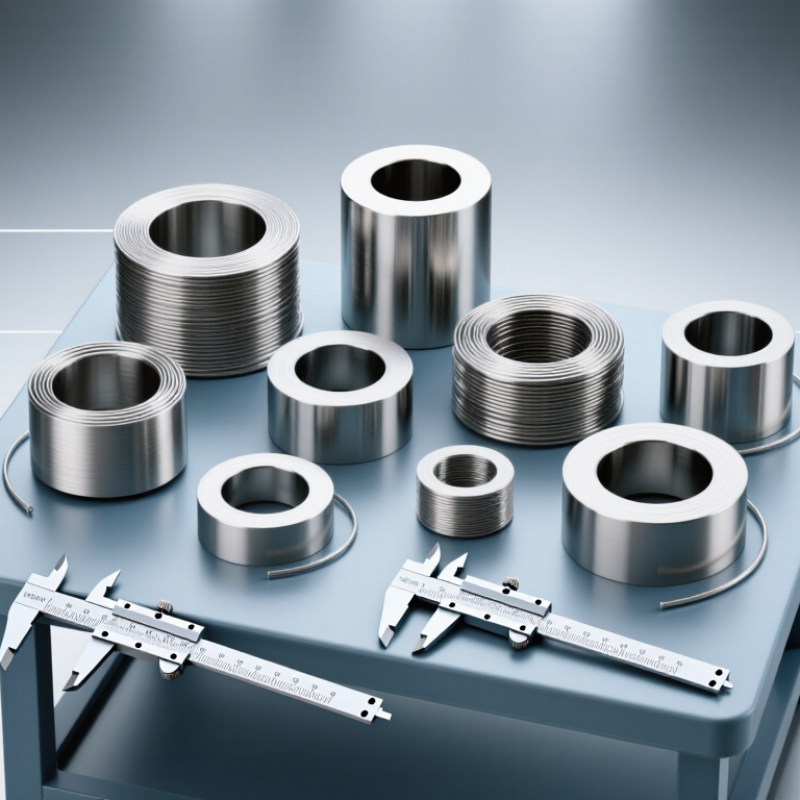
Why Choose Custom Stainless Steel Coil?

Grade Selection: 304 Uses ~18% Chromium and 8% Nickel; 316 Adds 2–3% Molybdenum

Why Choose Custom Stainless Steel Coil?

Choosing a custom stainless steel coil starts with the service environment, not only the lowest purchase price. Grade 304 contains about 18% chromium and 8% nickel, giving it strong corrosion resistance for kitchen equipment, indoor panels, tanks, and general fabrication. It also forms easily and usually offers a practical balance between performance and cost. The exact chemistry can vary slightly by specification, so verified mill certificates matter.

Grade 316 adds roughly 2–3% molybdenum, alongside chromium and nickel. That addition improves resistance to pitting, especially where chloride may be present. Coastal air, saline water, cleaning chemicals, and some process environments can expose this weakness quickly. Grade 316 is often the safer choice for marine fittings, pharmaceutical equipment, and outdoor components near salt exposure. It is not invulnerable. Poor welding, surface contamination, or trapped moisture can still create problems.

Custom coil production also allows control over thickness, width, edge condition, surface finish, and temper. These details affect stamping, bending, welding, and final appearance. A narrow tolerance may reduce material waste, but it can increase processing cost. That trade-off deserves review. A careless grade choice may look economical until rust spots appear around scratches or welds. Before ordering, compare the actual atmosphere, temperature, forming method, and maintenance routine. Small details decide whether 304 is sufficient or 316 earns its higher cost.


Corrosion Performance: Chromium Passivation Protects Stainless Steel Surfaces

Why Choose Custom Stainless Steel Coil?

Chromium passivation is the core reason stainless steel resists corrosion. Under normal oxygen exposure, chromium forms a transparent oxide film on the surface. This layer is only a few nanometres thick, yet it can rebuild after minor scratching. EN 10088-1 defines stainless steel as containing at least 10.5% chromium. Higher chromium levels generally improve passive-film stability. The protection is quiet, not dramatic.

NACE International’s IMPACT study estimated global corrosion costs at about 3.4% of worldwide GDP. That figure shows why surface protection deserves careful engineering. In chloride environments, custom coil selection can control thickness, surface finish, edge quality, and alloy chemistry. These details affect cleaning, forming, and local corrosion resistance. A smoother surface usually leaves fewer sites for deposits and crevice attack. It is not a guarantee.

Molybdenum-bearing grades can improve resistance to chloride pitting, while suitable welding controls help preserve corrosion performance near heat-affected areas. ASTM G48 testing is often used to compare pitting and crevice resistance under controlled conditions. However, laboratory results do not perfectly represent every plant, coastal site, or processing line. Fabrication residue, iron contamination, and poor drainage can weaken performance. Custom stainless steel coil therefore works best when specifications reflect the actual service environment, not just a preferred grade.

Why Choose Custom Stainless Steel Coil?

Chromium passivation protects stainless steel surfaces by forming a thin, self-repairing oxide layer. This chart compares typical nominal chromium content in widely used stainless steel grades.

Values represent the midpoint of common specified chromium ranges: Type 304, 16–20%; Type 316, 16–18%; Type 430, 16–18%; and Type 410, 11.5–13.5%. Higher chromium generally supports a more stable passive film, while corrosion performance also depends on alloying elements, chloride exposure, temperature, and fabrication quality.

Mechanical Reliability: ASTM A240 Type 304 Requires 515 MPa Tensile Strength

Why Choose Custom Stainless Steel Coil?

Mechanical Reliability: ASTM A240 Type 304 Requires 515 MPa Tensile Strength

Custom stainless steel coil starts with a clear mechanical requirement. ASTM A240 Type 304 specifies a minimum tensile strength of 515 MPa for many relevant product conditions. This value indicates how much pulling force the material can withstand before breaking. It matters in formed panels, pressure-related components, and fabricated assemblies.

Tensile strength is not the only concern. Coil thickness, width, temper, surface condition, and edge quality can affect production results. A carefully matched coil reduces trimming waste and supports more stable forming. During purchasing, request the material test report and confirm the applicable ASTM edition. Check the reported test direction and specimen details.

Small details matter.

In practical fabrication, a coil may meet the tensile requirement yet still behave poorly during bending. Excessive springback, uneven edges, or inconsistent thickness can create costly adjustments. Custom sizing helps, but it does not remove the need for incoming inspection. Measure thickness at several points, examine the surface under proper lighting, and compare certificates with the delivered coil.

The 515 MPa requirement provides a dependable baseline, not a complete performance promise. Actual results can vary with processing, welding, heat input, and tool condition. That limitation deserves attention. A technically sound specification should connect material strength with the real manufacturing process, expected loads, and quality records.

Dimensional Precision: Custom Slitting Matches Coil Width, Thickness, and Tolerance

Why Choose Custom Stainless Steel Coil?

Dimensional precision begins with the finished application, not the master coil. Custom slitting matches required width, thickness, and tolerance before material reaches the production line. That control reduces trimming, rejects, and unstable feeding through stamping or forming equipment. Small errors matter. A 0.5 mm width variation can disrupt nesting, welding alignment, or automated sensor readings. Operators should also check burr height, edge quality, coil ID, and winding tension.

The International Stainless Steel Forum reported approximately 58.4 million tonnes of crude stainless steel production in 2023. This scale shows the material’s importance, but volume does not guarantee dimensional consistency. ASTM A480/A480M provides widely used requirements for stainless steel sheet and strip, including dimensional and surface considerations. A capable slitting plan should translate those requirements into measurable inspection points. Thickness mapping across the parent coil can reveal center-to-edge variation. Laser gauges and calibrated micrometers provide stronger evidence than visual checks alone. Still, precision is not automatic. Excessive tension may create telescoping, while poor knife setup can leave sharp burrs. A carefully reviewed tolerance may also be unnecessarily strict, increasing cost without improving performance. Engineers should compare the drawing, equipment limits, and actual assembly conditions before approving the final coil specification.

Why Choose Custom Stainless Steel Coil? - Dimensional Precision: Custom Slitting Matches Coil Width, Thickness, and Tolerance

Custom slitting converts master coils into narrower strips with controlled width, thickness, edge condition, and winding requirements. The values below represent common engineering ranges and achievable targets; final tolerances depend on stainless grade, temper, thickness, coil width, tooling, and applicable material standards.

Material Parameter Typical Custom Range Representative Dimensional Target Measurement Consideration Practical Benefit
Slit Strip Width Approximately 10–1,500 mm Common target: ±0.10 mm for many precision slit programs Measured across the strip width; narrower strips and tighter tolerances may require dedicated tooling and inspection. Matches the customer’s forming, stamping, tube-making, or progressive-die requirements while reducing secondary trimming.
Material Thickness Approximately 0.05–3.00 mm Typical order tolerances are specified by the applicable ASTM, EN, or JIS product standard. Thickness should be checked at defined locations and away from burrs, welds, and coil ends. Helps maintain consistent springback, part weight, strength, and feed performance during production.
Thickness Uniformity Across-width and along-length control Controlled to the ordered material specification; tighter uniformity may be negotiated for critical parts. Variation can result from the original rolling process, coil position, temper, and measurement method. Supports stable forming loads and more predictable dimensions throughout a long production run.
Slit Length / Coil Weight Specified by required line capacity and handling limits Cut-to-length or recoiled to an agreed outside diameter and maximum weight Core size, outside diameter, lift-point limits, and packaging requirements should be confirmed before processing. Improves line uptime and allows the coil to fit the customer’s decoiler, pay-off, or automated feeding equipment.
Edge Condition Standard slit, deburred, rounded, or specially conditioned edge Edge requirements defined by burr height, sharpness, or edge profile Burr formation is influenced by knife clearance, material thickness, hardness, and tool condition. Reduces handling risk and improves performance in welding, tube forming, bending, and high-speed feeding.
Coil Winding Oscillated, tight, or ribbon-wound configuration Winding pattern and telescoping limit specified on the order Recoiling tension, alignment, strip width, and surface condition affect winding quality. Promotes smooth unwinding and reduces strip wandering, overlaps, and feed interruptions.
Stainless Steel Grades Common grades include 304, 304L, 316, 316L, and 301 Chemical and mechanical requirements verified against the selected standard Grade selection affects corrosion resistance, formability, strength, magnetism, and work hardening. Enables the coil to be matched to the operating environment and the required manufacturing process.
Surface Finish 2B, BA, No. 1, brushed, or other specified finish Surface condition and protective film requirements defined before slitting Appearance and surface protection may be affected by handling, tooling contact, and recoiling. Maintains the required visual quality and minimizes additional finishing or surface repair.
Dimensional Inspection Width, thickness, burr, camber, coil ID/OD, and weight Inspection frequency and sampling plan agreed with the purchase specification Calibrated instruments and a consistent measurement method are essential for reliable results. Provides traceable confirmation that each custom coil is suitable for the intended production line.
Specification note: Exact dimensions and tolerances should be confirmed on the purchase order and referenced to the applicable material standard, such as ASTM A480/A480M, ASTM A666, EN 10088, or JIS G4305, as appropriate for the selected stainless steel product.

Resource Efficiency: Stainless Steel Is 100% Recyclable Without Quality Loss

Why Choose Custom Stainless Steel Coil?

Custom stainless steel coil can reduce material waste before production even begins. Dimensions are matched to the forming process, limiting excess trimming and unnecessary offcuts. In our experience, accurate coil width also makes handling smoother on busy production lines. Less scrap means fewer purchased materials, lower storage pressure, and more efficient use of energy.

Stainless steel offers a stronger resource advantage because it is 100% recyclable without quality loss. Old coil, fabrication offcuts, and removed components can return to the steelmaking cycle. Their metallic value remains useful after remelting. That loop can continue repeatedly. However, recycling is not effortless. Different grades must be identified, separated, and protected from contamination. Poor sorting may reduce the value of recovered material or complicate processing.

A custom coil supports this system by producing cleaner, more predictable offcuts. Clear specifications help fabricators separate stainless steel from other metals during collection. Small improvements matter. Still, recycling rates can vary by region, infrastructure, and product use. It would be careless to treat recyclability as a complete environmental solution. Manufacturing and transport still consume resources. A practical evaluation should consider coil thickness, service life, cutting yield, and recovery routes together. When these details are reviewed early, stainless steel can remain in use longer and return to production with its essential properties intact.

Plug & Play Installation

Our installation services are top-notch, delivering modular systems for any application on time in plug & play condition. We leave nothing for you to figure out, set up, or fix. All you’ve to do is just step in, and get going with your business.

Dismantling & Reassembling

We hold a long-term view when we build modular rooms taking into consideration your changing needs. Whether it’s shifting your workspace to a new site, redesigning your unit to fit new requirements, or simply clearing the area at the end of the project, our Dismantling & Reassembling teams are pressed into service to get the job done in the quickest possible time and minimum resource wastage.

Interior Designing

Our interior designs combine both functional and aesthetic aspects to provide you with physical and emotional comfort. We ask you for your preferences and give the best possible solutions aligned to your tastes. Our units are built to be modern, stylish, and elegant.

Bespoke Solutions

We understand that every project is unique and therefore has a different set of requirements. That’s why we believe in customizing our solutions to fit individual needs. We are equipped with the right talents, technology, and skillset to offer bespoke modular units, without compromising on turnaround time or quality.

Aftersales Service

The benefits of choosing Containers ME continues long after the installation of the units as we provide aftersales service for as long as you need. All you have to do is sign the Annual Maintenance Contract (AMC) and enjoy technical support for all the maintenance-related issues. By signing the contract, you can rest assured that a highly professional team of dedicated staff are at your service all year round to attend to your needs.

Customized Container Solutions

We specialize in Customized Container Solutions designed to meet diverse needs across the UAE. Our offerings include customized modular containers that cater to various applications, from tailor-made container solutions to bespoke container designs.

Whether you’re looking for personalized container homes or custom modular containers, we have you covered. Our customized container offices provide functional workspaces, while our customized portable containers ensure flexibility on-site. Explore our range of custom container storage units and customized cargo containers to optimize your space.

We also offer custom container leasing and custom container fabrication services, along with customized sea containers designed for secure transport. For specialized needs, our specialized container modifications will help you create the perfect solution for your requirements in both Dubai and the broader UAE.

Get a quote

Get a quote



