Blogs

Best Shipping Container Storage Options in 2026?

Choosing the best shipping container storage option in 2026 depends on what you need to store, where the container will sit, and how often you need access. A unit placed beside a workshop can keep tools close at hand. A container at a managed storage facility may offer easier access to site services and staff. Renting can suit a short project, while buying may make sense for longer use. The right choice is rarely obvious.

This guide compares common options through practical details: size, condition, delivery, ventilation, security, and total cost. A dry, level site matters. So does checking whether a container can reach the intended location; a narrow driveway or low tree branch can complicate delivery. Standard steel containers are not automatically climate controlled, and condensation may affect sensitive belongings. Insulation, airflow, and a moisture plan can help, but they add cost and need careful consideration. Small details matter.

We also look at access, maintenance, and questions to ask suppliers before signing an agreement. Ask how the unit is inspected, what delivery includes, and whether the quoted price covers placement or site preparation. Local requirements can differ, so confirm them with the relevant property manager or local authority. No option is perfect. A container may be sturdy yet inconvenient, or affordable yet poorly suited to delicate items. The comparisons ahead aim to make those trade-offs clearer, while recognizing that real site conditions can change the answer.
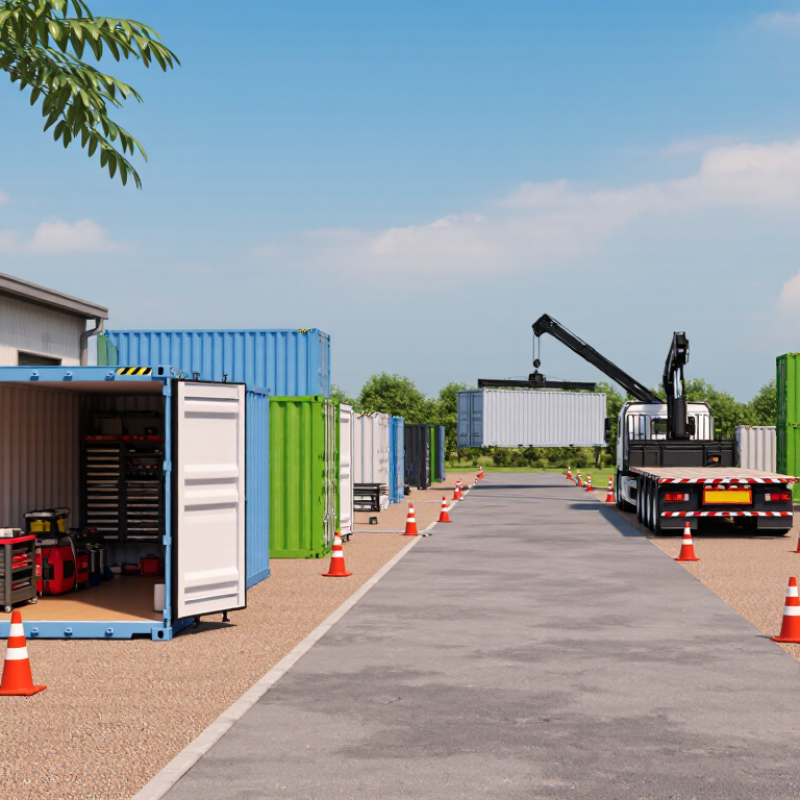
Best Shipping Container Storage Options in 2026?

What Shipping Container Storage Is and How It Works

Shipping container storage means keeping goods inside a durable, enclosed steel unit, either at a fixed site or temporarily near a home, farm, or worksite. The container is delivered by truck, positioned on firm, level supports, and loaded through its end doors. Simple, but placement matters. Uneven ground can twist the frame and make doors difficult to open.

Standard containers commonly come in 20-foot and 40-foot lengths. Their modular sizing helps storage operators stack units and plan site layouts. UNCTAD’s Review of Maritime Transport 2024 reports that global container port throughput reached 858.9 million TEUs in 2023, up 2.4% from the previous year. That scale reflects how widely containerized transport is used, though a storage container is not a climate-controlled room. Temperature swings can cause condensation; cardboard, fabric, and electronics may need extra protection.

For storage, operators typically check access, drainage, ground stability, and how often items will be retrieved. A level gravel pad or concrete base can help keep the unit stable. Leave a clear path to the doors, and place frequently used boxes near the entrance. Keep goods off the steel floor with pallets, and avoid blocking vents. Small details count. Even a well-sealed container can feel damp after a sharp change in temperature, so inspect stored items periodically rather than assuming the unit solves every moisture problem.


Key Factors to Consider When Choosing Storage in 2026

Best Shipping Container Storage Options in 2026?

Key Factors to Consider When Choosing Storage in 2026

Start with the ground, not the lock. A level, well-drained pad helps prevent water pooling beneath the container and keeps doors easier to operate. Check the roof seams, door seals, floor, and corners before loading; daylight through a seam is a warning, not a ventilation feature.

UNCTAD’s Review of Maritime Transport 2024 reported 858.9 million TEU in global container port throughput during 2023, up 2.4% from 2022. That scale underscores why container availability and condition can vary. It does not guarantee every used unit is suitable for dry storage.

Match size and access to what you will store. Measure bulky items, leave room for a safe walkway, and consider whether a side-opening unit is worth the added cost. For sensitive belongings, ask about ventilation, condensation control, and site drainage. A steel box can heat up quickly in direct sun. Climate matters. Check operating hours, security lighting, camera coverage, and vehicle access, too; a low monthly price may be less useful if loading is difficult.

Tips: Visit after rain if possible. Look for puddles, rust, musty odors, and doors that stick. Photograph the empty unit and ask how access and maintenance are handled. I would not assume a fresh coat of paint means a sound roof.

Types of Shipping Container Storage Options

Shipping container storage generally falls into three categories: on-site dry containers, portable units, and depot or warehouse storage. On-site containers suit tools, stock, or equipment needed close to daily work. Portable units can be delivered to a property, but access, ground stability, and door clearance need checking before placement. Small details matter.

A standard dry container protects goods from rain and dust, but it is not climate-controlled. For paper records, electronics, or moisture-sensitive materials, condensation can still cause damage. Ventilation, a raised base, and moisture monitoring help, though they do not replace temperature control. ISO 668:2020 sets dimensions for series 1 freight containers, useful when checking fit and handling compatibility.

Refrigerated containers maintain controlled temperatures for suitable goods, while warehouse storage offers indoor space, shelving, and staff-managed handling. Refrigerated units need reliable power and regular checks; warehouse storage may reduce direct access. UNCTAD’s Review of Maritime Transport 2024 reports global container-port throughput of 858.5 million TEUs in 2023, showing the scale of container logistics, not proving one storage type is best. The right choice depends on access, security, duration, and environmental needs. There is no perfect option. Budget for upkeep, too.

Best Shipping Container Storage Options in 2026? - Types of Shipping Container Storage Options

Compare common container types by their storage use, approximate interior space, and practical trade-offs. Dimensions and usable capacity can vary by manufacturer, model, and container condition; confirm specifications before purchase or rental.

Container Type Approx. Interior Dimensions (L × W × H) Approx. Internal Volume Best For Key Advantages Important Considerations
20 ft Standard Dry 5.9 × 2.35 × 2.39 m
(19.4 × 7.7 × 7.9 ft)
About 33 m³
(1,170 ft³)
Tools, equipment, household goods, and smaller inventories Compact footprint; widely available; easier to place where space is limited Less floor space than a 40 ft unit. Check ground access and placement clearance.
40 ft Standard Dry 12.03 × 2.35 × 2.39 m
(39.5 × 7.7 × 7.9 ft)
About 68 m³
(2,390 ft³)
Bulk inventory, furniture, building materials, and larger storage loads Substantial storage volume in one enclosed unit; suitable for long items Requires a longer, accessible site and adequate space for delivery and doors to open.
40 ft High Cube Dry 12.03 × 2.35 × 2.69 m
(39.5 × 7.7 × 8.9 ft)
About 76 m³
(2,690 ft³)
Bulky goods, tall equipment, and loads needing extra vertical clearance Approximately 30 cm (1 ft) taller externally than a standard-height container Confirm overhead clearance, door height, and site restrictions before delivery.
Refrigerated Container Varies by size and model; interior space is reduced by refrigeration equipment and insulation Model-dependent; typically less usable space than a comparable dry container Temperature-controlled storage for suitable chilled or frozen goods Built-in refrigeration system allows controlled-temperature storage when correctly operated Needs a suitable power supply, temperature monitoring, maintenance, and ventilation clearance. Confirm the unit’s operating range and condition.
Open-Top Container Often similar to a standard container of the same length; dimensions vary by model Comparable to the matching standard container, subject to design Tall or awkward cargo loaded from above, such as some machinery or materials Removable roof covering can make top loading practical Not ideal for weather-sensitive contents unless properly covered. Verify height limits and lifting access.
Side-Door Container Varies by model; commonly available in 20 ft and 40 ft formats Depends on length and configuration Items that need frequent access or are difficult to reach through end doors Additional side access can make loading, unloading, and organizing stored goods easier Door layout and usable opening widths vary. Allow room to open the doors safely.
Insulated or Lined Container Varies with insulation thickness and interior finish Less than an equivalent unlined container Storage where reducing temperature swings or condensation risk is important Interior insulation can moderate heat transfer compared with an uninsulated steel unit Insulation alone does not provide active temperature control. Manage moisture and check that stored goods suit the conditions.

How Storage Options Compare on Cost, Security, and Access

Cost is not just the monthly rate. A container beside a workshop can reduce repeat van trips, but delivery, ground preparation, and a secure lock add upfront costs. Off-site storage generally includes site maintenance in the rent; restricted gate hours or access fees may change the calculation. Compare a full year, including transport and insurance. The Self Storage Association’s 2023 Self-Storage Demand Study estimated that 11.1% of U.S. households used self-storage. That measures demand, not container prices, so local written quotes matter. A small distinction, but an important one.

Security depends on the site as much as the steel walls. Check lighting, camera coverage, drainage, and whether the container’s lock is shielded from bolt cutters. A container on private property offers convenient access, yet the owner must manage those safeguards. At a managed facility, ask about staffed hours, entry logs, and after-hours rules. The association’s 2024 Self-Storage Almanac counted roughly 52,000 U.S. facilities, suggesting many locations to compare, though nearby options vary. I would not assume “24-hour access” means easy access; verify vehicle clearance and weekend entry before signing. That detail gets missed.

Best Shipping Container Storage Options in 2026

How common storage options compare on estimated monthly cost, security, and access.

Monthly costs are broad U.S. planning estimates, not quoted prices; actual rates vary by location, size, delivery, and site preparation. Security and access scores are indicative (1 = low, 5 = high): a facility’s controls and opening hours, a container kept on-site, or a gated storage yard can differ substantially.

How to Choose and Prepare the Right Container Storage Option

Best Shipping Container Storage Options in 2026?

Choosing a container starts with what you plan to store and how often you need access. A standard dry container may suit boxed household goods, tools, or seasonal equipment. For items sensitive to heat or humidity, consider climate-controlled storage instead. It costs more and needs a reliable power source, so check the site before choosing. Measure bulky items, too. A container’s advertised size does not account for every awkward corner or the space needed to move inside. That trade-off is easy to miss.

Inspect the container before loading it. Look for gaps around the doors, soft floor patches, rust holes, and signs of leaks. A quick check during dry weather may miss a problem; ask about its condition and inspect after rain when possible. Choose level, well-drained ground with enough room for delivery and door access. Keep stored items off the floor on sturdy pallets, and leave a small gap between boxes and walls to support airflow. Use dry, labeled bins for vulnerable belongings, but avoid packing everything tightly. It seems efficient until you need one item. Check the lock, ventilation, local site rules, and any delivery restrictions before arranging drop-off.

Plug & Play Installation

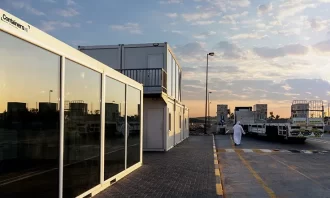
Our installation services are top-notch, delivering modular systems for any application on time in plug & play condition. We leave nothing for you to figure out, set up, or fix. All you’ve to do is just step in, and get going with your business.

Dismantling & Reassembling

We hold a long-term view when we build modular rooms taking into consideration your changing needs. Whether it’s shifting your workspace to a new site, redesigning your unit to fit new requirements, or simply clearing the area at the end of the project, our Dismantling & Reassembling teams are pressed into service to get the job done in the quickest possible time and minimum resource wastage.

Interior Designing

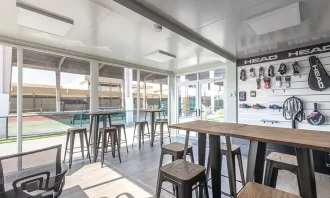
Our interior designs combine both functional and aesthetic aspects to provide you with physical and emotional comfort. We ask you for your preferences and give the best possible solutions aligned to your tastes. Our units are built to be modern, stylish, and elegant.

Bespoke Solutions

We understand that every project is unique and therefore has a different set of requirements. That’s why we believe in customizing our solutions to fit individual needs. We are equipped with the right talents, technology, and skillset to offer bespoke modular units, without compromising on turnaround time or quality.

Aftersales Service

The benefits of choosing Containers ME continues long after the installation of the units as we provide aftersales service for as long as you need. All you have to do is sign the Annual Maintenance Contract (AMC) and enjoy technical support for all the maintenance-related issues. By signing the contract, you can rest assured that a highly professional team of dedicated staff are at your service all year round to attend to your needs.

Customized Container Solutions

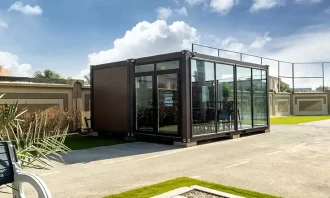
We specialize in Customized Container Solutions designed to meet diverse needs across the UAE. Our offerings include customized modular containers that cater to various applications, from tailor-made container solutions to bespoke container designs.

Whether you’re looking for personalized container homes or custom modular containers, we have you covered. Our customized container offices provide functional workspaces, while our customized portable containers ensure flexibility on-site. Explore our range of custom container storage units and customized cargo containers to optimize your space.

We also offer custom container leasing and custom container fabrication services, along with customized sea containers designed for secure transport. For specialized needs, our specialized container modifications will help you create the perfect solution for your requirements in both Dubai and the broader UAE.

Get a quote

Get a quote