Blogs

How to Choose Bespoke Containers for Global Shipping?

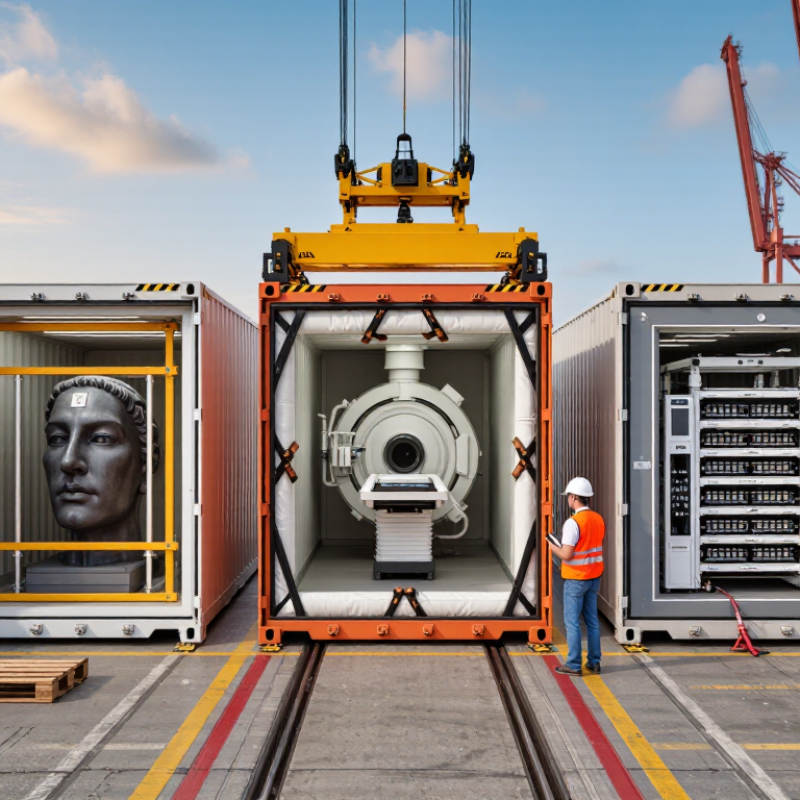
Choosing the right bespoke containers begins with the cargo, not the container supplier. A steel sculpture, medical machine, and temperature-sensitive component demand different protection. Each shipment also faces ports, cranes, road restrictions, weather, and repeated handling.

The UNCTAD Review of Maritime Transport 2024 states that more than 80% of world merchandise trade moves by sea. It also reports that maritime trade reached approximately 12.3 billion tons in 2023. These figures show the scale of exposure. A small design weakness can become a costly delay after several transfers. The World Bank’s Logistics Performance Index 2023 highlights customs efficiency, shipment reliability, tracking, and infrastructure as key logistics factors. Therefore, bespoke containers should support the entire transport route, not only the factory departure.

Start with measurable requirements. Record the cargo’s weight, center of gravity, dimensions, lifting points, moisture sensitivity, and loading method. Then review stacking, lashing, ventilation, insulation, and access doors. ISO 1496 container standards provide useful performance references, while the International Convention for Safe Containers establishes safety requirements for eligible freight containers. Compliance must be verified by qualified specialists and relevant authorities.

A custom container is not automatically a better container. That assumption can fail. Overengineering adds weight, cost, and handling limits. Underengineering creates movement, impact damage, or unsafe lifting. Practical trials matter. Place the packed unit on a vibration test, inspect restraints, and photograph every critical connection. Experienced freight engineers can then compare the design with carrier, port, and road requirements before production. Reliability is built through evidence, not attractive drawings.
How to Choose Bespoke Containers for Global Shipping?

Understanding Bespoke Containers and Their Role in Global Shipping

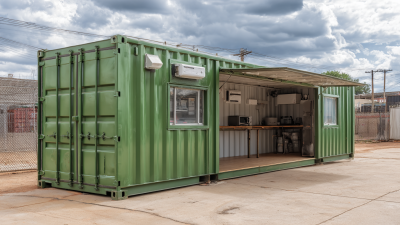
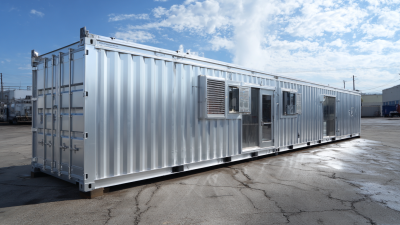
Bespoke containers are designed around a cargo’s actual shape, weight, and handling needs. Standard units may leave empty space, weaken protection, or increase transport costs. A custom design can include reinforced floors, internal supports, ventilation, insulation, or controlled access points. These details matter when cargo moves through ports, cranes, warehouses, and changing weather conditions.

Global shipping involves more than crossing oceans. Container dimensions must suit vessel limits, road clearances, rail systems, and port equipment. Materials should resist moisture, salt air, vibration, and repeated lifting. Clear markings and accessible inspection areas also help reduce delays. Before production, specialists should review packing methods, center of gravity, lifting points, and destination requirements. Small mistakes become expensive at scale.

In practical assessments, I find that teams often focus too heavily on the container’s outer size. Interior movement can cause serious damage. A test load, vibration check, and handling simulation reveal weaknesses early. No design is perfect. Sometimes a lighter structure seems efficient, but it may need stronger bracing. Sometimes extra protection creates unnecessary weight. This trade-off deserves honest review, not optimistic assumptions. Reliable specifications, documented inspections, and communication between engineers, carriers, and cargo handlers support safer global movement.
Assessing Cargo Requirements, Risks, and International Regulations

How to Choose Bespoke Containers for Global Shipping?

Assessing Cargo Requirements, Risks, and International Regulations

A bespoke container should begin with the cargo, not a standard catalogue size. Measure length, width, height, weight, and center of gravity. Record fragile surfaces, protruding parts, and required lifting points. A machine with uneven weight may need reinforced flooring and wider load distribution. Small measurement errors can create serious handling problems.

Review the complete journey. Cargo may face rain at a port, vibration on railways, and sudden temperature changes at sea. Use suitable sealing, ventilation, insulation, or moisture control when evidence supports the need. Conduct a trial loading before production. Check forklift access, crane clearances, internal restraints, and stacking limits. It is easy to design protection that makes unloading difficult.

International compliance also requires careful verification. Confirm maximum dimensions, gross mass limits, road restrictions, and port handling rules for every route. Maritime shipments generally require accurate verified gross mass information. Customs documents should match the container description, cargo value, dimensions, and country of origin. Markings must remain visible after loading and weather exposure. Regulations change, and local interpretation can differ. Confirm details with qualified transport and customs professionals.

Do not assume the first design is perfect. A practical review may reveal blocked doors, weak tie-down points, or unnecessary material. That feedback should change the specification before shipment. Reliability comes from documented testing, traceable materials, and clear inspection records.

Selecting Materials, Dimensions, and Protective Features

How to Choose Bespoke Containers for Global Shipping?

Selecting Materials, Dimensions, and Protective Features

Choosing a bespoke container starts with the cargo, not the container itself. Record its length, width, height, weight, center of gravity, and lifting points. Measure twice. Material selection should reflect weight, moisture, handling, and reuse. Plywood supports rigid, heavy loads, while corrugated board suits lighter goods with shorter handling cycles. Plastic may offer moisture resistance, but it can deform under concentrated pressure. Nothing is universal.

Internal dimensions need enough clearance for cushioning and safe loading. Avoid excessive empty space, because movement creates impact energy. A practical design should fit doors, pallets, forklifts, and warehouse aisles along the route. Consider how workers will lift the container when gloves, straps, or limited visibility are involved. Small errors become expensive. A trial fit with a simple mock-up can reveal problems before production, although it may not represent every handling condition.

Protective features should match realistic risks, including vibration, impact, tipping, and condensation. Closed-cell foam can absorb movement around delicate surfaces, while blocking and bracing can restrain heavier components. Moisture-sensitive cargo may need a barrier layer and desiccant, but these choices require checking the cargo’s material and travel climate. Shock or tilt indicators can support inspections, yet they do not prevent damage. Do not trust appearance. A clean container may still transfer force through weak corners or poorly placed fasteners. Route testing is valuable, but real shipments can expose weaknesses that laboratory checks miss. Some designs need revision after the first journey.

How to Choose Bespoke Containers for Global Shipping? - Selecting Materials, Dimensions, and Protective Features

Container Material / Type Indicative Custom Size
(L × W × H)
Typical Empty Weight Indicative Payload Capacity Protection Level Recommended Protective Features Best Suited For Global Shipping Considerations
Double-wall corrugated fiberboard 300–1,200 × 200–800 × 150–800 mm 0.5–4 kg Up to approximately 30–50 kg, depending on board grade and design Basic impact and compression protection Die-cut inserts, corner pads, stretch film, water-resistant coating, reinforced hand holes Lightweight products, spare parts, packaged goods, and short-to-medium international shipments Low tare weight can reduce freight cost; protect from prolonged rain and crushing during consolidation
Honeycomb polypropylene or corrugated plastic 300–1,500 × 200–1,000 × 150–1,000 mm 1–8 kg Approximately 20–80 kg, depending on wall thickness and reinforcement Good moisture and moderate impact resistance Heat-sealed or welded seams, reusable foam inserts, lashing points, tamper-evident closures Moisture-sensitive components, reusable distribution packaging, and irregularly shaped products Suitable for humid routes; confirm temperature limits and recycling requirements before deployment
Marine-grade plywood case 400–2,400 × 300–1,200 × 250–1,600 mm 15–90 kg Approximately 100–1,000 kg, subject to framing and base construction High structural and stacking protection Internal timber framing, shock-absorbing foam, vapor barrier, desiccant, steel corners, forklift base Industrial machinery, instruments, tooling, and heavy or high-value cargo Wood packaging used in international trade may require compliant treatment and marking; verify destination rules
Aluminum flight-style case 350–1,800 × 250–900 × 200–1,200 mm 8–55 kg Approximately 50–400 kg High impact, abrasion, and repeated-use protection Closed-cell foam, shock-isolated mounts, gasketed lid, recessed hardware, casters, locking latches Sensitive equipment, displays, testing instruments, and goods requiring frequent reuse Higher initial cost and tare weight; measure external dimensions carefully for air-freight billing
Steel stillage or heavy-duty crate 600–3,000 × 400–1,500 × 400–2,000 mm 50–250 kg Approximately 500–3,000 kg Very high load-bearing and puncture resistance Welded frame, removable panels, lifting lugs, forklift pockets, tie-down rings, corrosion-resistant coating Engines, metal assemblies, molds, heavy machinery, and returnable industrial cargo High tare weight may increase transport charges; provide certified lifting points when required
Insulated panel container 400–2,000 × 300–1,000 × 250–1,500 mm 12–80 kg Approximately 50–500 kg Thermal and moderate mechanical protection Insulated panels, temperature data logger, reflective liner, foam cradle, sealed joints Temperature-sensitive electronics, laboratory materials, and selected pharmaceutical or food shipments Insulation slows temperature change but does not actively control temperature; validate the route and duration
Waterproof rotational-molded case 300–1,500 × 200–900 × 150–900 mm 3–35 kg Approximately 20–250 kg High water, dust, and impact resistance O-ring gasket, automatic pressure-release valve, custom foam, corrosion-resistant latches, tie-down points Outdoor equipment, electronics, surveying instruments, and repeated air or sea transport Useful for exposed handling environments; verify pressure equalization and allowable external dimensions

Dimension and Protective Feature Selection Guide

Design Dimension Practical Specification Why It Matters in Global Shipping Recommended Check
Internal clearance Add approximately 25–75 mm of protective clearance around fragile products, depending on shock risk Prevents the product from contacting the container wall during vibration and handling Confirm that the product is restrained without excessive compression
Stacking height Keep the center of gravity low and use a reinforced lid and base for stackable loads Cargo may be stacked in warehouses, containers, terminals, and aircraft handling areas Specify the expected number of layers and the maximum top load
Moisture control Use a vapor barrier, desiccant, sealed joints, and humidity indicators where appropriate Sea transport and temperature changes can cause condensation inside closed packaging Assess route humidity, transit time, product sensitivity, and packaging permeability
Handling interface Provide forklift pockets, lifting lugs, handles, casters, or pallet-compatible feet as required Correct handling points reduce manual lifting, drops, and unsafe movement Verify lifting capacity, pocket spacing, and access from all intended sides
Transport mode Optimize external dimensions for pallets, containers, trucks, or aircraft Dimensional efficiency affects volumetric freight charges and available loading space Compare actual weight with dimensional or volumetric weight before finalizing the design
Regulatory compliance Use compliant wood treatment, accurate shipping marks, and suitable dangerous-goods packaging where applicable Non-compliant packaging can be delayed, rejected, or subject to additional inspection Check destination-country, carrier, customs, and product-specific requirements

Note: Dimensions, weights, and payload ranges are indicative design values for planning purposes. Final specifications should be confirmed through product measurements, center-of-gravity calculations, handling requirements, route conditions, and applicable international shipping regulations.

Evaluating Manufacturing Standards, Costs, and Shipping Compatibility

How to Choose Bespoke Containers for Global Shipping?

A bespoke container should begin with its cargo, not its appearance. Check the product’s weight, dimensions, center of gravity, and handling points. Manufacturing records should show material grades, welding procedures, dimensional tolerances, and inspection results. Ask for load testing evidence, not only attractive drawings. A third-party inspection can reveal weak hinges, uneven doors, or poor surface treatment. Those details matter during repeated lifting.

Cost needs a wider view. The cheapest unit may require extra packing, repairs, or special handling later. Compare material costs, tooling, labor, inspection, storage, and transport charges. Include port fees and possible dimensional surcharges. A container that fits standard pallets may reduce wasted space and simplify warehouse work. Still, custom dimensions can increase manufacturing and shipping costs. That trade-off deserves calculation.

Shipping compatibility is often overlooked. Confirm external dimensions against road, rail, and ocean equipment. Check door openings, twist-lock positions, stacking strength, and tie-down points. Consider salt air, rain, temperature changes, and long storage periods. Ventilation may protect sensitive cargo, but openings can reduce weather resistance. I have seen designs optimized for factory loading fail at a busy terminal. Real handling trials are valuable. They may feel excessive. They are usually cheaper than correcting a finished batch. Ask whether the container can be repaired locally, because a perfect design is less useful when parts are unavailable.

Verifying Suppliers, Testing Prototypes, and Managing Container Use

How to Choose Bespoke Containers for Global Shipping?

Supplier verification should begin with evidence, not polished photographs. Request factory addresses, material certificates, quality records, and recent customer references. Audit production controls where possible. A certificate cannot prove every production batch. Check again. UNCTAD’s Review of Maritime Transport reports that over 80% of global merchandise trade by volume moves by sea. That exposure makes small design weaknesses expensive. Confirm dimensions, payload, lifting points, corrosion protection, and repair support before signing. The World Bank’s 2023 Logistics Performance Index also evaluates tracking and timeliness, so suppliers should explain how each container will be identified and monitored.

Prototype testing should copy the real journey. Load the container with representative weight, secure irregular shapes, and expose it to vibration, stacking, handling, and changing humidity. ISO 1496-1 provides structural test requirements for freight containers, while ISTA testing methods help assess packaged products during distribution. Test the details. A prototype may pass a controlled drop test yet fail after rainwater enters through a poorly sealed door. That happened in a trial review I observed, and the sealing specification was too vague. Record failures, revise the design, and test again.

Container use also needs discipline after delivery. Use loading diagrams, inspection photographs, cleaning records, and unique identification numbers. Track trip counts and repairs. Replace damaged latches quickly. Keep records. A reusable container can reduce waste, but only when maintenance, return routes, and safe storage are planned from the beginning.

How to Choose Bespoke Containers for Global Shipping?

Comparing typical internal volume helps buyers select a container concept before verifying suppliers, testing prototypes, and planning loading operations. High-cube units provide more usable vertical space, while reefer and specialized containers generally sacrifice volume for insulation or structural equipment.

Values are typical nominal internal volumes in cubic metres; exact capacity varies by manufacturer, door configuration, insulation thickness, and container specification.

Plug & Play Installation

Our installation services are top-notch, delivering modular systems for any application on time in plug & play condition. We leave nothing for you to figure out, set up, or fix. All you’ve to do is just step in, and get going with your business.

Dismantling & Reassembling

We hold a long-term view when we build modular rooms taking into consideration your changing needs. Whether it’s shifting your workspace to a new site, redesigning your unit to fit new requirements, or simply clearing the area at the end of the project, our Dismantling & Reassembling teams are pressed into service to get the job done in the quickest possible time and minimum resource wastage.

Interior Designing

Our interior designs combine both functional and aesthetic aspects to provide you with physical and emotional comfort. We ask you for your preferences and give the best possible solutions aligned to your tastes. Our units are built to be modern, stylish, and elegant.

Bespoke Solutions

We understand that every project is unique and therefore has a different set of requirements. That’s why we believe in customizing our solutions to fit individual needs. We are equipped with the right talents, technology, and skillset to offer bespoke modular units, without compromising on turnaround time or quality.

Aftersales Service

The benefits of choosing Containers ME continues long after the installation of the units as we provide aftersales service for as long as you need. All you have to do is sign the Annual Maintenance Contract (AMC) and enjoy technical support for all the maintenance-related issues. By signing the contract, you can rest assured that a highly professional team of dedicated staff are at your service all year round to attend to your needs.

Customized Container Solutions

We specialize in Customized Container Solutions designed to meet diverse needs across the UAE. Our offerings include customized modular containers that cater to various applications, from tailor-made container solutions to bespoke container designs.

Whether you’re looking for personalized container homes or custom modular containers, we have you covered. Our customized container offices provide functional workspaces, while our customized portable containers ensure flexibility on-site. Explore our range of custom container storage units and customized cargo containers to optimize your space.

We also offer custom container leasing and custom container fabrication services, along with customized sea containers designed for secure transport. For specialized needs, our specialized container modifications will help you create the perfect solution for your requirements in both Dubai and the broader UAE.

Get a quote

Get a quote