Choosing the best China mobile container supplier requires more than comparing prices on a product page. A reliable partner should understand engineering, transport, site conditions, and long-term maintenance. In this guide, we examine how experienced buyers evaluate a container mobile manufacturer before placing an order.
The review focuses on factory capability, material quality, customization, and documented quality control. Important details include steel grade, insulation thickness, welding standards, floor load capacity, door hardware, and roof drainage. A professional supplier should provide clear drawings, realistic production timelines, sample photos, and inspection records. Independent factory audits can reveal important facts that polished websites often hide. Small details matter.
We also consider communication and after-sales support. Can the supplier answer technical questions clearly? Can it replace damaged panels or hardware efficiently? Does it understand export packaging, local building requirements, and installation guidance? Certifications may support credibility, but they should match the actual product and destination market. A certificate alone proves little. Our assessment is practical, not absolute, because the best choice depends on climate, budget, intended use, and project scale. Some suppliers may offer attractive customization but lack consistent delivery records. Others may have strong factories but limited design support. That trade-off deserves careful thought. By comparing verified evidence, user experience, and technical responses, readers can identify a dependable container mobile supplier instead of choosing only the lowest quotation.
A strong supplier understands how mobile containers work on real sites. I have seen projects fail because doors were poorly aligned and floors absorbed moisture. Practical experience matters more than attractive catalog images. The best supplier checks steel thickness, welding points, insulation, ventilation, and locking systems before shipment. Small details matter.
Clear communication also shows professional expertise. A reliable supplier confirms dimensions, loading limits, surface treatment, electrical needs, and installation conditions in writing. Technical drawings should match the finished unit. Quality records, material reports, and inspection photos provide useful evidence. Independent testing can add confidence when the project has strict performance requirements.
After-sales support separates a dependable supplier from a temporary seller. Spare parts should be identified before delivery, not after damage occurs. Installation guidance must use simple drawings and clear steps. Response time matters when a container arrives with a missing fitting.
It happens.
Cost still matters, but the lowest quotation may hide thinner materials or limited service. A careful buyer compares total value, including transport, maintenance, customization, and replacement costs. No supplier is perfect. I would still request a sample review, factory inspection, or third-party check when the order is important. That extra step may feel slow, yet it can reveal problems before production begins.
Evaluating a mobile container supplier requires more than comparing unit prices. Start with compliance, dimensional accuracy, and production consistency. ISO 668 defines container dimensions and ratings. ISO 1161 covers corner fittings. Ask for test records, welding procedures, and material certificates. A reliable supplier should provide traceable batch numbers and clear inspection photos.
Documentation matters.
Logistics capability deserves equal attention. The World Bank’s 2023 Logistics Performance Index gave China a score of 3.7, ranking it 19th among 139 economies. This suggests strong logistics capacity, but factory-level performance can differ sharply. Check loading methods, port experience, export packaging, and average lead times. UNCTAD’s Review of Maritime Transport 2024 reported 2.4% growth in seaborne trade during 2023. Rising demand can pressure delivery schedules. Request a production slot before signing.
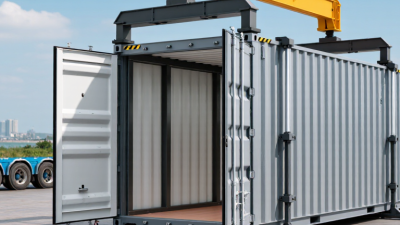
Inspect the container physically when possible. Look for even weld beads, sealed roof joints, smooth door movement, and drainage that does not trap water. Ask how insulation, flooring, ventilation, and electrical systems are tested. Fire-resistance claims should include recognized laboratory evidence.
Warranty terms must state exclusions, response times, and replacement procedures.
My own checklist is not perfect. Supplier references can also be selective. An independent pre-shipment inspection remains worthwhile, especially for large orders.
A dependable mobile container supplier should provide measurable evidence, not polished photographs. UNCTAD’s Review of Maritime Transport 2024 states that over 80% of global merchandise trade moves by sea. That scale makes structural reliability essential. Request steel grades, coating thickness, weld inspection records, floor-load ratings, and door-cycle test results. Examine a sample unit personally, especially its corner castings, seals, hinges, and drainage points. A neat brochure is not proof.
Customization should solve a site problem, not add decoration. Check insulation performance, ventilation rates, lifting points, electrical layouts, and internal clearances. Ask for drawings before production starts. The World Bank’s Logistics Performance Index 2023 highlights reliability and shipment quality as key logistics concerns. Poor drawings can create delays, damaged goods, or expensive modifications. Suppliers should also explain how design changes affect weight, transport dimensions, and maintenance access.
Compliance requires destination-specific evidence. Confirm alignment with ISO 668 dimensions where relevant, and verify CSC requirements for units used in international transport. Electrical systems may require local certification, fire protection, and inspection documents. Request material traceability, factory acceptance records, and independent testing. I would not accept “international standard” without a clause number. Even experienced buyers miss small details, such as emergency exits or grounding continuity. A trial order exposes these weaknesses before a larger commitment.
What Is the Best China Mobile Container Supplier?
How to Verify a Supplier’s Manufacturing Capacity and Reliability
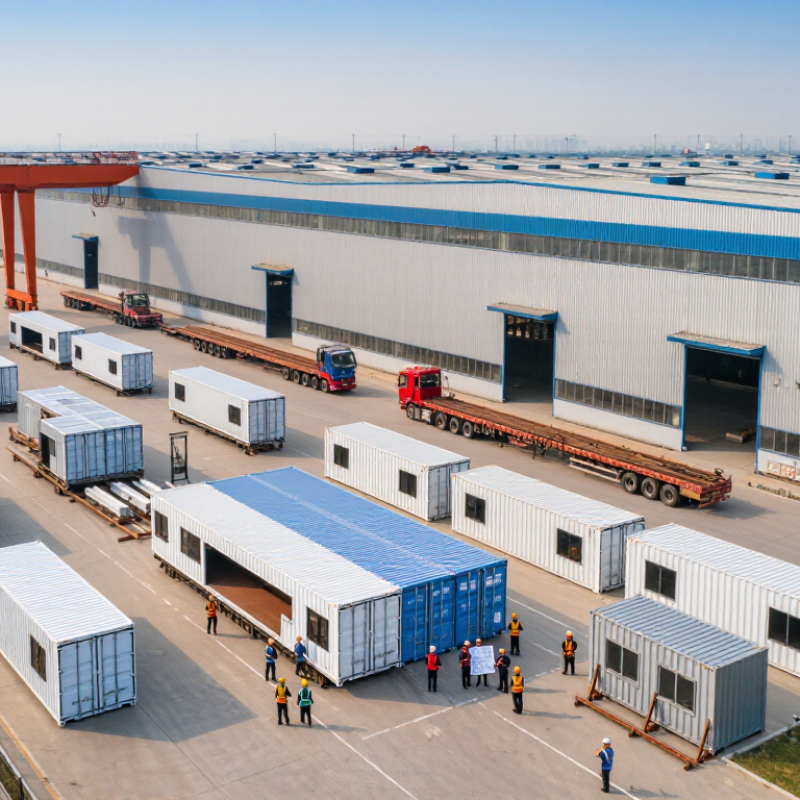
A reliable mobile container supplier should prove capacity with records, not polished photographs. Request the factory’s monthly output, active production orders, equipment list, and workforce details. A site visit should reveal cutting, welding, painting, assembly, and final inspection areas. Look for marked materials, batch numbers, and containers moving through defined checkpoints. A supplier unable to explain its production bottleneck deserves caution. Capacity claims can age quickly.
Technical verification matters more than impressive office displays. Check welding procedures, steel certificates, coating thickness, door-cycle tests, roof-load tests, and dimensional reports. For freight applications, compare documents with applicable ISO 668 and ISO 1496 requirements. UNCTAD’s Review of Maritime Transport 2024 states that shipping carries over 80% of global merchandise trade, making equipment consistency commercially important. The World Bank’s 2023 Logistics Performance Index also treats shipment timeliness as a key logistics indicator. Ask for recent delivery records, inspection reports, corrective-action files, and references from comparable projects. Use an independent inspector before mass production. It costs less than discovering warped doors at a distant port. Still, no audit removes every risk. Production pressure, raw-material changes, or weak subcontractor control can affect quality after approval. Set measurable acceptance criteria, staged payments, and traceable change-control rules. Reliability is demonstrated repeatedly, not promised once.
| Verification Dimension | What to Verify | Reliable Evidence | Suggested Acceptance Benchmark | Warning Signs |
|---|---|---|---|---|
| Legal Identity | Confirm that the supplier is legally registered and authorized to manufacture or export the proposed container products. | Business license, registration details, export records, and a company bank account matching the legal entity. | All documents should show the same legal entity name and registered address. | Payment requested to an unrelated personal or third-party account. |
| Manufacturing Location | Determine whether production is carried out in-house or subcontracted. | Live video audit, factory address, production-line photos, equipment list, and visitor records. | The supplier can show raw-material storage, fabrication, welding, assembly, inspection, and finished-goods areas. | Only an office is available, or the factory location changes during verification. |
| Production Capacity | Check whether the supplier can meet the required quantity without compromising lead time or quality. | Monthly capacity statement, current production schedule, equipment capacity, workforce information, and delivery history. | Capacity should exceed the project requirement by approximately 20% to 30% during the planned production period. | Capacity is described only with vague terms such as “unlimited” or “very large.” |
| Material Traceability | Verify the grades, thicknesses, coatings, insulation materials, and hardware used in production. | Material certificates, purchase records, batch numbers, incoming inspection reports, and approved samples. | Critical materials should be traceable from purchase through final assembly. | The supplier refuses to disclose material specifications or substitutes materials without approval. |
| Structural Compliance | Confirm that the frame, corner fittings, lifting points, doors, and load-bearing components meet the intended use. | Engineering drawings, welding procedures, load calculations, inspection reports, and applicable test results. | The design should be reviewed against applicable container, building, transport, and local safety requirements. | The supplier provides marketing images but no engineering drawings or test documentation. |
| Standards and Certifications | Identify which standards apply to the container’s intended use, such as transport, storage, accommodation, or site offices. | Valid certificates with certificate numbers, scope, issuing body, validity dates, and matching product descriptions. | Certificates must be independently verifiable and applicable to the exact product category being purchased. | Expired certificates, edited documents, or certificates issued for a different product. |
| Welding and Fabrication Quality | Assess the consistency of welds, frame geometry, surface preparation, and assembly accuracy. | Welding procedure records, welder qualifications, inspection checklists, dimensional reports, and factory audit results. | Welds should be continuous where specified, visually consistent, free from visible cracks, and inspected before coating. | Heavy use of filler, visible porosity, uneven joints, or no documented inspection process. |
| Corrosion Protection | Verify surface preparation, primer, topcoat, coating thickness, and protection of concealed areas. | Coating specification, paint batch records, surface-preparation procedure, and dry-film-thickness measurements. | The coating system should be defined in writing and matched to the expected climate and service environment. | Rust is visible before shipment, coating thickness is not measured, or damaged areas are left untreated. |
| Water and Weather Resistance | Check the roof, wall joints, doors, windows, penetrations, drainage, and sealing details. | Water-penetration test records, sealing specifications, inspection photos, and an approved pre-shipment checklist. | A completed water test should be documented for every production batch or agreed inspection lot. | Leaks are dismissed as normal, or sealing is performed only after a customer complaint. |
| Electrical and Fire Safety | Verify electrical components, grounding, circuit protection, fire-rated materials, and local code compliance. | Wiring diagrams, component certificates, insulation tests, grounding tests, and fire-performance documentation where required. | The electrical design must be reviewed for the destination country and the intended installation conditions. | Unprotected wiring, mixed component specifications, or no test records. |
| Quality Management System | Evaluate how the supplier controls drawings, purchasing, production, inspections, nonconformities, and corrective actions. | Quality manual, inspection plan, calibration records, nonconformity reports, and corrective-action records. | A documented process should exist from incoming materials to final release and shipment. | Quality depends entirely on one person’s experience and no records are retained. |
| Sample and Pilot Order | Confirm that the supplier can reproduce the approved design before full-scale production. | Signed sample approval, dimensional inspection, functional testing, and change-control records. | Approve one representative sample or pilot unit before placing a large production order. | The supplier requests full payment or mass production before sample approval. |
| Third-Party Inspection | Use an independent inspection company to verify quantity, workmanship, dimensions, packaging, and documents. | Pre-production, during-production, and pre-shipment inspection reports with photographs and measured results. | Inspection scope and acceptance criteria should be written into the purchase contract. | The supplier rejects independent inspection or allows inspection only after shipment. |
| Delivery Performance | Review the supplier’s ability to meet production, loading, and shipping deadlines. | Redacted purchase orders, shipment records, production schedules, and customer references. | Request at least three recent, verifiable project references with similar product scope. | Repeated unexplained delays, changing lead times, or refusal to provide references. |
| After-Sales Support | Confirm how defects, replacement parts, technical questions, and warranty claims are handled. | Written warranty terms, spare-parts list, response procedure, service contacts, and claim records. | Warranty duration, exclusions, response time, and remedy should be clearly stated in the contract. | Only verbal warranty promises or no defined process for defective goods. |
| Commercial and Contract Risk | Check payment terms, specifications, tolerances, delivery obligations, inspection rights, and remedies for nonconformity. | Detailed purchase contract, approved drawings, technical specification, packing list, and change-order procedure. | No critical requirement should remain only in informal messages or verbal discussions. | Pressure to pay quickly, incomplete specifications, or unwillingness to accept written liability. |

Choosing the best China mobile container supplier starts with your project’s real operating conditions. UNCTAD’s Review of Maritime Transport reports that over 80% of global merchandise trade by volume moves by sea. Therefore, transport compatibility matters before appearance. Ask for ISO 668 dimensions, corner-fitting specifications, loading limits, and flat-pack details.
Request a complete landed-cost sheet, not only a factory quotation. Include manufacturing, inland delivery, port handling, insurance, duties, installation, and replacement parts. A lower unit price may become expensive after modifications. The World Bank’s 2023 Logistics Performance Index highlights customs, infrastructure, shipment arrangements, and delivery timeliness as key logistics factors. Check each area with written evidence. Factory video calls help, but an independent pre-shipment inspection is stronger.
Visit the production line when possible. Examine weld consistency, door alignment, floor joints, drainage, insulation, and corrosion protection. Ask for material certificates, structural drawings, load tests, and warranty terms. For hot or humid sites, compare insulation performance and ventilation design, not just panel thickness. Lead time also needs proof; request recent production records and container-loading photographs. I have found that small omissions cause large delays. Still, no supplier is perfect. A careful buyer should allow a contingency budget, perhaps 10–15%, for site changes, damaged parts, or local compliance adjustments. Never approve from photos alone. A sample unit or third-party inspection can reveal uncomfortable details early.
Subscribe to our newsletter for the latest news and exclusive offers.
We hold a long-term view when we build modular rooms taking into consideration your changing needs. Whether it’s shifting your workspace to a new site, redesigning your unit to fit new requirements, or simply clearing the area at the end of the project, our Dismantling & Reassembling teams are pressed into service to get the job done in the quickest possible time and minimum resource wastage.
We understand that every project is unique and therefore has a different set of requirements. That’s why we believe in customizing our solutions to fit individual needs. We are equipped with the right talents, technology, and skillset to offer bespoke modular units, without compromising on turnaround time or quality.
The benefits of choosing Containers ME continues long after the installation of the units as we provide aftersales service for as long as you need. All you have to do is sign the Annual Maintenance Contract (AMC) and enjoy technical support for all the maintenance-related issues. By signing the contract, you can rest assured that a highly professional team of dedicated staff are at your service all year round to attend to your needs.
We specialize in Customized Container Solutions designed to meet diverse needs across the UAE. Our offerings include customized modular containers that cater to various applications, from tailor-made container solutions to bespoke container designs.
Whether you’re looking for personalized container homes or custom modular containers, we have you covered. Our customized container offices provide functional workspaces, while our customized portable containers ensure flexibility on-site. Explore our range of custom container storage units and customized cargo containers to optimize your space.
We also offer custom container leasing and custom container fabrication services, along with customized sea containers designed for secure transport. For specialized needs, our specialized container modifications will help you create the perfect solution for your requirements in both Dubai and the broader UAE.